Mythality · World Mythology
Where the Sun
Touched the Earth
Enter the sacred cosmos of the Inca — a world shaped by divine creators, breathing mountains, and a goddess who lives beneath every footstep.
Begin the JourneyOrigins
Creation Myths of the Andes
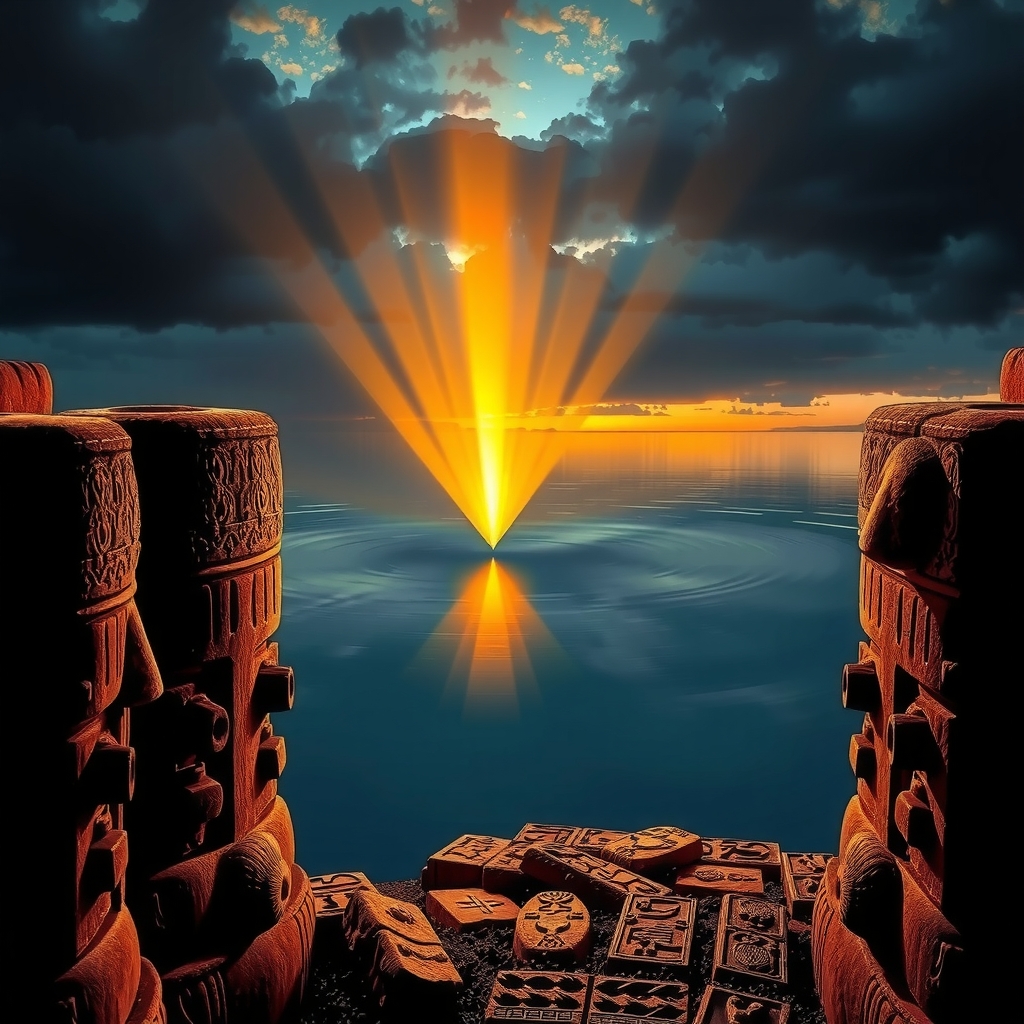
Before light existed, there was only primordial darkness and the cold waters of Lake Titicaca. From those depths rose Viracocha, the great creator, who spoke the world into being — calling forth the sun, moon, stars, and the first humans from islands of the lake.
"Con Tici Viracocha, lord of the world, made heaven and earth and all things in them."
His first creation was flawed — giants who ignored his commands. In his disappointment he turned them to stone, flooding the earth and beginning again. The ruins at Tiwanaku are said to be their petrified remains.
The Andean cosmos was divided into three realms: Hanan Pacha (upper world of gods and celestial beings), Kay Pacha (the living earth), and Ukhu Pacha (the inner world of the dead and unborn). These realms were united by the ceque system — invisible lines radiating from Cusco like veins of a living body. Compare this layered cosmology with the three worlds of Slavic mythology or the celestial tiers in Japanese Inca cosmology.
The Divine Pantheon
Gods of the Andean World
The Inca did not separate nature from divinity — every mountain, river, and storm was an expression of sacred power made manifest.
Solar Deity
Inti
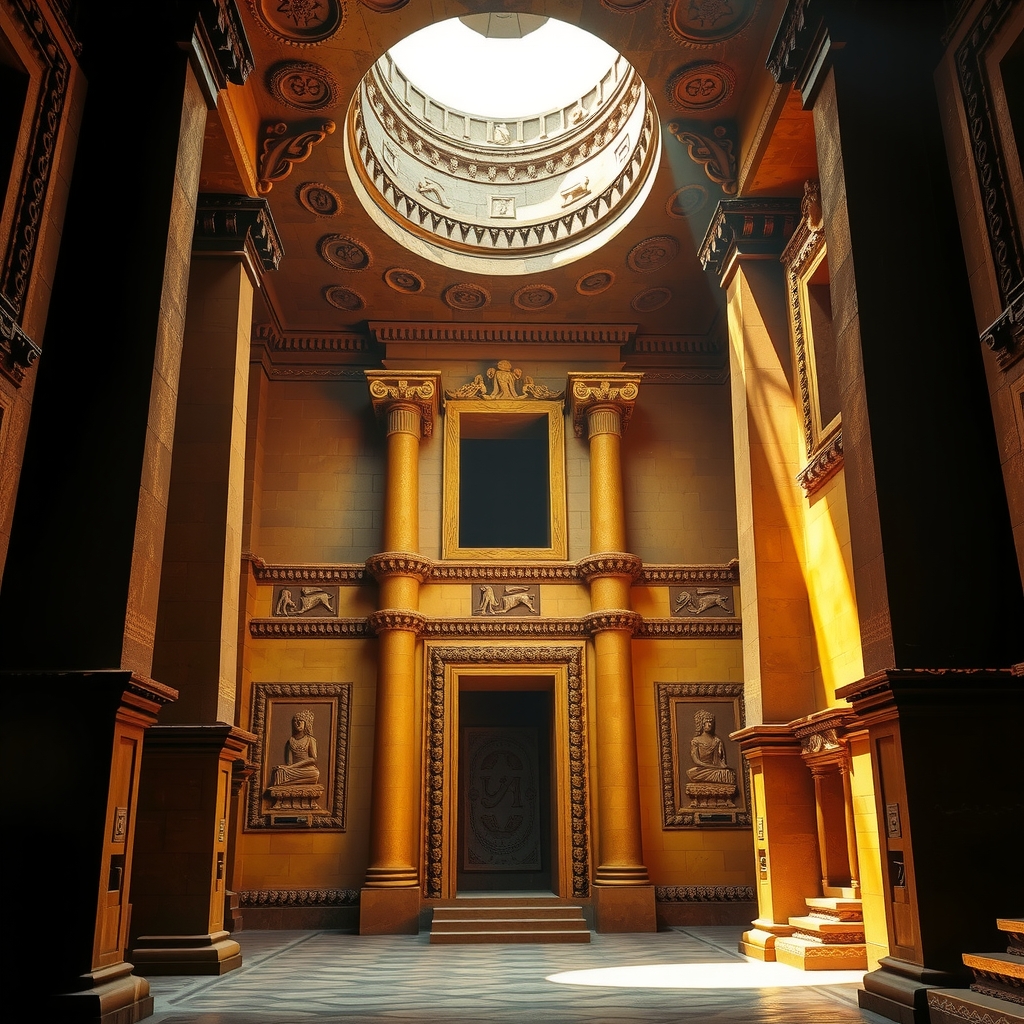
The radiant sun god and divine father of the Inca royal line. The Sapa Inca ruled as his earthly representative. His great temple, Coricancha in Cusco, was sheathed in gold to mirror his brilliance — the metal considered his sweat.
Earth Mother
Pachamama
The living earth herself — not simply a goddess of soil but the animate body of the world. Communities still pour chicha onto the ground before drinking as an offering to her. She governs fertility, harvests, and the passage of seasons. Her worship echoes First Nations reverence for the living land.
Storm & Creation
Viracocha
The supreme creator who walked among humans disguised as a beggar, testing their virtue. After completing his work he walked across the Pacific Ocean and disappeared. Some accounts describe him returning at the end of the world cycle to remake creation once more.
Thunder & Weather
Illapa
The thunder god who wielded a sling to crack lightning across the Andean sky. He drew water from the celestial river of the Milky Way and released it as rain — a cosmic irrigation system tended by divine hands.
Moon Goddess
Mamaquilla
Mother Moon and divine wife of Inti. She governed the lunar calendar that structured all Inca ritual life. During a lunar eclipse, the Inca believed a great cosmic serpent or puma was devouring her — and they would shout and throw weapons to frighten the beast away.
Maize Goddess
Mama Sara
The sacred spirit of maize, the Andes' foundational crop. Unusual ears of corn were selected as her embodiment and kept wrapped in textiles as living idols. Her abundance was the measure of divine favor — a concept paralleled by the maize deities of neighboring Aztec mythology.
Sacred Geography
The Living World of Huacas
In Andean thought, divinity was not confined to temples — every mountain, spring, cave, and unusual stone could be a huaca: a sacred being with its own name, history, and need for offerings.
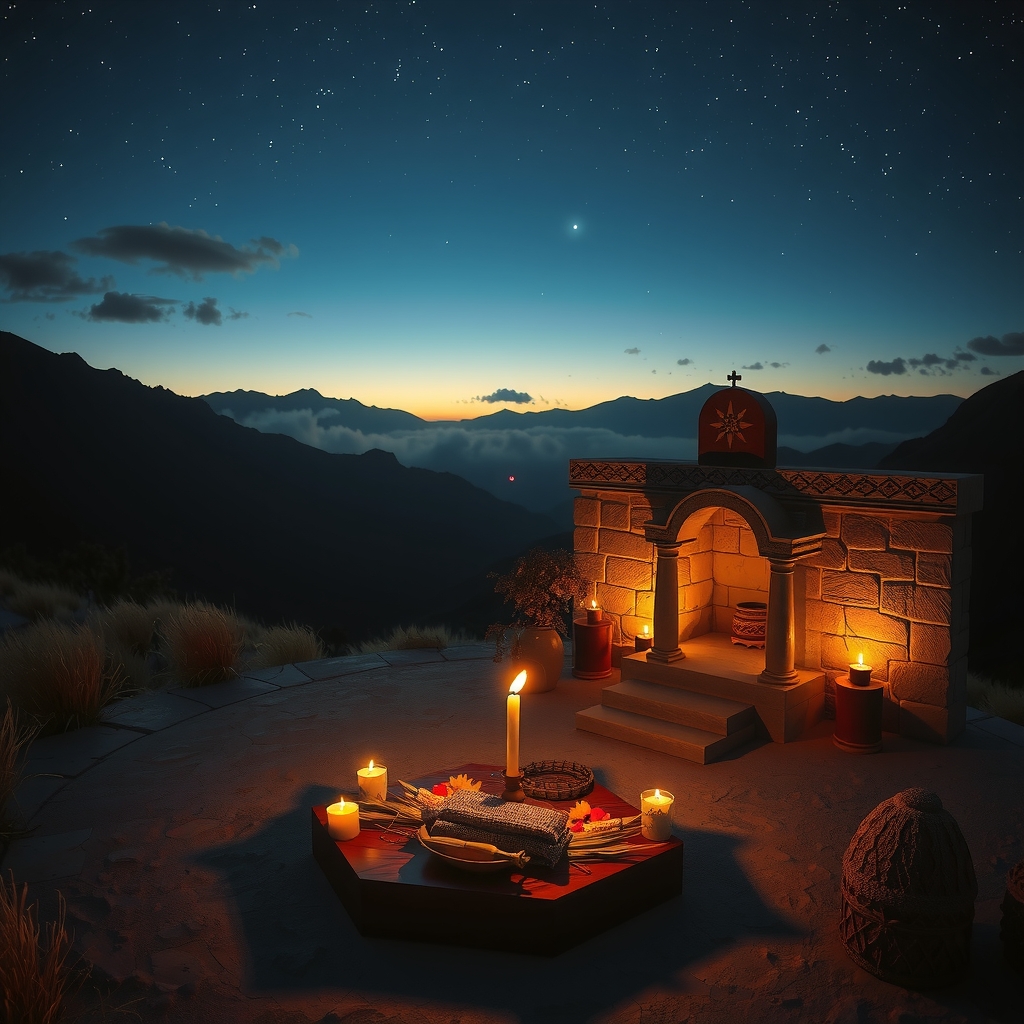
Apu — Mountain Spirits
The great peaks of the Andes are living ancestors, watching over communities, sending weather, and demanding respect. Mt. Ausangate near Cusco is among the most powerful.
Lake Titicaca
The world's highest navigable lake and the navel of Inca creation. The Island of the Sun harbors temples marking where Inti first rose into the sky.
Cusco — Navel of the World
The Inca capital was laid out in the shape of a puma and served as the convergence point of all ceque lines — a ritual map of the cosmos drawn on the earth itself.
Machu Picchu
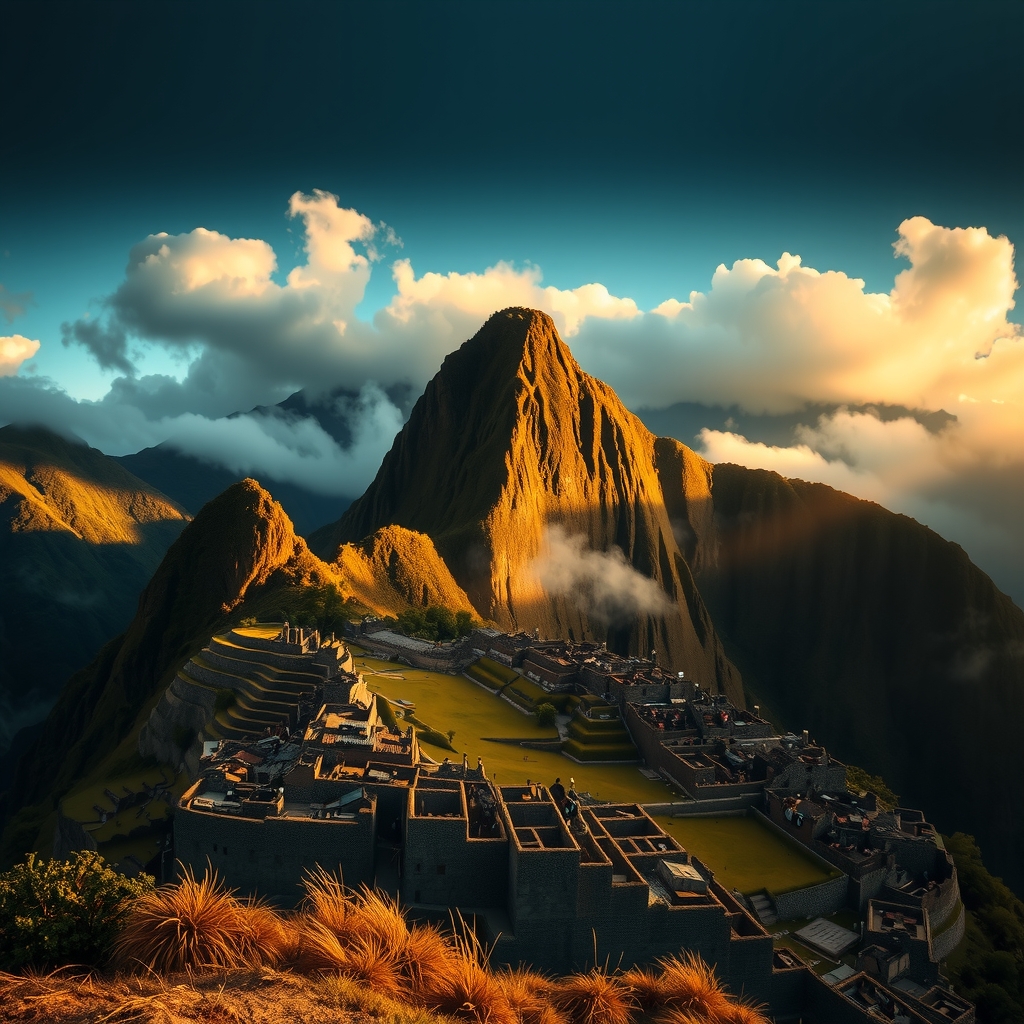
Not merely a citadel but an astronomical observatory, a place of pilgrimage, and a royal estate built where mountain, sky, and river converged in sacred alignment.
Ceques & Wak'as
41 invisible lines radiated from Coricancha temple, each holding a sequence of wak'a shrines tended by specific family groups — a living ritual calendar written in landscape.
Qoyllur Riti Glacier
Pilgrims still ascend to this sacred glacier each year, carrying blocks of ice down the mountain as living offerings — water from the gods returning to the earth.
Sacred Calendar
Festivals & Living Ritual
The Inca ritual year was a continuous conversation between humans and the divine — each month its own ceremony, each ceremony an act of reciprocal care called ayni.
June Solstice
Inti Raymi
The Festival of the Sun — the most spectacular celebration of the Inca year. The Sapa Inca offered chicha to Inti at dawn, and the entire empire participated in feasting, sacrifice, and prayer for a fruitful year ahead. Revived in Cusco today, drawing tens of thousands.
August
Pachamama Raymi
August is Pachamama's month — a time when the earth is considered "open" and especially receptive. Communities bury food, coca leaves, llama fat, and other offerings in the ground to feed and honor the living earth.
September
Citua
A great purification ritual held at the new moon following the September equinox. Torches were run to the four corners of the empire to drive out illness and evil, and all strangers, dogs, and the physically impure were expelled from Cusco for the duration.
December Solstice
Capac Raymi
The Royal Festival — a month-long celebration marking the initiation of young Inca nobles into adulthood. Ear-piercing ceremonies, pilgrimages to Huanacauri hill, and great feasts accompanied the transition from boyhood to warrior status.
Legends & Tales
Stories from the Andes
Manco Cápac & Mama Ocllo
Inti took pity on the wild peoples of the earth and sent his son Manco Cápac and daughter Mama Ocllo from the waters of Lake Titicaca, bearing a golden staff. They were commanded to walk the land and plant the staff wherever it sank effortlessly into the earth. At a fertile valley in the mountains, the staff disappeared into the ground entirely. There they founded Cusco, the Navel of the World, and taught the people agriculture, weaving, and law.
This founding myth is the Andean equivalent of Rome's Romulus and Remus — a story that places divine legitimacy at the heart of imperial rule. Similar founding journeys appear in Māori traditions of navigating to new lands →
The Fox and the Llama
A llama on the coast began to weep, telling its owner it had dreamed of the sea rising to swallow the land. The herder trusted the animal and led his family to the top of the highest mountain, taking pairs of every animal. When the flood came, only that peak remained above water. After the waters receded, the humans descended and repopulated the world. Scholars note striking parallels with flood myths across Mesopotamia — preserved in the ancient texts explored in our Sumerian mythology guide →
The Origin of the Coca Leaf
A beautiful woman accused of infidelity was condemned to death. After her death, her body was found to have given birth to a plant whose leaves, when chewed, could sustain a worker through hunger and cold for hours. The divine origin of coca sanctified its ritual use — it became the foremost offering to Pachamama, Inti, and the apus, and a medium through which diviners read fate.
Inkarri — The Return of the Inca King
When the Spanish captured and executed Atahualpa, indigenous Andean communities preserved a prophecy: the Inca king's severed head was buried, and his body was slowly regenerating underground. When it was whole again, Inkarri would rise and restore the Inca order. This messianic myth — born from colonial trauma — shows how mythology adapts to historical rupture. A parallel resilience lives in the stories of First Nations traditions →
Watch: Andean Mythology
Scroll through short films, documentaries, and ritual footage from the living Andean tradition.
Continue Exploring
More Worlds Await
The Andes are one peak in a vast mythological range. Discover the sacred stories of civilizations across every continent.