Mythality · Egyptian Mythology
Gods of the Nile
Where the river floods and recedes, where the sun dies and is reborn — here the gods walk among mortals, and eternity is written in stone.
Enter the MythThe Ancient World
Introduction to Egyptian Mythology
For more than three thousand years, the civilisation that rose along the banks of the Nile wove one of history's most intricate and enduring mythological tapestries. Egyptian mythology was not a single text or creed — it was a living, breathing architecture of stories, rituals, and sacred images that explained the movement of the sun, the rhythm of the floods, and the mysteries of death and rebirth.
"What is Below is Like What is Above, and What is Above is Like What is Below — to accomplish the Miracle of the One Thing."
The gods of Egypt were not remote figures — they inhabited the land itself. Ra crossed the sky each day in his solar barque; Osiris lay in every flooded field that would spring green again. The Pharaoh was a living god, bridging the human and divine. These myths gave meaning to an entire civilization, sustaining it across centuries with the same power the Nile itself sustained the land.
Unlike many mythological traditions, Egyptian belief was profoundly concerned with Ma'at — a concept encompassing truth, justice, cosmic order, and balance. Every myth, every ritual, every temple inscription was a reaffirmation that the universe operated according to sacred principles, and that humanity's duty was to uphold them.
The Divine Assembly
The Egyptian Pantheon
Egypt's gods numbered in the thousands — cosmic forces embodied in human, animal, and hybrid forms, each ruling a domain of existence.
Ra
The supreme solar deity, creator and sustainer of all life
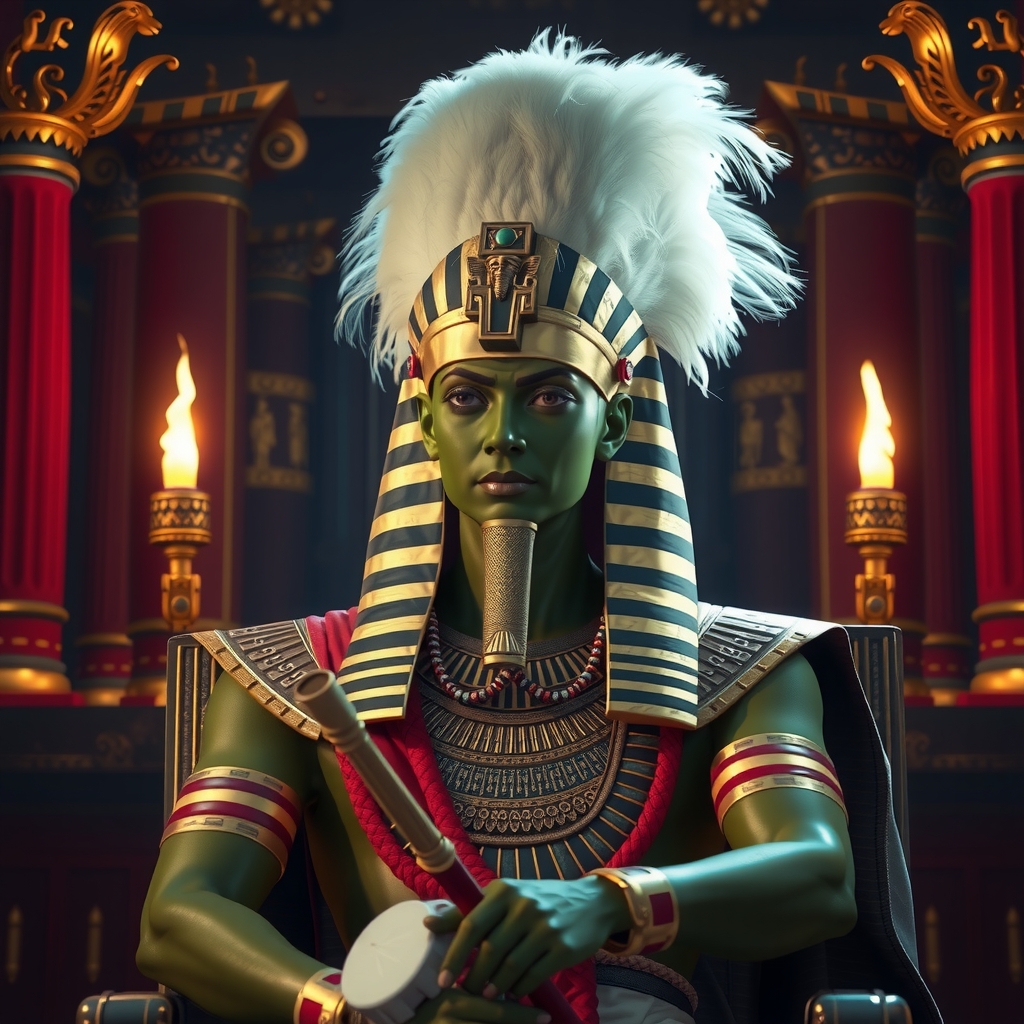
Osiris
God of death, resurrection, and the fertile earth
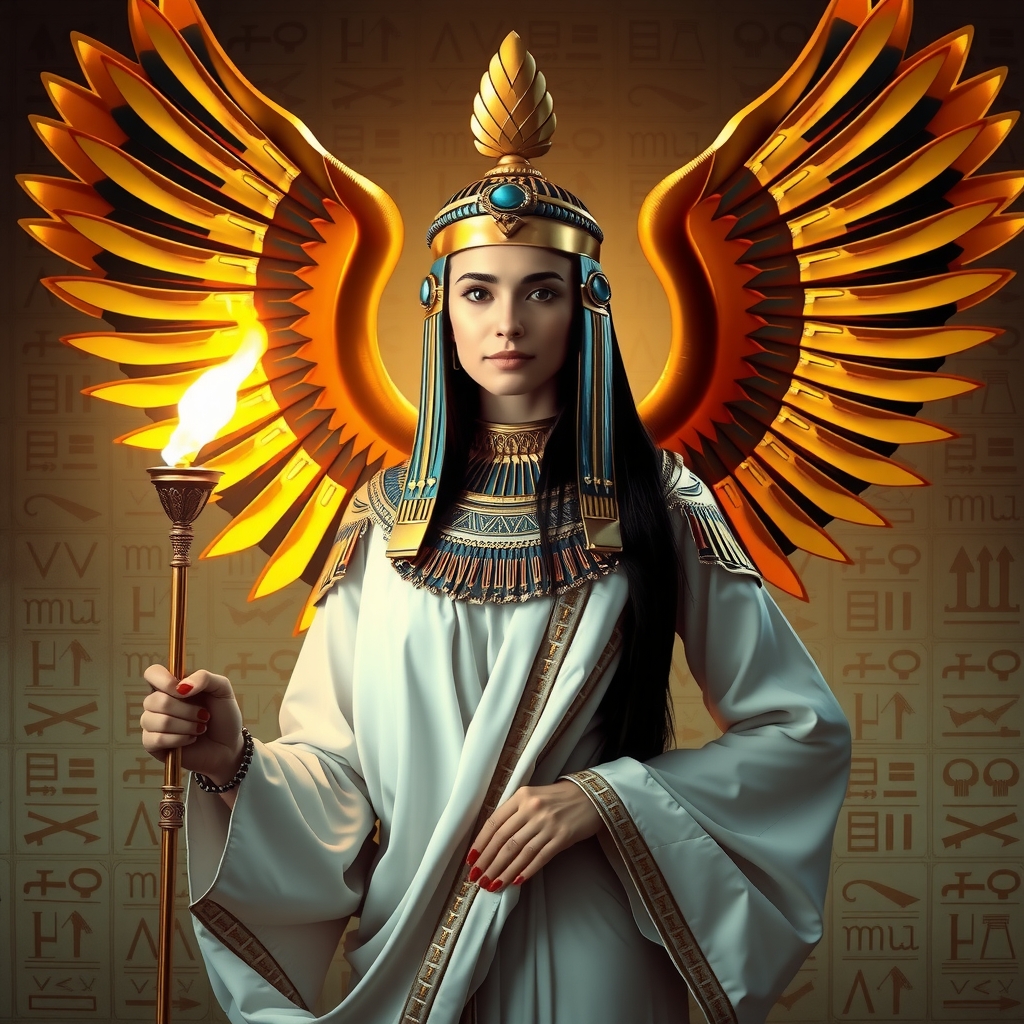
Isis
Goddess of magic, healing, motherhood, and the throne
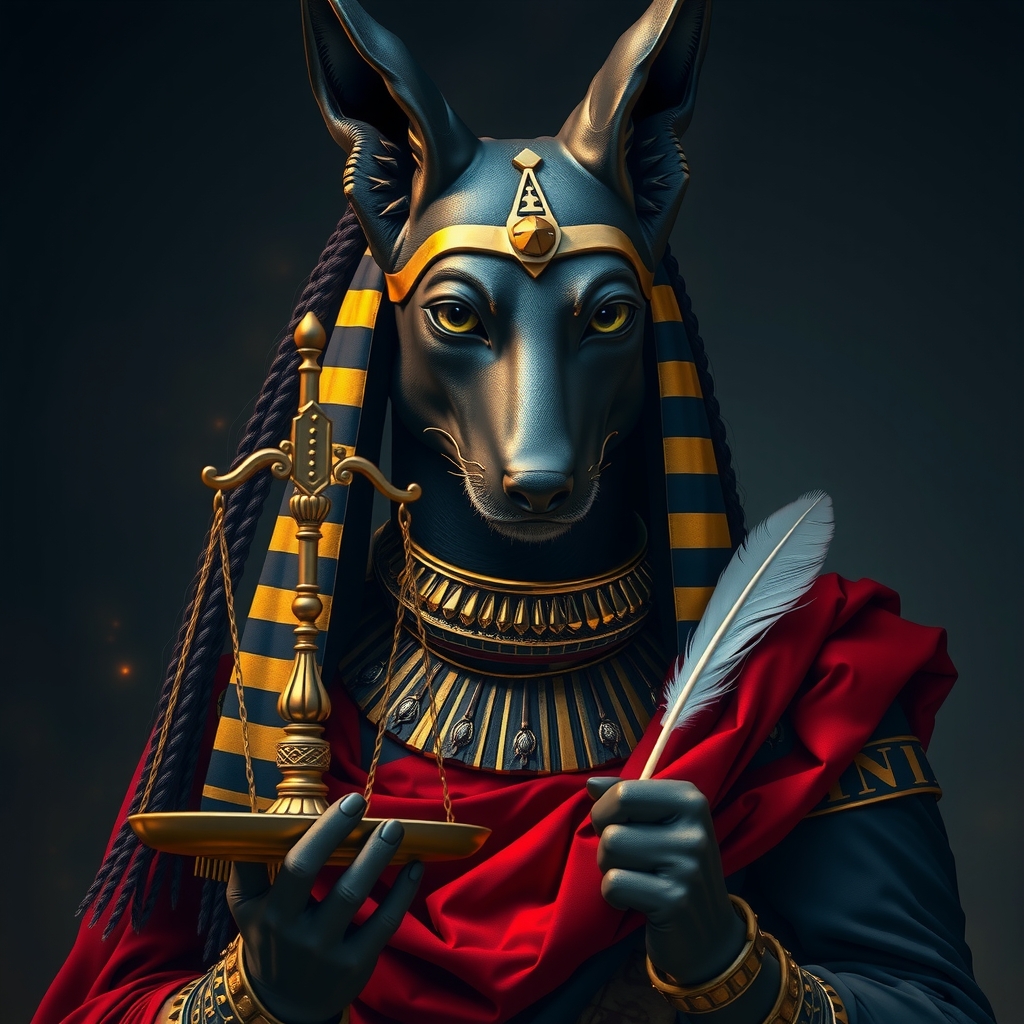
Anubis
Jackal-headed guide and guardian of the dead
Horus
Sky god and falcon-king, protector of the pharaoh
Thoth
Ibis-headed god of writing, wisdom, and the moon
Sekhmet
Lioness goddess of war, healing, and divine fury
Sobek
Crocodile god of the Nile, military power, and fertility
Solar Deity
Ra — The Sun God
Ra was the supreme deity of the Egyptian cosmos — the great solar disc who brought light, warmth, and order to the world each morning. Each dawn was a miracle: Ra's rebirth, his triumph over the serpent Apep who dwelled in the darkness of the Duat. Each sunset was his descent, his aging journey through the underworld, where he would be swallowed by the goddess Nut only to be reborn at first light.
He sailed the heavens in his solar barque, the Mandjet, accompanied by other gods who protected him from chaos. Over time, Ra merged with other deities — becoming Ra-Atum, Ra-Horakhty, and most powerfully, Amun-Ra — the hidden yet all-illuminating god who became the king of all the Egyptian gods.
- Domain: Sun, creation, kingship, order
- Symbol: Solar disc with uraeus serpent
- Form: Falcon-headed man with sun disk
- Sacred Animal: The falcon and scarab beetle
- Cult Centre: Heliopolis (Iunu)
Death & Resurrection
Osiris & Isis — The Sacred Pair
The myth of Osiris and Isis is perhaps the most beloved story in all Egyptian mythology — a tale of love, betrayal, death, and miraculous resurrection that moved the Egyptian people for millennia. Osiris, the wise and just king, was murdered by his jealous brother Set, who dismembered his body and scattered the pieces across Egypt.
Isis, the great magician and devoted wife, gathered every fragment — or nearly every one — and with her sister Nephthys, used her extraordinary power to reassemble and momentarily resurrect Osiris long enough to conceive their son Horus. Osiris then descended to rule the underworld as the lord of the dead, judge of souls, and symbol of eternal life.
This myth mapped directly onto the agricultural cycle — Osiris was the seed buried in the dark earth, and his resurrection was the green shoot rising each year. For Egyptians, death was never truly an ending.
- Osiris domain: Death, resurrection, agriculture, afterlife judgment
- Isis domain: Magic, healing, protection, motherhood
- Their child: Horus, avenger and sky king
Guardian of Souls
Anubis — The Jackal God
With the sleek black head of a jackal and the bearing of absolute authority, Anubis stood at the threshold between life and death — a guardian whose gaze was both terrifying and merciful. He was the god of embalming, mummification, and the protection of the dead on their journey through the Duat, the Egyptian underworld.
Most famously, Anubis presided over the Weighing of the Heart — the culminating judgment of every soul. The deceased's heart was placed on one side of a divine scale; the feather of Ma'at, symbol of truth and justice, on the other. If the heart was lighter than or equal to the feather — unburdened by sin, honest and good — the soul passed into the Field of Reeds, the Egyptian paradise. If heavier, the monstrous Ammit devoured it.
- Domain: Death, embalming, the Duat, judgment
- Symbol: Jackal head, the Imiut fetish
- Role: Psychopomp, divine embalmer, judge's assistant
- Parents: Osiris (or Ra) and Nephthys
Complete Reference
Egyptian Gods Directory
A comprehensive guide to the major deities of the Egyptian pantheon — their domains, symbols, and sacred roles in the cosmic order.
| Deity | Domain | Form | Cult Centre |
|---|---|---|---|
| Ra / Amun-Ra | Sun, creation, kingship | Falcon-headed with solar disc | Heliopolis, Karnak |
| Osiris | Death, resurrection, agriculture | Mummified king with crook & flail | Abydos, Busiris |
| Isis | Magic, healing, motherhood | Woman with throne headdress | Philae, Memphis |
| Horus | Sky, kingship, divine order | Falcon-headed man | Edfu, Hierakonpolis |
| Anubis | Embalming, judgment, Duat | Jackal-headed man | Cynopolis, Memphis |
| Thoth | Writing, wisdom, moon | Ibis-headed man | Hermopolis |
| Set | Chaos, storms, desert | Set-animal headed man | Ombos, Avaris |
| Sekhmet | War, plague, healing | Lioness-headed woman | Memphis, Karnak |
| Hathor | Love, beauty, music, sky | Cow-headed or horned woman | Dendera, Edfu |
| Sobek | Nile, fertility, military power | Crocodile-headed man | Crocodilopolis, Kom Ombo |
| Nephthys | Mourning, protection, darkness | Woman with house-basket headdress | Heliopolis, Sapi-Res |
| Nut | Sky, stars, cosmos | Arched woman covered in stars | Heliopolis |
| Geb | Earth, vegetation, earthquakes | Reclining man with goose headdress | Heliopolis |
| Ma'at | Truth, justice, cosmic order | Woman with ostrich feather | Memphis, Karnak |
| Ptah | Craftsmen, creation by word | Mummified man holding djed staff | Memphis |
The Journey Beyond
The Book of the Dead & The Afterlife
The Book of the Dead — more accurately "The Book of Coming Forth by Day" — was a collection of magical spells and instructions compiled over centuries to guide the deceased through the treacherous Duat and into eternal paradise.
The Negative Confession
Before Osiris and 42 divine judges, the soul declared all the sins it had not committed — "I have not stolen, I have not killed unjustly, I have not spoken falsehood."
Weighing of the Heart
Anubis weighed the soul's heart against Ma'at's feather while Thoth recorded the verdict. The purest hearts earned eternal life in the Field of Reeds.
The Gates of the Duat
The deceased navigated twelve gates, each guarded by a dangerous deity, requiring the correct spell or name to pass safely through the night realm.
The Field of Reeds (Aaru)
The Egyptian paradise: an ideal version of Egypt, where the blessed dead lived in abundance beside the eternal Nile, farming celestial fields forever.
Spells of Transformation
Certain spells allowed the soul to transform into powerful beings — a falcon, a lotus, a golden cobra — to navigate the underworld's many hazards.
The Ammit
Part lion, part hippopotamus, part crocodile — Ammit the "Devourer of Souls" waited beside the scales. A condemned heart was her eternal meal.
In the Beginning
The Myth of Creation
Before all things, there was Nun — the boundless, formless waters of primordial chaos. From these dark, silent depths arose a singular consciousness, the creator god Atum (or Ra-Atum), who willed himself into existence upon the first hill of earth, the Benben stone. From this single act of divine will, the entire Egyptian cosmos unfolded.
Nun — The Primordial Waters
Before creation, only formless, infinite water existed. No sky, no earth, no light — only the potential of all things waiting in the dark deep.
The Emergence of Atum
The self-created god Atum arose from Nun upon the Benben mound, the first solid thing in existence. By speaking his own name, he brought himself — and creation — into being.
Shu & Tefnut — Air & Moisture
Atum created the first divine pair from himself: Shu, god of air, and Tefnut, goddess of moisture — the first breath and the first dew upon the world.
Geb & Nut — Earth & Sky
Shu and Tefnut bore Geb the earth and Nut the sky, who were locked in embrace until Shu separated them, lifting Nut high above so the world could exist between them.
Osiris, Isis, Set & Nephthys
From Geb and Nut came the great Ennead's final generation — the gods who would rule, contest, love, and mourn, bringing divine drama into the human world.
The Tears of Ra — Humanity
Humanity was born from the tears of Ra when he wept upon finding his lost children Shu and Tefnut. The Egyptian word for humanity, remetj, was a homophone for "tears."
Moving Images
Explore in Video
Video explorations of Egyptian mythology, sacred rituals, and the gods of the Nile will be available soon on the Mythality channel.
Visit Mythality Home for UpdatesContinue Your Journey
Explore More Mythologies
The myths of Egypt are one thread in humanity's vast sacred tapestry. Explore the gods and legends of other ancient worlds.