
Empire of the Gods
From the wolf-nursed twins to the eternal pantheon of Jupiter's court — Rome's mythology is power, destiny, and divine ambition cast in marble and blood.
A Mythology Forged in Empire
Roman mythology is not merely a copy of Greek thought dressed in Latin — it is a living tradition shaped by centuries of conquest, civic pride, and sacred covenant between a people and their gods. Where Greek myth reveled in individual heroism and divine caprice, Rome's sacred stories were instruments of statecraft, woven into law, ritual, and identity.
The Romans absorbed the deities of every culture they encountered, but none more profoundly than the Greeks. Yet the Roman pantheon carries its own ancient heart: the animistic spirits called numina, the household gods known as Lares and Penates, and a reverence for pietas — duty to family, state, and the divine order — that distinguishes Roman faith from all others.
To explore Roman mythology is to stand at the crossroads of legend and history, where the gods themselves ordained the destiny of the greatest empire the ancient world had ever known.
Greek vs. Roman Gods
When Rome encountered Greek civilization, the gods did not disappear — they were reborn with new names, new purposes, and a distinctly Roman character. The following table maps some of the most celebrated divine correspondences.
| Greek Name | Roman Name | Domain |
|---|---|---|
| Zeus | Jupiter | King of Gods, Sky, Thunder |
| Hera | Juno | Queen of Gods, Marriage, Women |
| Ares | Mars | War, Valor, Ancestral Patron of Rome |
| Aphrodite | Venus | Love, Beauty, Desire |
| Athena | Minerva | Wisdom, Craft, Strategic War |
| Poseidon | Neptune | Sea, Earthquakes, Horses |
| Apollo | Apollo | Sun, Prophecy, Arts (name unchanged) |
| Artemis | Diana | Moon, Hunt, Wilderness |
| Hermes | Mercury | Commerce, Messengers, Travel |
| Dionysus | Bacchus | Wine, Ecstasy, Theatre |
| Hades | Pluto / Dis | Underworld, Death, Wealth |
| Hephaestus | Vulcan | Fire, Forge, Craftsmanship |
Note: While the names changed, the Roman character of each deity often shifted — Mars, for instance, was far more solemn and central to Roman civic life than the often-mocked Ares of Greece.
Jupiter & Juno
At the apex of the Roman cosmos stood Jupiter Optimus Maximus — Best and Greatest — whose thunderbolts ratified the decrees of senators and whose eagle surveyed the boundaries of empire. His queen, Juno, was the divine guardian of Roman women and the protector of the state, her fierce jealousy and sovereign dignity alike celebrated in cult and poetry.
Sovereign of heaven, wielder of lightning, Jupiter was invoked before every great enterprise of state. The Capitoline Temple dedicated to him, Juno, and Minerva stood as the physical heart of Roman religion — all triumphs concluded at its threshold, offerings laid before the face of divine authority.
Juno Regina — Juno the Queen — watched over women from birth to death, presiding over marriage rites and the welfare of the Roman state. Each woman was believed to possess her own personal Juno, a divine counterpart to the masculine Genius. Her month, June, still bears her name across all the languages of the Western world.
In Virgil's Aeneid, Juno becomes the great antagonist — hurling storms at Aeneas, bargaining with gods, delaying the founding of Rome by every means divine ingenuity could devise — yet never ultimately prevailing against fate itself.
Mars — God of War
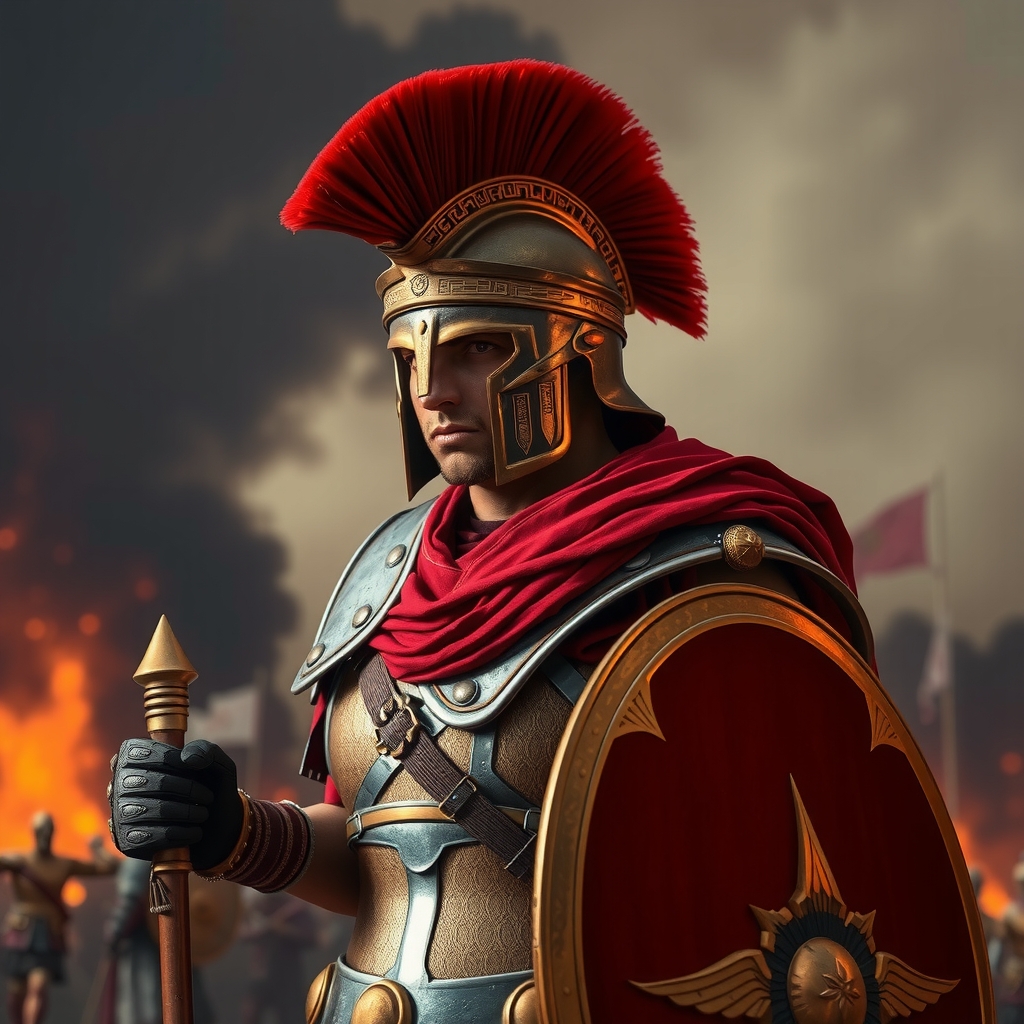
Unlike the Greek Ares — sneered at even by his divine peers — Mars was among the most revered deities in the Roman pantheon, second only to Jupiter himself. He was the divine father of Romulus and Remus, the ancestral patron of the Roman people, the guardian of agriculture and the boundaries that defined civilization from wilderness.
The month of March bears his name, and it was in March that Roman armies traditionally opened their campaign season, sacrificing to Mars Gradivus — the Strider — before marching beyond the sacred boundary of Rome. His priests, the Salii, danced through the city in archaic armor, singing hymns whose words even they could no longer fully translate, so ancient was the cult.
Mars was not only destruction. He was the disciplined, ordered force that brought enemies to heel and kept the Pax Romana — the Roman peace — secured across three continents. His Campus Martius, the Field of Mars, became the training ground of legions and the site of the city's greatest monuments.
"For these I set no limits, world or time, but make the gift of empire without end." — Jupiter to Venus, Aeneid I (Virgil)
Romulus & Remus
Of all Rome's founding myths, none is more primal than the tale of twin brothers nursed by a she-wolf on the banks of the Tiber. Born of the war god Mars and a Vestal Virgin named Rhea Silvia, the twins were cast into the river by the usurper Amulius — and survived by divine will.
The dominant twin, Romulus drew the auspices of the gods — twelve vultures to Remus's six — and founded the city upon the Palatine Hill in 753 BCE. In a fit of rage or divine compulsion, he slew his brother when Remus mocked the new walls by leaping over them. Romulus became Rome's first king and, in legend, was swept up into the heavens to become the god Quirinus — deified founder of the eternal city.
The tragic twin, Remus represents the city's shadow — the alternative Rome that might have been, built upon the Aventine Hill. His death by his brother's hand at the very walls he mocked became a foundational trauma, an original violence that Romans acknowledged shaped their history of civil war and political murder. Some ancient sources suggest Remus was killed not by Romulus himself but by a loyal lieutenant — a telling ambiguity.
The she-wolf who suckled the infants, the Lupa Capitolina, became the supreme symbol of Rome — fierce, maternal, and sovereign. Her bronze image survives still in the Capitoline Museums, a direct connection to the oldest layers of Roman self-understanding.
The Aeneid & Epic Tradition
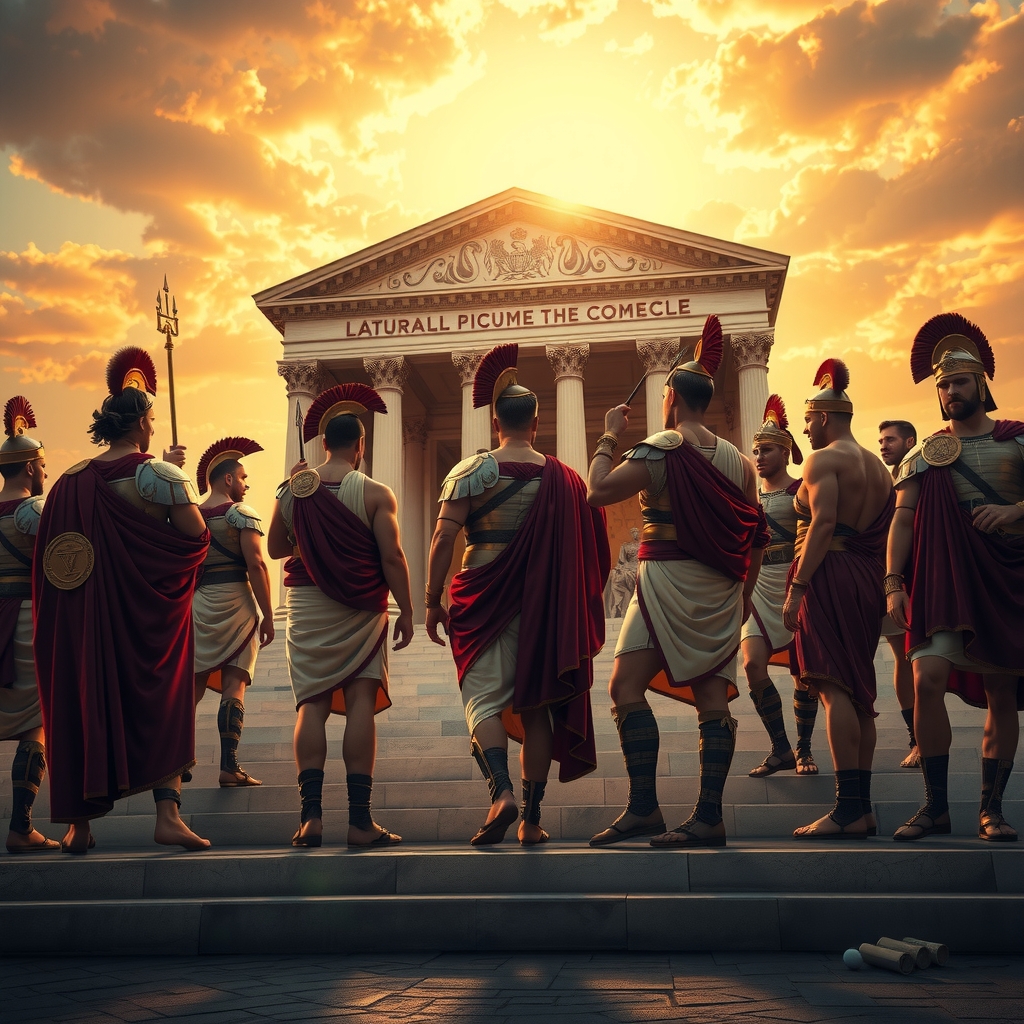
Commissioned by Augustus at the height of Rome's power and written by Publius Vergilius Maro — Virgil — between 29 and 19 BCE, the Aeneid is the defining text of Roman mythology. It answers Homer's epics with a Roman voice, tracing the journey of the Trojan hero Aeneas from the burning ruins of Troy to the shores of Latium, where destiny demanded he found the lineage that would become Rome.
"I sing of arms and the man, who first from the shores of Troy came fated an exile to Italy and the Lavinian coast." — Virgil, Aeneid I.1 (trans. Fairclough)
Aeneas embodies pietas — the supreme Roman virtue of duty to gods, family, and state. He carries his aged father Anchises on his back from the flames of Troy; he obeys divine command even when it sunders his heart. His love affair with Dido, Queen of Carthage, and his tragic abandonment of her to fulfill destiny became one of antiquity's most devastating love stories.
The epic tradition Virgil established was continued by Ovid's Metamorphoses — fifteen books of transformations that encoded the entire mythological inheritance of Rome in dazzling verse — and Ovid's Fasti, which traced the sacred calendar of Roman religion month by month. Together, these texts preserved the divine imagination of Rome across two millennia.
Explore Roman Myth in Motion
We are curating video content on Roman mythology for this page. In the meantime, visit our dedicated videos library for documentary features and myth explainers across all traditions.
✦ Visit the Mythality Video Library
Explore More Mythologies

Rome shared the ancient world with civilizations whose gods were equally magnificent. Follow the myths across cultures and discover the threads that bind all human storytelling.