Mythality · Slavic Mythology
Perun, Baba Yaga & the Ancient Slavic Gods
Deep in the forest where the old gods still walk — thunder rolls across the sky, a hut turns on its chicken legs, and a firebird sets the dark ablaze.
The Gods of the East
The Slavic Pantheon
Before Christianity swept through Eastern Europe, Slavic peoples — from the steppes of Russia to the coasts of Poland — honoured a vivid array of deities, spirits, and supernatural forces. Unlike the neatly catalogued pantheons of Japan or ancient Mesopotamia, Slavic mythology survived largely through oral tradition, folk custom, and the testimony of medieval chroniclers who often wrote with disapproving pens. What endures is wild, contradictory, and utterly compelling.
Perun
God of thunder, sky, and war. The supreme deity among the Eastern Slavs, wielder of the sacred axe and eternal enemy of Veles.
Veles
God of the underworld, cattle, wealth, and magic. A shapeshifting trickster who challenges the cosmic order from below.
Mokosh
The great mother goddess — weaver of fate, protector of women, keeper of the earth's fertility and the threads of destiny.
Svarog
God of celestial fire and the forge. Father of Dazbog (sun) and Svarogich (fire), patron of craftsmanship and sacred flame.
Dazbog
The sun god and giver of prosperity. His name — "Give, God" — speaks to his role as benefactor of humanity's daily blessing.
Marzanna
Goddess of death, winter, and nightmares. Each spring, her effigy was burned or drowned — a ritual re-enactment of winter's end.
The Great Conflict
Perun vs Veles — Heaven Against the Deep
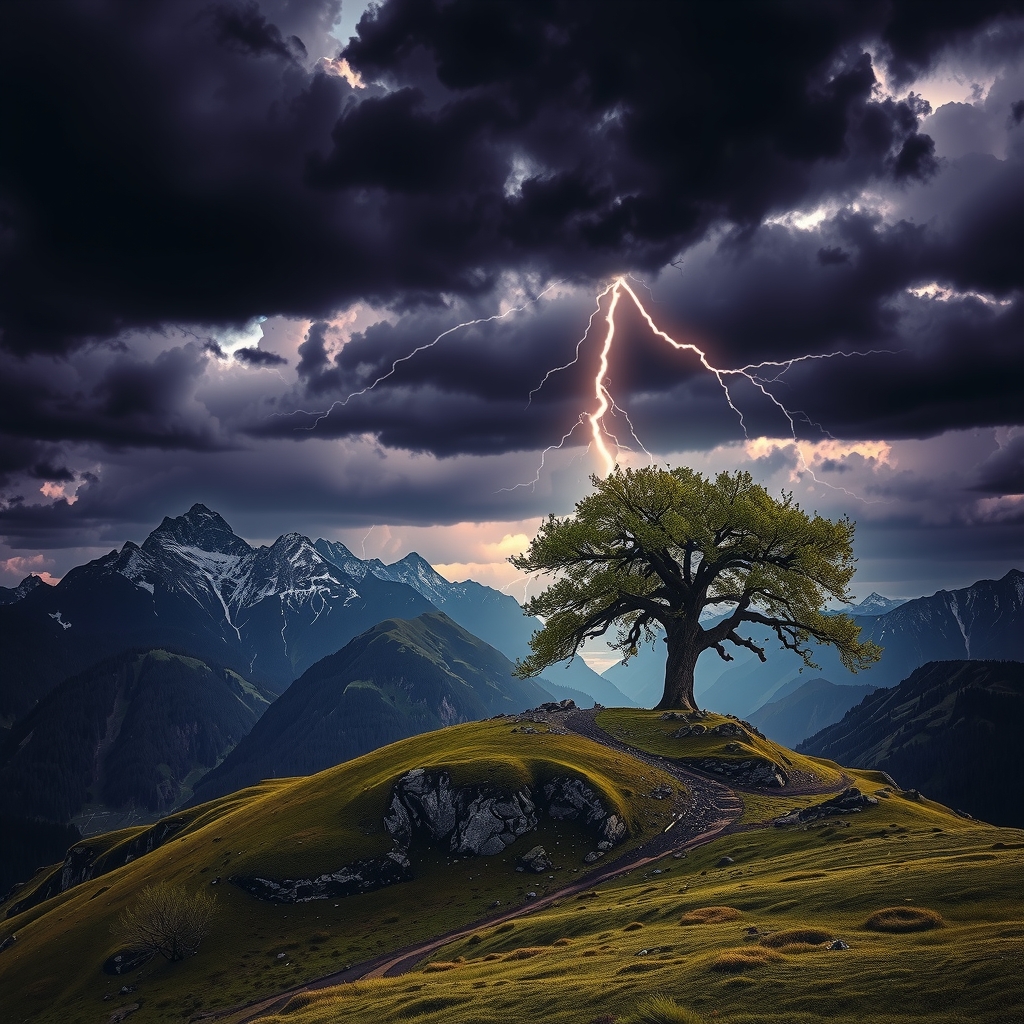
At the heart of Slavic cosmology burns one central myth: the eternal battle between Perun, lord of sky and storm, and Veles, god of the underworld and wild. It is not merely a story of good versus evil — Veles is cunning rather than cruel, a necessary force of chaos against Perun's thundering order.
Veles steals Perun's cattle, children, or wife, retreating underground or disguising himself as a serpent at the roots of the World Tree. Perun descends in fury, lightning blazing, pursuing his rival across sky and earth. When his axe strikes, rain falls and crops grow — cosmic violence becomes agricultural blessing.
⚡ The Sacred Axe
Bronze axe-amulets (Perun's axes) were worn by Slavic warriors and found in graves. Each lightning-split oak was considered Perun's mark upon the earth — sacred, never to be used for firewood.
🐍 Veles the Shapeshifter
Veles could appear as a serpent, a bear, an old man, or a merchant. He governs the boundary between the living and the dead, and his realm lies beneath the cosmic world tree's roots.
This conflict echoes similar divine rivalries found across world mythology — compare it with Ogun's fierce energy in West Africa or the celestial battles in Japanese myth. But Perun and Veles remain uniquely Slavic: their battle is a weather report as much as a theology.
The Forest & Its Keepers
Baba Yaga & the Spirits of the Wild
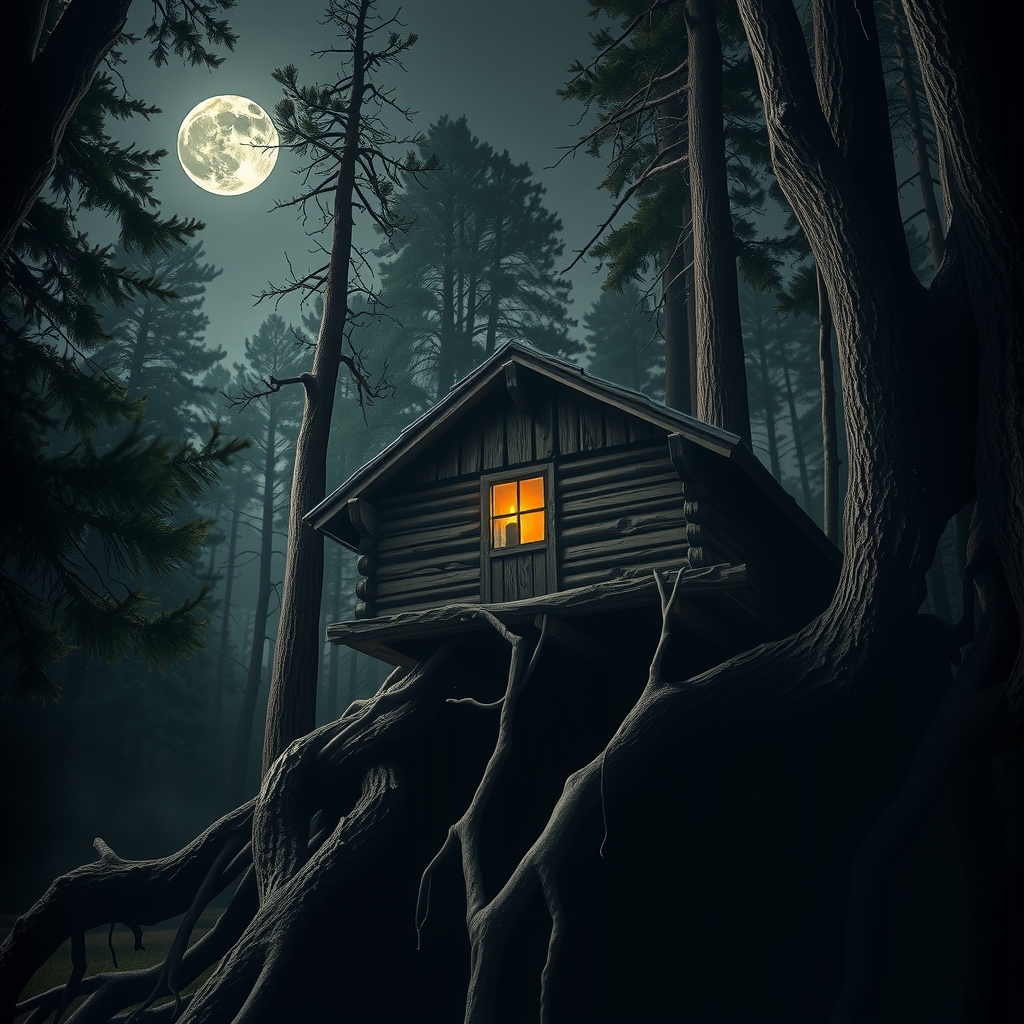
No figure in Slavic folklore haunts the imagination like Baba Yaga — the ancient crone who lives in a hut that spins on chicken legs, deep in the birch forests where the living are not meant to stray. She is neither simply villain nor helper; she is the forest itself given human form, a guardian of the threshold between worlds.
Heroes who reach her must answer her riddles, complete her tasks, or be eaten. She bathes, feeds, and houses them — then tests their worthiness. Those who pass receive her gift: directions, magical objects, or the knowledge needed to survive. She embodies the terrifying generosity of the natural world.
- 🌲Leshy — the forest master, lord of the woods who leads travellers astray, protects wild animals, and can shrink or grow to match the trees around him.
- 💧Rusalka — spirits of young women who died untimely deaths, inhabiting rivers and lakes, beautiful and dangerous to men who stray near the water's edge.
- 🌾Kikimora — a household spirit turned malevolent, tangling spinning thread, plaguing sleepers with nightmares, punishing slovenly housekeeping.
- 🌊Vodyanoy — the water spirit, an old man covered in algae who dragged the unwary beneath the river surface to serve him in his underwater realm.
These spirits weren't merely superstition — they encoded ecological knowledge: stay away from deep water at dusk, respect the forest, keep your household in order. Mythology as survival guide.
Legends of Light & Longing
The Firebird
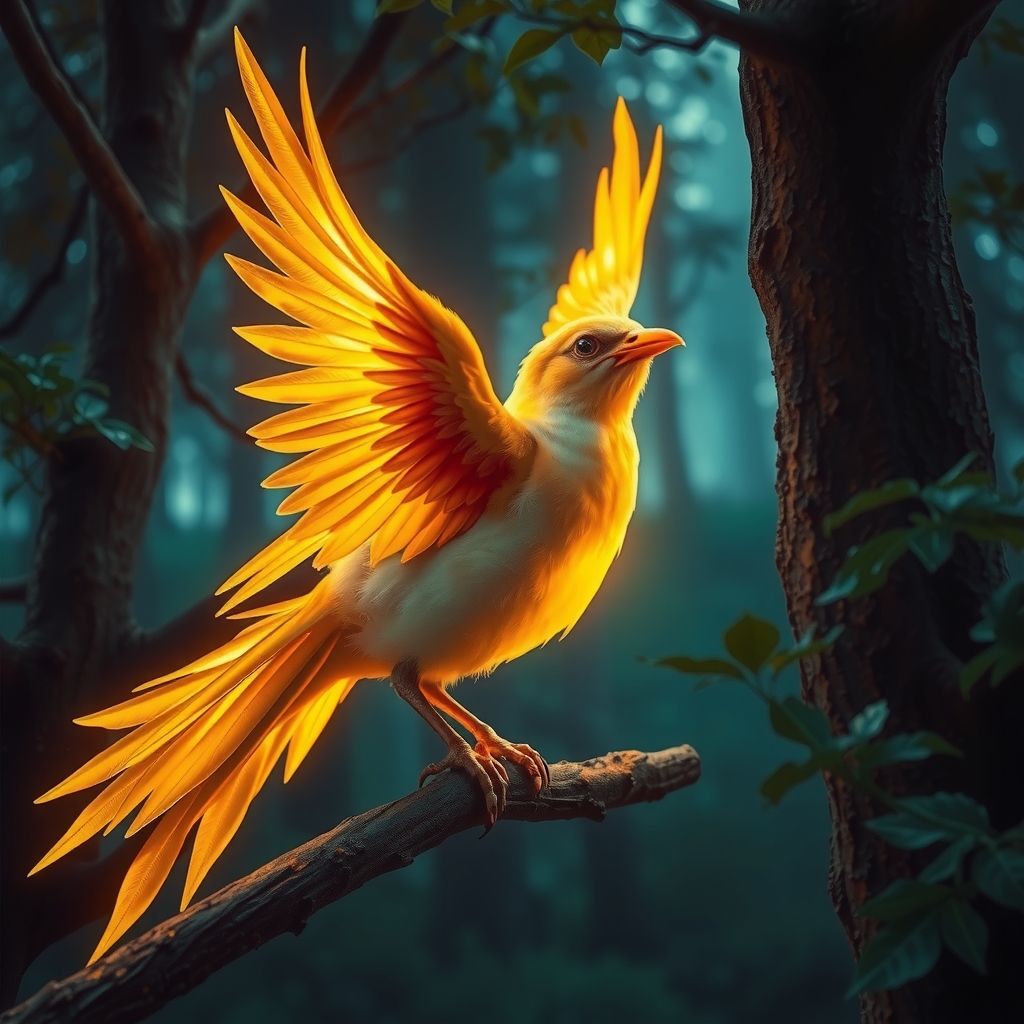
The Zhar-Ptitsa — the Firebird — is one of Slavic mythology's most luminous symbols. A creature of impossible beauty, its feathers glow like living coals; even a single fallen plume lights a room. It appears most often as the object of a quest, a thing so radiant and elusive that pursuing it sets a hero's entire destiny in motion.
In the most famous tales, a young prince — often the overlooked youngest son — is tasked by his father with capturing the bird that has been stealing golden apples from the royal garden. The Firebird leads him through a succession of trials: he wins a magical horse, outwits kingdoms, and ultimately earns both the bird and a bride. The quest is never truly about the bird; it is about becoming worthy of wonder.
Igor Stravinsky immortalised the Firebird in his 1910 ballet, ensuring the myth's global reach — but Slavic storytellers had been passing the tale around winter fires for centuries before any composer set it to strings.
The Firebird shares the phoenix symbolism found across world mythologies — compare the solar bird imagery in Andean cosmology or the radiant creatures of African mythological tradition. Yet the Slavic Firebird is distinctly ambiguous: beautiful, dangerous, and impossible to truly possess.
Sacred Domestic Life
Domovoi & the Spirits of the Hearth
Slavic spiritual life was not confined to great temples or mountain peaks. The home itself was a sacred space, inhabited by spirits who required respect, offerings, and careful attention. The most important was the Domovoi — a small, hairy ancestor-spirit who lived behind the hearth or beneath the threshold and served as the household's invisible guardian.
Domovoi
The benevolent house spirit. Left bread and salt by the hearth, he kept the family safe. Ignored or disrespected, he turned mischievous.
Dvorovoi
Spirit of the courtyard and outbuildings. He watched over livestock — a displeased Dvorovoi could cause animals to sicken or stray.
Ovinnik
Guardian of the threshing barn, prone to dangerous moods. Farmers left offerings at harvest to keep him from burning the grain stores.
Bannik
The bathhouse spirit, most dangerous at night. The bathhouse was used for divination and childbirth — liminal, powerful, perilous.
This intimate mythology of household spirits finds parallels in traditions worldwide — the ancestral spirits of First Nations peoples, the household kami in Japanese belief, or the protective spirits in African cosmology. Everywhere, the threshold between human and spirit world runs through the home.
The Shape of the World
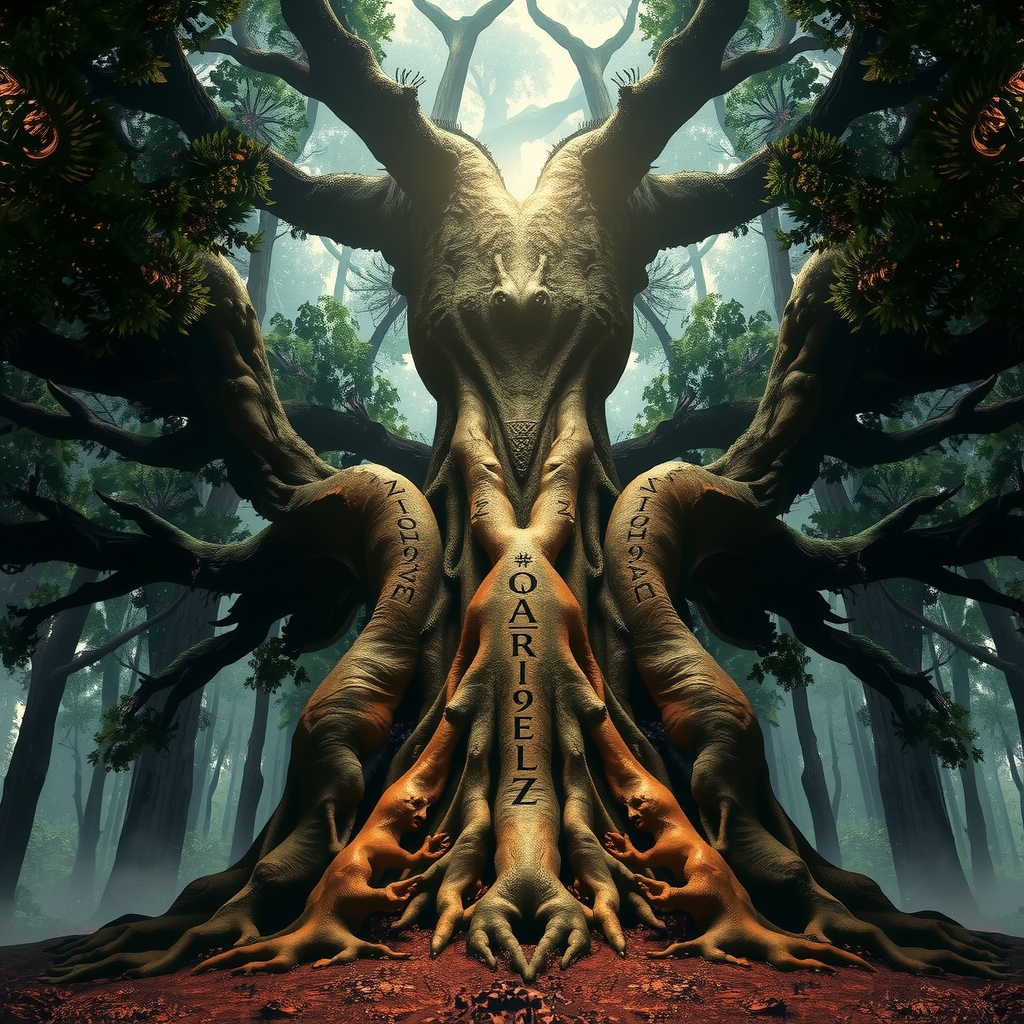
Slavic Cosmology — The World Tree & the Three Realms
Slavic cosmology centres on a great World Tree — an oak, birch, or sometimes an island-rooted pine called Buyan — whose roots touch the underworld, whose trunk spans the mortal earth, and whose crown reaches the sky realm of the gods. Everything in existence has its place along this vertical axis.
The realm of the dead, located beneath the World Tree's roots. Ruled by Veles, it is not a place of punishment but of transition — the dead rest here, waiting in the half-light.
The manifest, living world — the realm of humanity, animals, and daily existence. Mortal life in all its beauty and brevity.
The realm of divine truth and law, where Perun and the high gods reside. The source of cosmic order, unreachable except in death or through shamanic trance.
This three-realm structure echoes cosmologies found across the ancient world. Compare the Inca three-world vertical axis — Hanan Pacha, Kay Pacha, and Uku Pacha — or the layered worlds in Sumerian mythology. Humans have always imagined the cosmos as a vertical story, with themselves at the middle.
The island of Buyan, sometimes located where three seas meet, serves as a kind of cosmic storage room — the source of winds, the resting place of the sun at night, and the hiding place of Koschei the Deathless's soul, locked inside an egg, inside a duck, inside a chest, buried beneath an oak on the island's shore.
Keep Exploring
The World is Full of Ancient Gods
Slavic mythology is one thread in a vast global tapestry of divine stories. Follow the myths wherever they lead you — across oceans, deserts, forests, and the peaks of sacred mountains.
Explore African Mythology