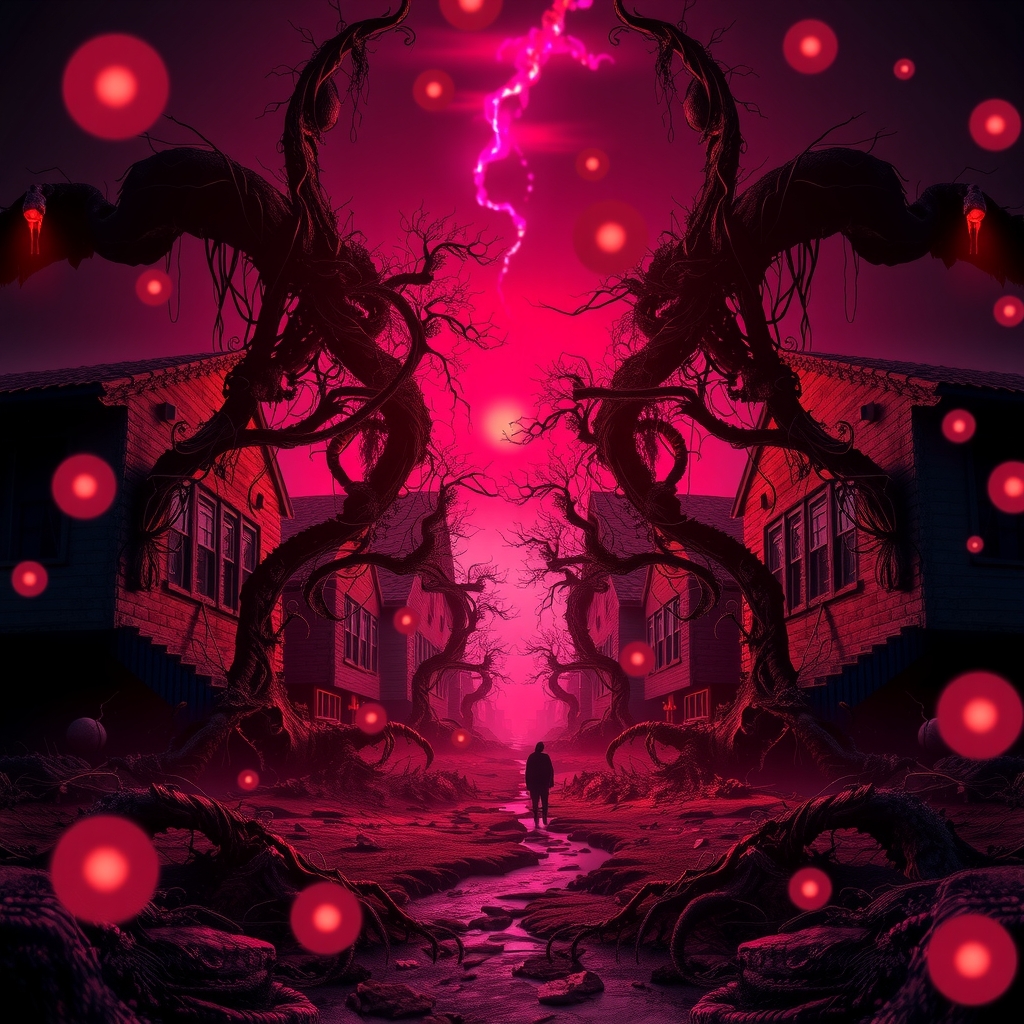
The Upside Down Awaits
Enter the dark mirror of our world — a dimension governed by a parasitic hive mind, populated by creatures older than human memory, and shaped by a villain who rewrote the rules of power. This is the mythology of Stranger Things.
The Upside Down — A Dark Mirror World
The Upside Down is a parallel dimension existing in a superimposed state with our own — a decayed, frozen echo of Hawkins, Indiana, preserved at the moment of its corruption. Its sky bleeds red. Ash-like spores drift in poisoned air. Bioluminescent tendrils colonise every surface like a planetary nervous system made visible.
Unlike most fictional underworlds, the Upside Down is not a place the dead go — it is a place the living are taken. It is defined not by absence but by infestation: an entire dimension colonised by the consciousness of a single, vast entity. Think of it as a world where the ecosystem serves one mind.
The gate between worlds was first torn open in 1983 at Hawkins National Laboratory, when Dr. Martin Brenner's experiments with sensory deprivation and the psychic abilities of Eleven inadvertently breached the dimensional membrane. That act of scientific hubris mirrors the oldest of mythological warnings: some doors, once opened, cannot be closed.
The Hive Mind — The Mind Flayer & Its Web
The Mind Flayer — named by the children of Hawkins after the Dungeons & Dragons monster — is more accurately described as a Shadow Entity: a vast, primordial intelligence that predates human civilisation in the Upside Down. It does not simply command creatures. It absorbs them. Every organism it infects becomes a neuron in its distributed mind.
The biological mechanics are remarkable in their mythology-making precision. The Mind Flayer spreads through spores, vines, and direct neural invasion. Its thralls retain their personalities until the infection reaches a critical threshold — then they become extensions of the whole. This is not mere possession; it is erasure of self through biological communion.
Compare this to the Norse concept of Yggdrasil — the world tree whose roots connect all nine realms into one living system. The Mind Flayer's vine network is a dark inversion: not a tree of life binding worlds together, but a web of domination spreading entropy in every direction.
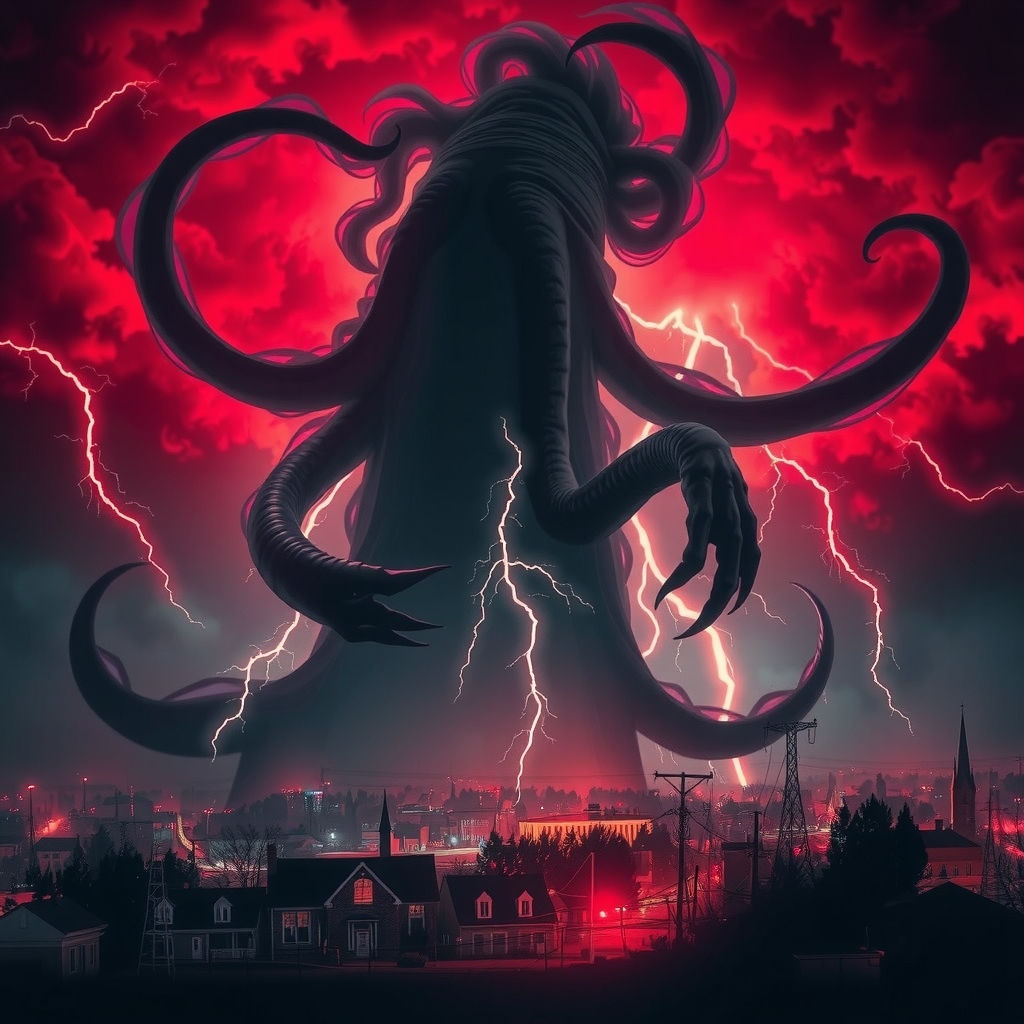
"It's like a spider at the centre of a web — but the web is made of living things."
Monsters of the Upside Down
Each creature in the Upside Down occupies a specific ecological role within the Mind Flayer's hierarchy — from apex predators to spore-spreading drones. Compare them with the great beasts of ancient mythology.
A bipedal humanoid monster with a flower-like, petal-mouthed head containing rows of teeth. Drawn to blood, it hunts alone — a lone apex predator in the early seasons. Named for the fearsome demon of Dungeons & Dragons mythology, itself derived from ancient demonological traditions. Its sensory organs appear vestigial, suggesting it hunts through electromagnetic or chemical signals rather than sight. Like the Minotaur, it stalks a labyrinthine domain and demands sacrifice.
Quadrupedal creatures representing the juvenile or secondary form of the Demogorgon species. Pack hunters operating in swarms under the Mind Flayer's direct command — they lose individual will almost entirely. Their lifecycle resembles eusocial insects: they exist to serve the hive, incapable of defection. The Duffer Brothers drew on concepts of parasitic body horror reminiscent of John Carpenter's The Thing.
Beneath the Upside Down's surface runs a vast tunnel network lined with bioluminescent organic matter — effectively the nervous system of the Mind Flayer made architectural. The tunnels permit rapid communication and resource transport across the dimension. Will Byers described experiencing them from the inside: an overwhelming, claustrophobic dissolution of self into the network. They parallel the underground root systems of Yggdrasil and the subterranean rivers of Greek Tartarus.
Human beings infected and consumed by the Mind Flayer in Season 3 — physically dissolved and amalgamated into a single monstrous biological weapon: the Spider Monster. The Flayed represent the Mind Flayer's attempt to build a physical avatar in the human world. Their dissolution into a single body is one of the show's most visceral pieces of body horror, echoing the Egyptian myth of Osiris dismembered and reconstituted — but without the resurrection.
Winged creatures introduced in Season 4, guarding Vecna and operating as mobile extensions of the hive mind across the vast airspace of the Upside Down. Their anatomy combines bat-like wings with the signature petal-mouth of the Demogorgon lineage. They mirror the psychopomp creatures of mythology — winged intermediaries between realms — though rather than guiding souls, they harvest them. Compare the ravens of Odin, scouts carrying intelligence to the chief mind.
When the Mind Flayer manifests physically in the human world, it does so through assembled matter — flesh, metal, chemical composites. Its storm-cloud form in the Upside Down is hundreds of feet tall: a vast shadow. The Shadow Monster of Season 2 is among the most visually striking creations in modern fantasy television — a being of pure, distributed will given temporary physical shape. It shares DNA with the Kraken and Fenrir in scale and cosmic threat.
Characters With Powers
Hawkins Laboratory's MKUltra-adjacent program subjected children to extreme sensory deprivation and trauma to cultivate psychic abilities — particularly telekinesis and remote viewing. These abilities mirror the shamanic traditions found across First Nations cultures, where vision-questing through isolation and endurance opened access to hidden realities.
Eleven (Jane Hopper) is the most powerful known psychic. Her abilities emerged from her mother's exposure to experimental psychedelics during pregnancy and were subsequently developed — or rather, weaponised — through years of laboratory conditioning. The Duffer Brothers have stated that her powers are bound to her emotional state: trauma suppresses them; love and rage amplify them.
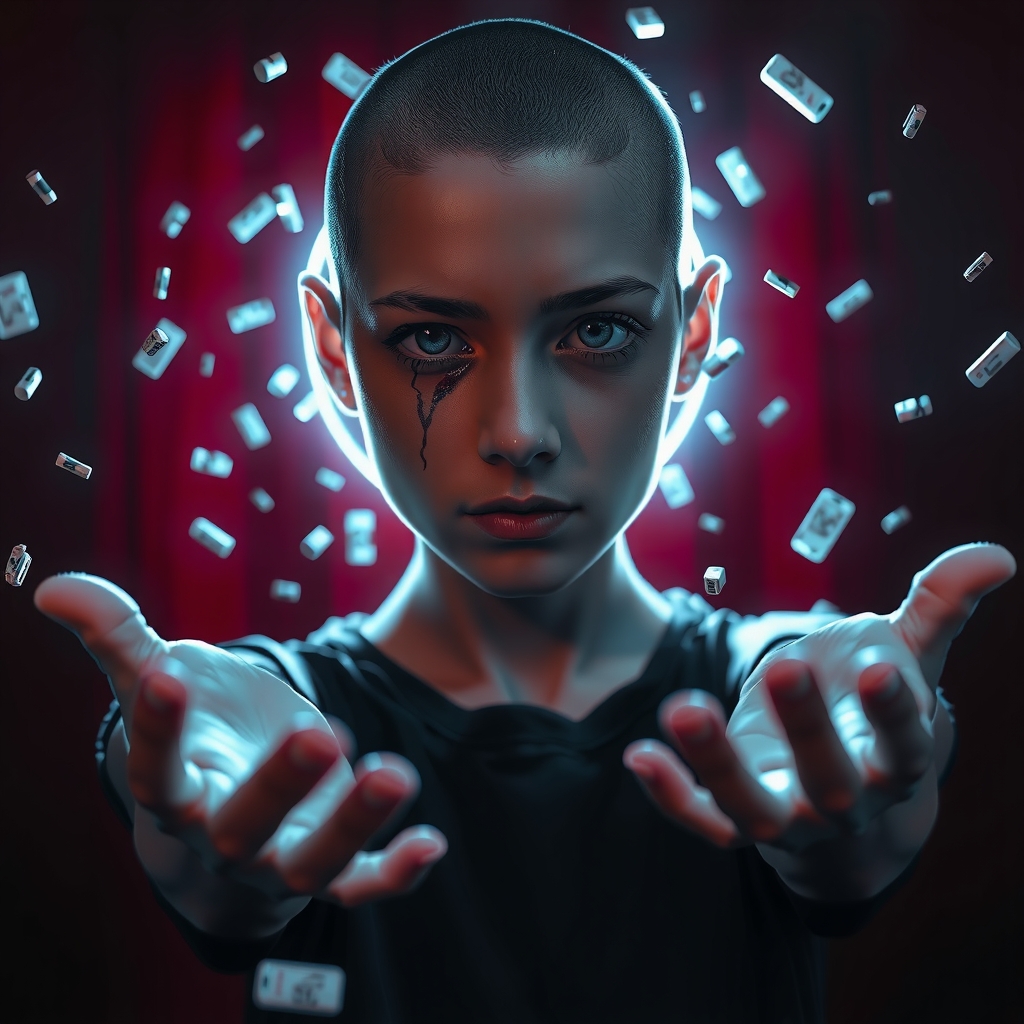
The Origins of Vecna
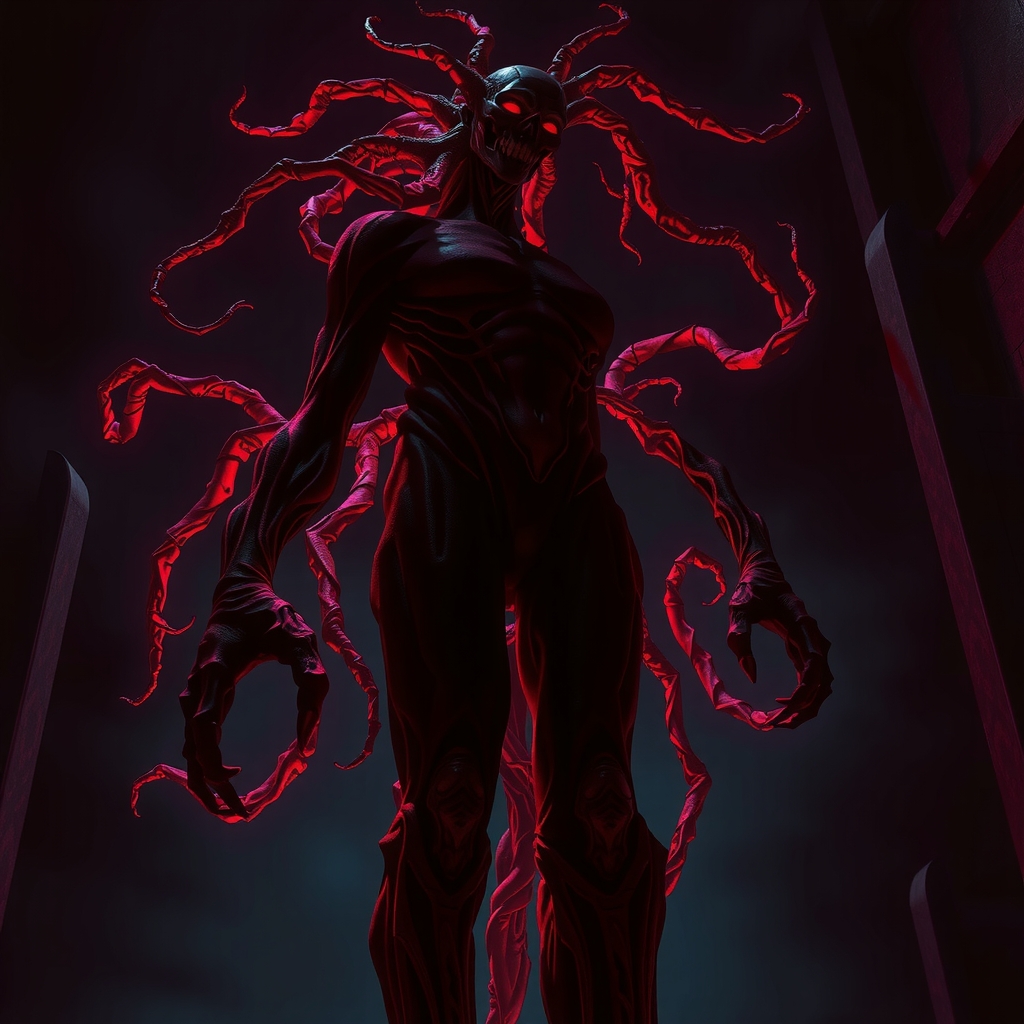
Henry Creel was born with extraordinary psychic abilities and an instinctive ability to perceive the hidden connections between all living things. As a child in the 1950s, he was drawn to the Upside Down's vine network — not as a victim, but as a fellow consciousness who felt kinship with the hive.
He murdered his family. He became Subject 001 — the original. Eleven defeated and banished him through the gate in 1979, where the Mind Flayer's environment transformed him into Vecna: a humanoid body colonised and restructured by the Upside Down's biology, preserved by it, granted terrible new power by its ancient intelligence.
Vecna is not simply a villain — he is the bridge between human psychology and cosmic horror. He experienced the Upside Down not as an invader but as a homecoming. He became Vecna by choosing to become the Mind Flayer's general: a human being who traded humanity for dominion. This mirrors the archetype of the trickster-turned-adversary — Loki's transformation from ambiguous agent to cosmic enemy — and the descent mythologies of Inanna and Odysseus, where the underworld reshapes those who enter it.
Named for the Dungeons & Dragons arch-lich — itself drawn from horror archetypes of the undying sorcerer — Vecna's mythology is ultimately about what happens when the will to power overcomes every other instinct. He is the show's Satan: a being of immense original gift, corrupted by contempt for lesser minds.
Mythological Parallels — Real Myths Behind the Show
The Duffer Brothers drew from a deep well of ancient mythology, horror literature, and Jungian psychology. These parallels are not accidental — they are structural.
The Upside Down echoes Hades — a realm of the dead (or near-dead) mirroring the living world. Will Byers' abduction parallels Persephone's seizure: an innocent taken below, marking the boundary world with grief. His return, like hers, is partial — he carries the underworld inside him. See Odysseus's katabasis and Osiris's resurrection for direct structural parallels.
Norse Niflheim — the cold, dark realm of the dishonoured dead — maps closely onto the Upside Down: a parallel world of decay, cold, and forgotten things. The Mind Flayer's dominion echoes Hel's passive sovereignty over a realm of entropy. The vine-web mirrors Yggdrasil's root system, reversed: not life but stasis.
Inanna's descent into the underworld — where she is stripped of power at each gate — mirrors Eleven's progressive loss and recovery of her abilities across the seasons. The Upside Down's gates are its own version of Ereshkigal's seven gates: each a threshold demanding sacrifice from anyone who passes through.
Celtic mythology's Otherworld exists alongside the living world — accessible through mounds, lakes, and liminal spaces — populated by beings of immense, alien power. The thin places where Upside Down bleeds through (the gate, the shadow realm Will visits) are direct structural heirs of the Irish concept of portal sites.
The Egyptian Duat was not a destination but a process: a transformative journey the soul undergoes between death and judgement. The Upside Down similarly transforms those who enter it — Will, Eleven, Vecna himself. No one who touches it remains unchanged. The Duat had monsters too; the Ammit waited for the failed souls.
Veles, the Slavic god of the underworld and cattle, ruled a realm beneath the roots of the World Tree — a place of moisture, shadow, and transformation. His conflict with sky-god Perun mirrors the struggle between Vecna and Eleven: the being of darkness beneath, the being of light above, locked in permanent cosmic opposition across the boundary of worlds.
Timeline of the Upside Down
Henry Creel manifests psychic abilities in childhood, sensing the Upside Down's vine network. He perceives it not as threat but as kin — a vast consciousness that mirrors his own contempt for humanity.
Henry uses psychic ability to murder his family. Discovered by Brenner, he is recruited into the Hawkins Lab program as Subject 001 — predating all other numbered subjects.
Brenner's program produces a cohort of psychic children. Henry (001) is kept secret. Eleven (011) is born from Terry Ives — the most powerful subject yet produced, and the only one capable of matching 001.
Henry murders the lab's children. Eleven defeats him, sending him through the first gate she tears in spacetime. He is transformed by the Upside Down into Vecna. The dimension awakens to his presence.
A Demogorgon follows Eleven's tear into the human world. Will Byers is abducted into the Upside Down. Eleven escapes Hawkins Lab and meets Mike Wheeler. The series begins.
The Mind Flayer uses Will as a host to observe the human world, planting a shadow-tendril in his mind. The tunnel network beneath Hawkins is revealed. Eleven closes the gate — temporarily.
The Mind Flayer creates a physical avatar from the Flayed. A Soviet facility beneath Starcourt Mall attempts to force-open a new gate. The gate is closed, Hopper is lost, and Eleven loses her powers.
Vecna opens four gates through Hawkins using psychic murder as a ritual mechanism. The Upside Down fully invades the physical world. Eleven's powers are restored through recovered memory. The battle for Hawkins reaches its climax — but the gate does not fully close.
Stranger Things in Motion
Explore key scenes, power demonstrations, and monster lore through these short clips.
Explore More Mythologies
The Upside Down draws from the oldest imaginative wells in human history. Dive deeper into the real mythologies that shaped these stories — from Norse underworlds to Greek descents, Egyptian afterlives to Celtic Otherworlds.