Mythality · Ancient Mesopotamia
Sumerian Mythology
The First Stories
Ever Told
Before Greece, before Rome — in the river valleys of Sumer, humanity first pressed its dreams into clay. Meet Enki, Inanna, and the gods who made the world.
The Sumerian Pantheon
The Anunnaki — "those of royal blood" — were the great gods who shaped sky, earth, and the fate of humankind
The sky itself, father of the gods, whose very name meant "sky" in Sumerian. An sat atop the divine hierarchy, though he seldom intervened directly in mortal affairs.
Storm-god and king of the gods in practice. Enlil held the Tablet of Destinies — the divine ledger that determined the fate of gods and mortals alike. Capricious and powerful.
The cleverest of all gods, lord of the abzu (the primordial freshwater ocean beneath the earth). Enki was humanity's great champion — crafty, creative, and compassionate.
The most complex deity in Sumerian mythology — goddess of love, beauty, sex, war, and justice simultaneously. Inanna defied even death itself on her famous descent.
The moon god who sailed a golden crescent boat across the night sky. Nanna governed time, the calendar, and the monthly rhythms that organized Sumerian life and agriculture.
The all-seeing sun who traversed the heavens daily, Utu was the deity of justice and truth. He heard the prayers of the oppressed and guided heroes including Gilgamesh.
Enuma Elish
The Creation Epic
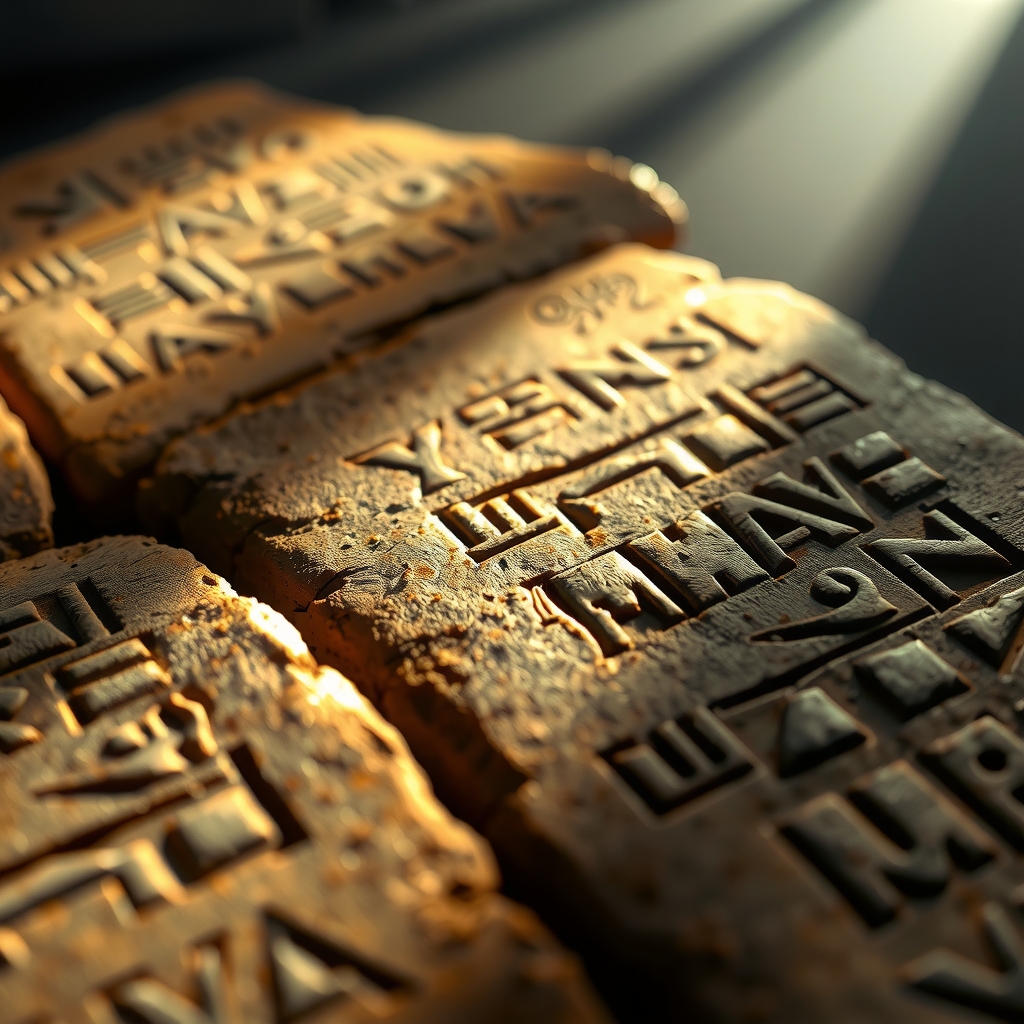
Inscribed on seven clay tablets around 1100 BCE but preserving far older Sumerian traditions, the Enuma Elish — "When on high" — is the oldest creation story ever recorded.
In the beginning, Apsu (fresh water) and Tiamat (salt water) mingled in a primordial chaos. From their union, the first gods were born — but their noise and energy disturbed the ancient waters. Apsu plotted to destroy his own offspring.
The wise Enki forestalled Apsu's plan, casting him into a magical sleep and slaying him. Tiamat, enraged, assembled an army of monsters to avenge her husband. The younger gods were terrified — all except Marduk, the storm champion.
Marduk slew Tiamat, split her body in two, and used her corpse to construct the heavens and the earth. Her eyes became the sources of the Tigris and Euphrates rivers. Her tail became the Milky Way. From her blood and the bones of her slain general Kingu, humanity was fashioned — created to serve the gods and relieve them of labor.
Compare this to creation myths from Japanese mythology, where Izanagi and Izanami similarly stir the primordial waters to form the islands of existence.
Inanna's Descent
to the Underworld
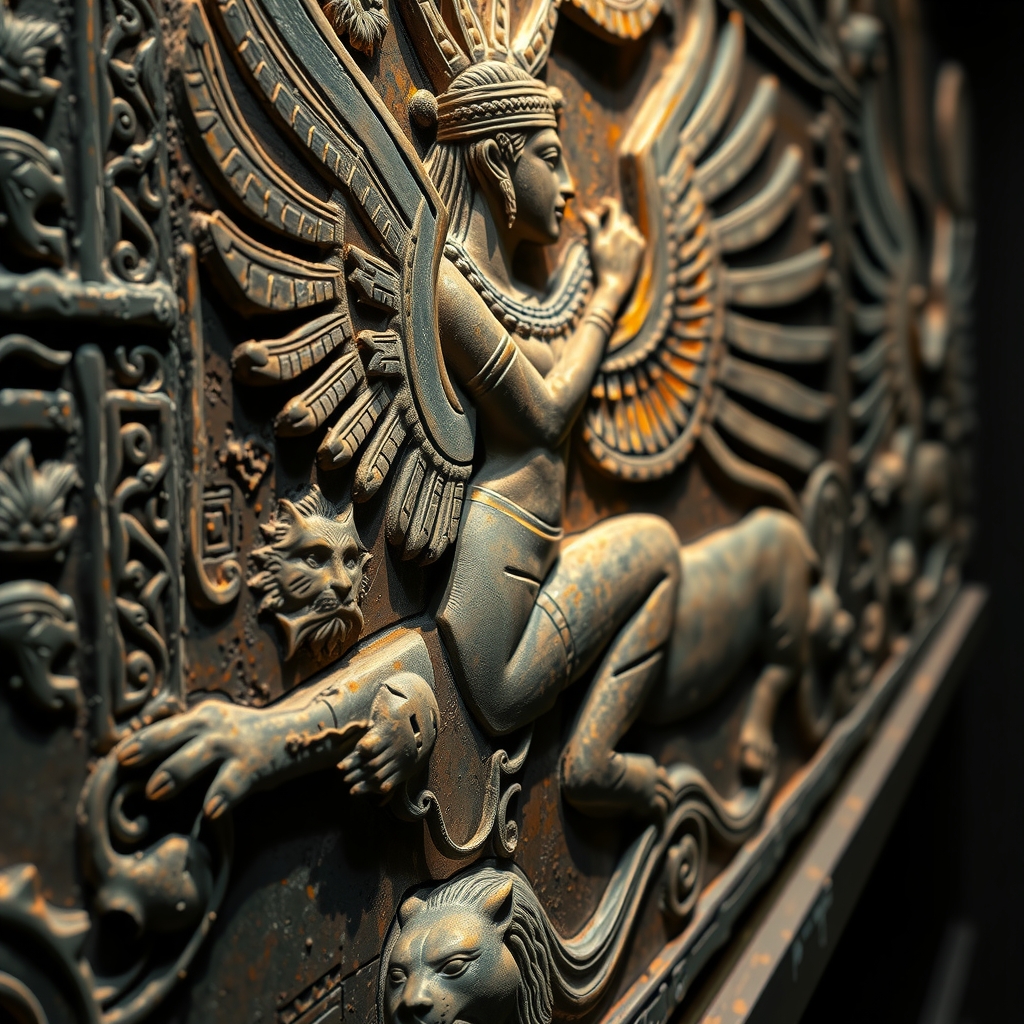
Written around 1900–1600 BCE, this is one of the most psychologically profound myths ever created — the story of the queen of heaven willingly entering death itself.
Inanna descended to the Kur — the realm of her sister Ereshkigal — through seven gates. At each gate, she was stripped of one garment or divine power:
- First Gate: Her crown of the steppe removed
- Second Gate: Her earrings taken
- Third Gate: Her necklace stripped away
- Fourth Gate: Her breastplate of "come, man, come" removed
- Fifth Gate: Her gold ring taken
- Sixth Gate: Her lapis lazuli measuring rod gone
- Seventh Gate: Her royal robe removed — she arrived naked and low
In the underworld, Ereshkigal killed Inanna, hanging her corpse on a hook. Only Enki's intervention — sending creatures to revive her — brought the goddess back. But the laws of the underworld demanded a replacement: her husband Dumuzi descended in her place, spending half each year below. The first myth of seasonal death and renewal.
Enki & Human Creation
While the Enuma Elish credits Marduk with humanity's creation, older Sumerian texts place Enki at the center of this story — working alongside the birth goddess Ninhursag in a tale of wisdom, compassion, and cosmic problem-solving.
The Problem of Labor
The lesser gods — the Igigi — were exhausted from digging rivers, carving canals, and laboring without rest. They went on strike, burning their tools outside Enlil's temple. Something had to give.
The Solution: Humans
Enki proposed creating beings from clay mixed with divine blood — specifically the blood of Kingu, a slain rebel god. These clay-and-blood creatures would take over the labor, freeing the gods.
Ninhursag's Role
The mother goddess Ninhursag (or Ninmah) shaped the first humans from clay, while Enki breathed life and destiny into them. She shaped fourteen figures — seven male, seven female.
The Flawed Humans
In a drunken contest, Enki and Ninhursag challenged each other to shape humans — and created beings with disabilities and imperfections. Enki found a place for every one of them in society, a profound ancient statement on human diversity.
Enki's compassion for humanity echoes through other traditions — compare his role to that of Obatala in Yoruba mythology, another divine sculptor of human beings, or Viracocha of the Inca, who fashioned people from stone at Tiwanaku.

The Great Flood
More than a thousand years before the biblical flood of Noah, Sumerian scribes recorded the story of Ziusudra (later Utnapishtim in the Epic of Gilgamesh) — a pious king warned of a coming deluge by none other than Enki himself.
Enlil, king of the gods, had grown weary of humanity's noise and clamor. He convened the divine assembly and decreed that a great flood would wipe the earth clean. The decision was meant to be secret — but Enki, always humanity's protector, found a way around his oath of silence.
"Dismantle the house, build a boat. Reject possessions, seek life. Spurn property, save living beings. Take aboard the boat all living beings' seed."
— Enki's message to Ziusudra, from the Epic of Gilgamesh (Tablet XI)Enki whispered his warning to a reed wall rather than directly to the human king — a technicality that honored his oath while saving humanity. Ziusudra built a great boat, loaded it with animals and family, and survived the seven-day deluge that erased the rest of civilization.
When the waters receded, Ziusudra released a dove, a swallow, and a raven to test the land. He offered sacrifices that "the gods smelled the sweet fragrance of." Moved, they granted him immortality and settled him at the mouth of the rivers.
The parallel with the later Hebrew flood narrative (and flood myths in First Nations mythology and beyond) illustrates how deeply these Sumerian stories shaped all subsequent storytelling about divine wrath, human survival, and cosmic renewal.
The Legacy of Mesopotamia
Why these oldest of stories still matter — their reach into every mythology that followed
Sumerian religious and mythological traditions span over five millennia, making them the longest-recorded continuous mythology on Earth.
The earliest written version of the Gilgamesh epic dates to around 2100 BCE, predating Homer's Iliad by more than a thousand years.
The Epic of Gilgamesh spans twelve tablets and contains the world's first literary hero, first friendship, first quest for immortality, and first recorded flood myth.
The Clay Still Remembers
These first stories — pressed into soft clay beside ancient rivers — became the template for every myth, every hero, every flood, every descent into darkness that followed. The Sumerians gave the world its storytelling soul.
Explore African Mythology →