Mythality
A serene view of an empty road stretching through a desert at sunset with distant mountains.
Mythality · Galactic Mythology

Star Wars Mythology — The Force, Heroes & Galactic Legends

Star Wars is not merely science fiction. It is one of the most successful mythological systems of the modern age — a deliberate synthesis of ancient hero tales, Eastern philosophy, and the universal story patterns that Joseph Campbell spent his life mapping.

The Mythology of George Lucas — How Campbell's Hero's Journey Shaped Star Wars

George Lucas consciously built Star Wars on Joseph Campbell's The Hero with a Thousand Faces. Before writing the screenplay for A New Hope (1977), Lucas read Campbell's work and used it as a structural blueprint — openly crediting it in later interviews as essential to the film's design.

Campbell's central argument was that all the world's great myths — Greek, Norse, Hindu, Indigenous — share a single deep pattern he called the Monomyth or Hero's Journey: a hero leaves an ordinary world, undergoes trials, receives supernatural aid, and returns transformed. Lucas mapped this pattern onto a galaxy far, far away, and the result resonated with audiences everywhere because the pattern was already familiar to the human nervous system.

"In the 1970s, I was aware of the work of Campbell… I was very much influenced by his ideas."

— George Lucas, speaking about the origins of Star Wars

The two men eventually met through Bill Moyers, and the 1988 PBS documentary The Power of Myth — filmed partly at Skywalker Ranch — became one of the most-watched public television series ever produced. Lucas and Campbell discussed Star Wars explicitly as modern mythology, evidence that the galaxy Lucas created is anchored in traditions as old as the hero's journey across every culture.

Lucas also drew on specific traditions outside Campbell's framework: Akira Kurosawa's samurai films shaped the Jedi aesthetic; Japanese mythology's warrior code of bushido informed Jedi honour; and the Force's dual nature echoes Chinese mythology's foundational concept of yin and yang. Star Wars is mythological borrowing at a planetary scale.

Starry night in Damghan, Iran, capturing the Milky Way in the desert.
The Milky Way — the same sky that inspired myths across every culture, from ancient Mesopotamia to the galaxy Lucas imagined.

The Force — A Cosmic Religion Compared to Real-World Spiritualities

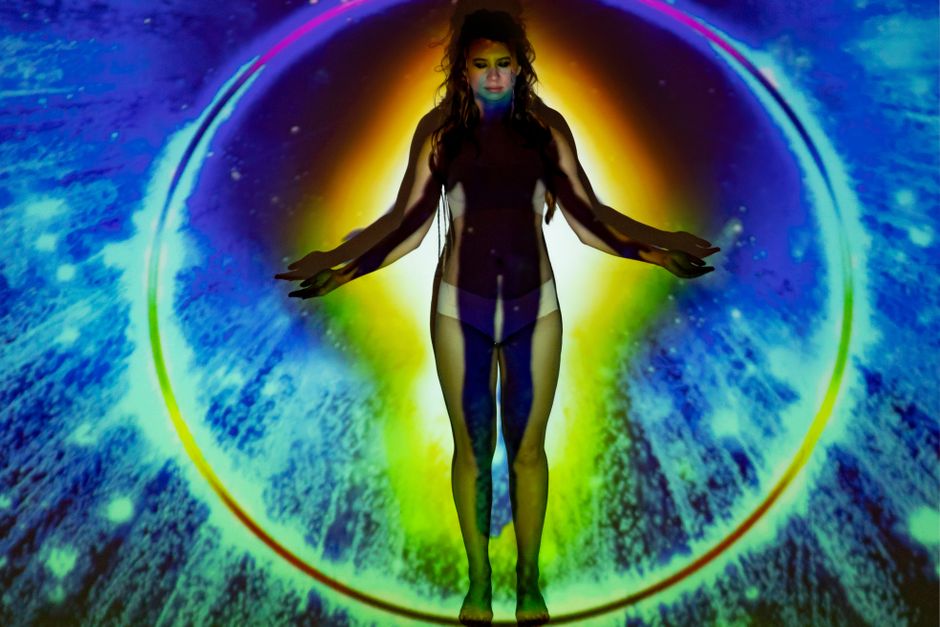
A captivating image of a woman enveloped in vibrant auras, symbolizing spiritual enlightenment and energy.

The Force is a metaphysical energy field that permeates all living things — and it maps closely onto several real-world spiritual traditions, none of them invented for film.

The most obvious parallel is the Taoist concept of Tao ("the Way") — an underlying natural force that flows through all existence and must be aligned with rather than fought against. Just as a Jedi learns to let the Force flow through them, Taoism teaches surrender to the natural current of reality. Lucas has cited Taoism directly when discussing the Force's philosophical origins.

The Force also echoes the Hindu concept of Brahman — the universal consciousness underlying all matter — explored across the Trimurti of Brahma, Vishnu, and Shiva. Midichlorians (the Force's biological mechanism in the prequels) recall the Hindu idea of the divine spark residing within every living being.

The Light Side and Dark Side mirror the Zoroastrian cosmic dualism between Ahura Mazda and Angra Mainyu — an eternal moral binary that also echoes in the Norse struggle between order and chaos preceding Ragnarök. Even the Force ghost tradition — appearing to the living after death — parallels Yoruba ancestor veneration, where the departed remain active presences among the living.

The Hero's Journey — Luke, Rey & the Monomyth

Both Luke Skywalker and Rey Palpatine follow Campbell's monomyth almost stage for stage — but they do so in distinctly different ways that reflect how mythology evolves across generations.

Campbell Stage Luke Skywalker Rey
Ordinary WorldMoisture farm on TatooineScavenging on Jakku
Call to AdventurePrincess Leia's message in R2-D2Finn and BB-8's arrival
Refusal of the Call"I can't get involved — I've got work to do"Initial insistence on returning to Jakku
Meeting the MentorObi-Wan KenobiHan Solo, then Luke
Crossing the ThresholdLeaving Tatooine on the Millennium FalconLeaving Jakku aboard the Falcon
Ordeal / Supreme TestDeath Star trench runConfronting Palpatine on Exegol
Return with ElixirRestoring hope to the RebellionChoosing a new name, honouring legacy

What makes Luke's journey archetypal is its clean linearity — he begins in ignorance and ends in mastery, mirroring heroes from Heracles to Odysseus. Rey's journey is more fractured: her identity is hidden from herself, her lineage is a source of shame, and she must choose who she is rather than discover it — a pattern closer to Rama's trials of righteousness in the Ramayana, where the hero's worth is tested repeatedly by external forces.

Both heroes share the mythological feature of the unknown parentage — a trope found in stories of Moses, Oedipus, Romulus, and Cú Chulainn. The absent or terrible father is the wound that drives the quest.

Archetypes — The Mentor, Trickster, Shadow & Threshold Guardian in Star Wars

Carl Jung identified a set of universal character patterns — archetypes — that appear across every mythology. Star Wars is a catalogue of them. Each major character embodies one cleanly enough to be used in comparative mythology courses.

🧙

The Mentor (Wise Old Man)

Obi-Wan Kenobi and Yoda are the clearest mentor figures in cinema. They parallel Merlin, Chiron (tutor of Achilles), and Odin the wandering sage — an elder who appears at the threshold of the hero's journey, transmits essential knowledge, and then withdraws, often through death.

🦊

The Trickster

Han Solo is the archetypal trickster — the charming outsider who operates by cunning rather than codes, who bends rules yet serves the greater good. He echoes Raven, Anansi, and Loki: agents of chaos who ultimately enable the hero's success.

🌑

The Shadow

Darth Vader is the hero's own shadow made flesh — Luke's potential dark future, the father's corrupted version of what the son might become. Jung's shadow archetype represents the repressed self, and Vader literalises it: he is Luke if Luke had chosen differently.

🚪

The Threshold Guardian

Jabba the Hutt, the Emperor's guards, and even Yoda in his first appearance (where he pretends to be foolish) are threshold guardians — figures who block or test the hero's passage. In Ishtar's Descent and Anubis's Judgment, similar figures stand between the ordinary world and the realm of transformation.

👸

The Herald

Princess Leia is the herald who delivers the call to adventure — a role with precedent in mythology's messenger figures, from Athena's divine interventions to the angels of Abrahamic tradition who appear to set the hero in motion.

🤖

The Shape-shifter

Lando Calrissian, Kylo Ren, and even Anakin himself are shape-shifters — figures whose loyalty and alignment remain ambiguous. The shape-shifter keeps the narrative unstable in exactly the way Veles of Slavic mythology and Loki do in their own traditions.

The Jedi Order — Warrior Monks & Mythological Parallels

The Jedi are warrior monks — and that combination of martial skill with spiritual discipline is one of the most ancient archetypes in world mythology. Lucas didn't invent it; he distilled it.

The closest historical parallel is Japan's samurai, specifically the Zen Buddhist samurai tradition that informed Kurosawa's films. The samurai code of bushido — discipline, honour, service, and acceptance of death — maps directly onto Jedi teachings. The lightsaber is a katana with a glowing blade. The Jedi bowing before a duel mirrors samurai ceremony.

But the Jedi also recall the Knights Templar of medieval Europe — a celibate military order who combined martial force with religious devotion, who held institutional power, and who were eventually destroyed by political betrayal from within (Order 66 is a precise parallel to Philip IV's suppression of the Templars in 1307).

In Indian tradition, the warrior-sage archetype — the kshatriya who is also a spiritual seeker — appears throughout the Mahabharata and the Bhagavad Gita. Arjuna's crisis of conscience on the battlefield — should I fight? — is answered by Krishna in terms that a Jedi Master would recognise: detachment from outcome, fidelity to dharma, and mastery of the self before mastery of the sword.

Group in Star Wars costumes on a blue-lit stage, perfect for film and entertainment concepts.

The Sith — Darkness, Corruption & the Shadow Archetype

A person dressed as a dark fantasy character holding a glowing red lightsaber, captured at night.

The Sith are not simply villains — they represent the mythological archetype of the corrupted hero, the one who chose power over wisdom and became a shadow of what they might have been.

Their philosophy — that passion and power are superior to peace and knowledge — echoes the mythological archetype of the Titan: the powerful being who refuses to accept limits and thereby brings destruction. In Greek mythology, the Titans were the older, more primal order overthrown by the Olympians. The Sith's insistence on their "Rule of Two" and their desire to dominate the galaxy recalls the Titanic ambition of figures like Cronos swallowing his children to preserve power.

Palpatine/Darth Sidious is perhaps the most purely archetypal figure in Star Wars. He is the dark king who rules through deception — an archetype found in Veles of Slavic mythology, in Set's usurpation of Osiris's throne, and in the Norse figure of Loki's final turn toward destruction. The dark king gains power not through strength but through manipulation — and ultimately brings about the very catastrophe he sought to prevent.

Anakin Skywalker's fall is a precise retelling of the hubris narrative familiar from the Trojan War: the hero whose exceptional gifts tip into exceptional pride, whose love becomes possessiveness, and whose desire to save what he loves destroys it.

Creation & Cosmology — The Chosen One Prophecy & Cosmic Balance

The Chosen One prophecy — that a being born of the Force itself will bring balance to the galaxy — is one of the oldest narrative patterns in world mythology: the prophesied hero whose birth unsettles the existing order and whose destiny is written into the cosmos before the story begins.

The closest parallel is the Hindu concept of avatara — the divine descent. In Vishnu's ten avatars, the god enters the mortal world specifically to restore cosmic balance (dharma) when it has been overwhelmed by darkness. Anakin's virgin birth mirrors divine incarnation myths: he has no biological father, his midichlorian count is extraordinarily high, and he arrives at a moment of cosmic crisis. This is the pattern of Krishna, of the Buddha's miraculous birth, of the Egyptian Horus born to restore what Set had broken.

The prophecy's ambiguity — does Anakin bring balance by becoming Darth Vader (destroying most of the Jedi, "balancing" an overpopulated order) or by destroying the Emperor and the Sith at the cost of his own life? — echoes the interpretive complexity found in real prophetic traditions, from Delphi's famously double-edged oracles to the Ragnarök prophecy in Norse cosmology where destruction and renewal are the same event.

The Force as a cosmic ordering principle also parallels Ra's daily solar journey sustaining creation, and the Chinese creation myth of Pangu, whose body became the cosmos itself — a universe that is itself a living, balanced entity that heroes exist to serve.

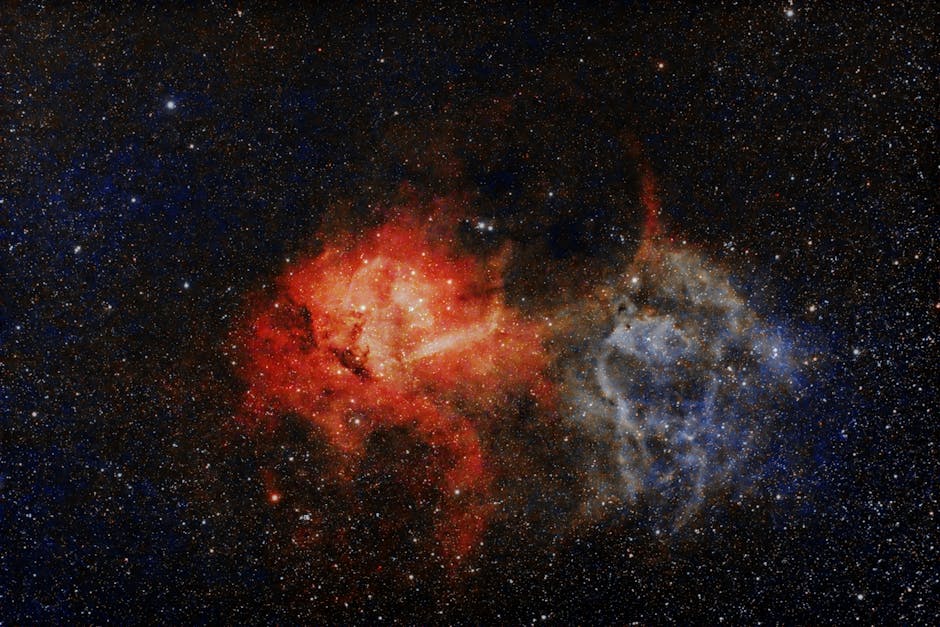
A captivating view of a colorful nebula surrounded by stars in a vast galaxy.

Star Wars in Motion — Video Explorations

Scholars, filmmakers, and storytellers discuss the mythological architecture of Star Wars — swipe to explore.

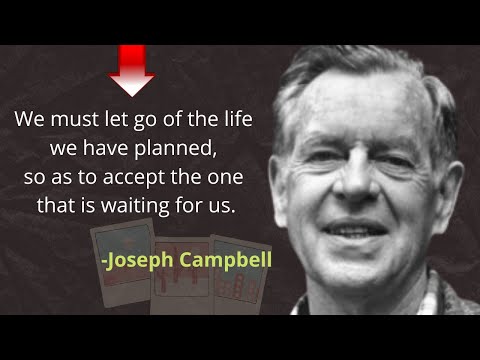
Joseph Campbell hero's journey quotes
Campbell Hero's Journey Quotes
The Cosmic Balance Symbol Explained
Cosmic Balance Symbol Explained
The Hero's Adventure Joseph Campbell short film
The Hero's Adventure — Campbell Short Film
George Lucas 1987 speech about Joseph Campbell
Lucas on Campbell — 1987 DVD Speech
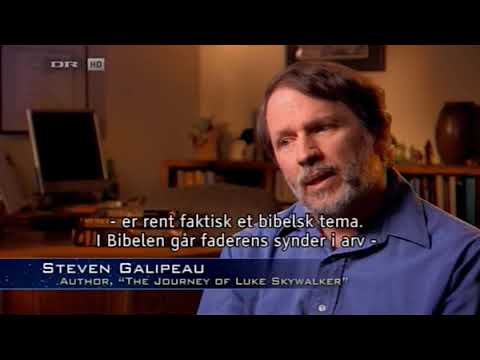
Father and Son Star Wars Mythology and the Bible
Father & Son — Star Wars & the Bible
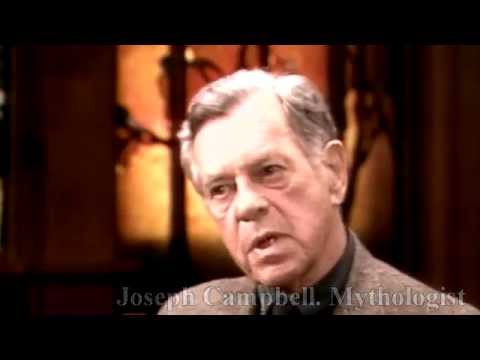
Joseph Campbell The Hero Quest
Campbell — The Hero Quest
Jedi meaning and pronunciation
Jedi — Meaning & Pronunciation
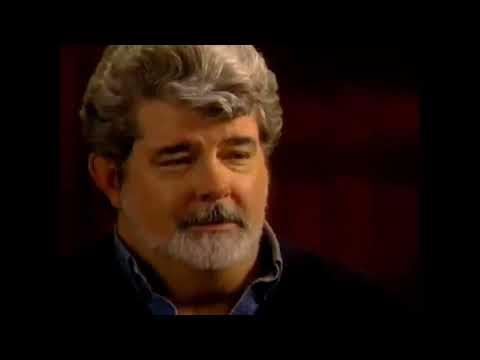
George Lucas on Heroism
Hero's Journey Stage Four Meeting the Mentor
Hero's Journey — Meeting the Mentor
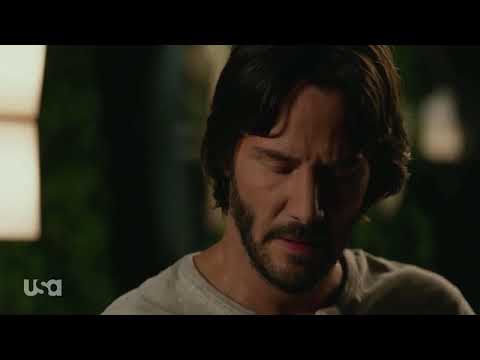
John Wick refuses the call to adventure
Refusing the Call — Hero's Journey in Film

Explore More Mythologies

Star Wars is one conversation in a dialogue that humanity has been having for millennia. Every mythology below fed the galaxy Lucas built — or carries the same deep patterns that made it resonate.

Frequently asked questions

Did George Lucas deliberately base Star Wars on mythology?
Yes. George Lucas consciously built Star Wars on Joseph Campbell's book The Hero with a Thousand Faces, reading it before writing the screenplay for A New Hope (1977) and openly crediting it in later interviews as essential to the film's design. He also drew on Akira Kurosawa's samurai films, Japanese bushido warrior codes, and Chinese yin and yang mythology.
What real-world spiritual traditions inspired the Force?
The Force draws on several real-world traditions. Its closest parallel is the Taoist concept of Tao, an underlying natural force to be aligned with rather than fought — Lucas has cited Taoism directly. The Force also echoes the Hindu concept of Brahman, Zoroastrian cosmic dualism between good and evil, and the Norse struggle between order and chaos preceding Ragnarök.
How do Luke Skywalker and Rey both follow Campbell's Hero's Journey?
Both characters pass through Campbell's monomyth stages — ordinary world, call to adventure, mentor, crossing a threshold, and a supreme ordeal — but differently. Luke's journey is linear, moving from ignorance to mastery. Rey's is more fractured: her identity and lineage are hidden from her, and she must actively choose who she is, a pattern closer to the repeated trials found in the Ramayana.
What Jungian archetypes appear in Star Wars?
Star Wars features several Jungian archetypes. Obi-Wan Kenobi and Yoda represent the Mentor, paralleling Merlin and Chiron. Han Solo is the Trickster, echoing Loki and Anansi. Darth Vader embodies the Shadow — Luke's potential corrupted future. Princess Leia functions as the Herald, and figures like Lando Calrissian and Kylo Ren serve as Shape-shifters whose loyalties remain ambiguous.
What is the connection between George Lucas and Joseph Campbell personally?
Lucas and Campbell met through journalist Bill Moyers. Their discussions about Star Wars as modern mythology were featured in the 1988 PBS documentary The Power of Myth, which was filmed partly at Skywalker Ranch and became one of the most-watched public television series ever produced.
What mythological tradition does the 'unknown parentage' trope in Star Wars reflect?
The hidden or terrible parentage shared by Luke Skywalker and Rey is a widespread mythological trope found in the stories of Moses, Oedipus, Romulus, and the Irish hero Cú Chulainn. According to the page, the absent or terrible father functions as the wound that drives the hero's quest across many cultural traditions.