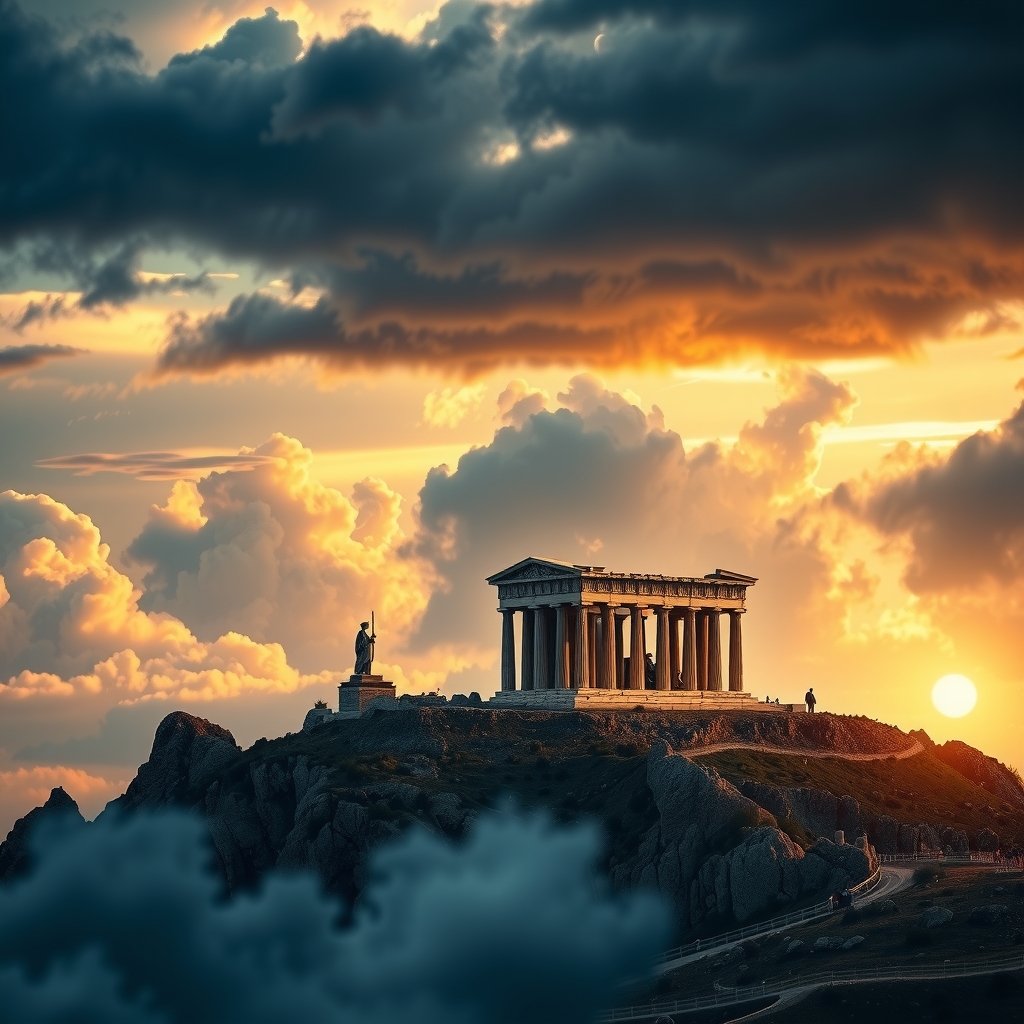
Mythality · Ancient Greece
Where Gods Walked
Among Mortals
From the thunder of Olympus to the wine-dark sea, Greek mythology gave the ancient world its deepest dreams and darkest fears — and they endure still.
Enter the Myth ↓The Living Tradition
Introduction to Greek Mythology
Before philosophy, before science, before democracy itself, there were the myths — vast, luminous, terrifying narratives that the ancient Greeks used to explain the cosmos, the human condition, and everything in between. These were not mere fairy tales but sacred technologies of meaning.
Greek mythology encompasses the collected stories of gods, demigods, heroes, and monsters recorded across millennia: from Hesiod's Theogony charting the birth of the gods, to Homer's epic verse immortalising heroes at Troy. The myths were performed at festivals, painted on pottery, carved into marble — woven into the very fabric of Greek life.
The Cosmos & Creation
In the beginning was Chaos — a yawning void. From it emerged Gaia (Earth), Tartarus (the Abyss), and Eros (Love). The Titans rose, were overthrown, and from the ashes of that celestial war the Olympians took dominion over all creation.
Myth as Mirror
The Greeks saw divinity in everything — storms, harvests, madness, love. Their gods were magnificently imperfect: jealous, passionate, mercurial. In their flaws the Greeks recognised themselves, and in their power they found reverence.
The Divine Court
The Twelve Olympians
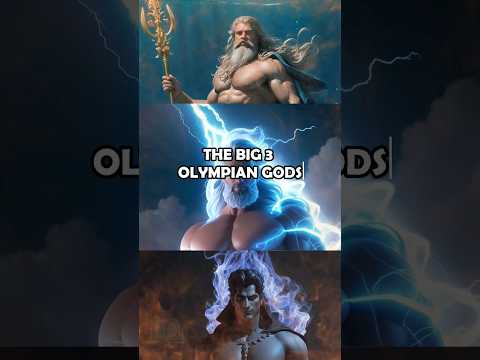
Reigning from the cloud-shrouded peak of Mount Olympus, these twelve deities commanded every domain of existence — sky and sea, war and wisdom, art and agriculture.
King of Olympus
Zeus — King of Gods
Zeus, wielder of the thunderbolt, ruler of sky and cosmos — he was simultaneously the most powerful and the most flawed of all gods. Son of the Titan Kronos, he escaped being devoured by his father, rallied his siblings, and overthrew the old order in the cataclysmic war of the Titanomachy.
His authority was supreme yet constantly tested — by the scheming of Hera, the ambitions of Prometheus, and the fates themselves. He fathered countless divine and mortal offspring, including Athena, Apollo, Artemis, Heracles, Perseus, and Helen of Troy.
"Zeus, first cause, prime mover; for who rules among men without Zeus?" — Aeschylus, Agamemnon
Born from the Mind of Zeus
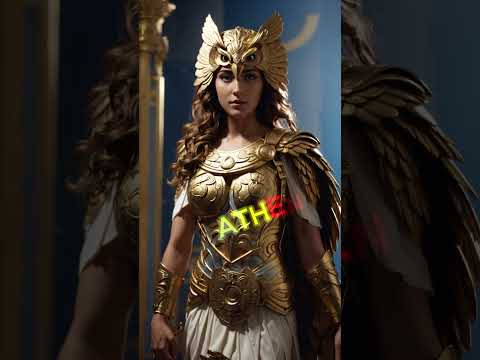
Athena — Goddess of Wisdom
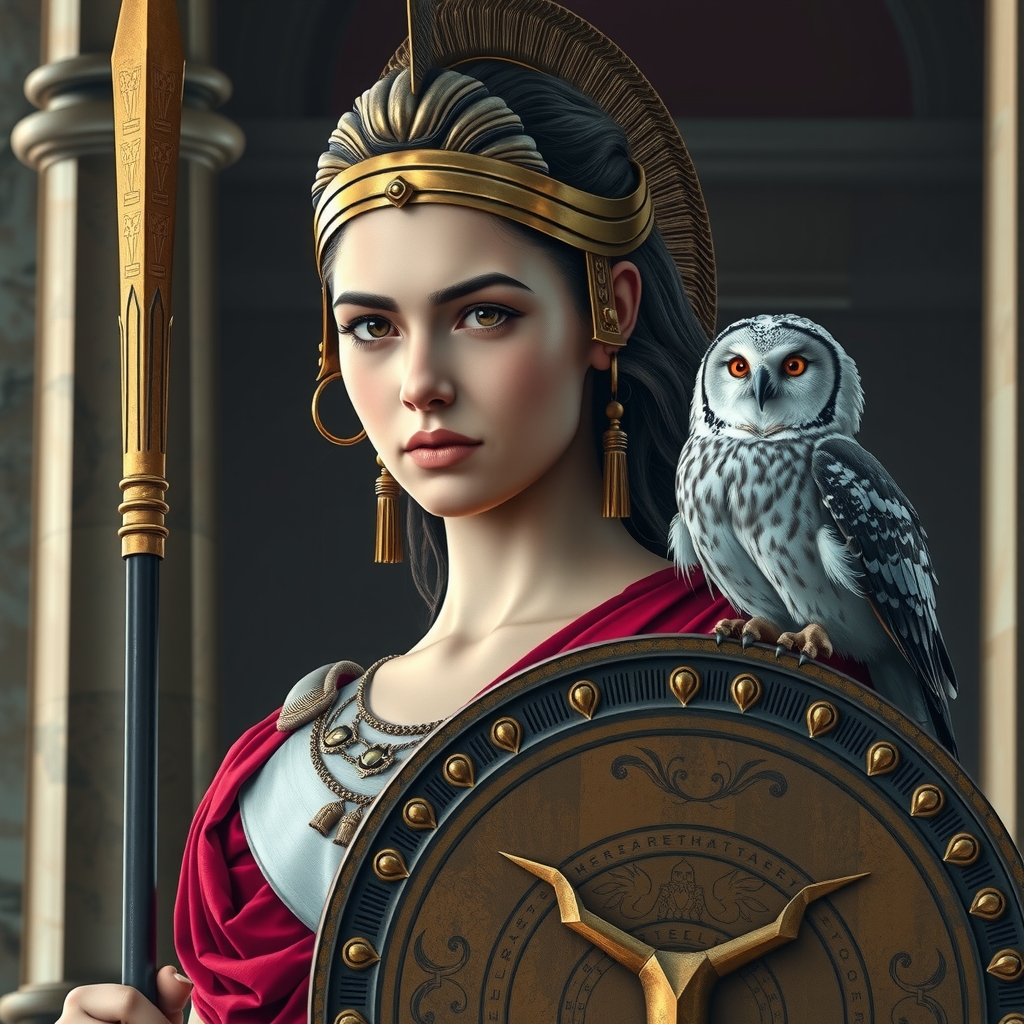
Born fully armoured from the skull of Zeus, Athena defied every convention. She was at once the goddess of wisdom and strategic warfare — not the brutal carnage of Ares, but the disciplined, calculated victory of the general who knows when to speak and when to strike.
Athens bore her name after she gifted the city an olive tree, besting Poseidon's saltwater spring in a contest of divine generosity. Her symbol, the owl, watched over scholars and statesmen. She championed Odysseus on his long journey home, guided Perseus against Medusa, and inspired the great craftsmen and poets of Greece.
Her temple — the Parthenon — still crowns the Acropolis, an immortal monument to reason among the ruins of an ancient world.
"She is a formidable goddess, who stands by the side of whomever she chooses." — Homer, Odyssey
The Greatest of Heroes
Heracles — The Twelve Labours

Son of Zeus and the mortal Alcmene, Heracles (Hercules to the Romans) lived a life of mythic extremity — superhuman strength matched by devastating tragedy. Driven to madness by the jealous Hera, he slew his own family and was condemned to perform twelve seemingly impossible labours as penance, assigned by King Eurystheus of Tiryns under the oracle's judgement at Delphi.
The scope of the Labours was designed to be impossible — each task more daunting than the last, stretching Heracles from the known world to its very edges and beyond.
All Twelve Labours in Full
-
I — The Nemean Lion
The valley of Nemea was terrorised by a lion whose golden hide was impervious to all weapons. Heracles tracked the beast to its cave, drove it inside by blocking one entrance, then strangled it with his bare hands. He used its own claws — the only things sharp enough — to skin it, and wore the pelt as armour for the remainder of his labours. The lion's image was placed in the stars as the constellation Leo.
-
II — The Lernaean Hydra
In the swamps of Lerna lurked the Hydra, a monstrous water-serpent with nine heads. For each head Heracles severed, two more grew in its place. With the help of his nephew Iolaus, Heracles developed a solution: after cutting off a head, Iolaus cauterised the stump with a burning torch before regrowth could occur. The immortal central head Heracles buried under a great rock. He dipped his arrows in the Hydra's venomous blood, making them lethally poisonous — a detail that would prove fateful at his death.
-
III — The Ceryneian Hind
The golden-horned hind of Ceryneia was sacred to the goddess Artemis — a deer so swift it could outrun an arrow. Heracles pursued the animal across Greece for an entire year before finally catching it beside the River Ladon. Artemis confronted him, furious, but Heracles explained his plight and she relented, allowing him to carry the hind to Eurystheus before releasing it unharmed.
-
IV — The Erymanthian Boar
On the slopes of Mount Erymanthos ravaged a monstrous boar that had driven the local people to terror. Heracles drove the boar into deep snowdrifts, exhausting it, then bound it in chains and carried it on his shoulders all the way back to Tiryns. The sight of the enormous living beast so terrified Eurystheus that the king hid in a large storage jar — an image that became a comic staple of Greek vase painting.
-
V — The Augean Stables
King Augeas of Elis kept three thousand divine cattle, and their stables had never been cleaned in thirty years. Eurystheus assigned Heracles this deliberately humiliating labour. Rather than toiling with a shovel, Heracles diverted two rivers — the Alpheus and the Peneus — through the stables in a single day, washing them clean. Augeas refused payment he had promised, and his son Phyleus supported Heracles's case; both were later exiled. Heracles eventually returned to punish Augeas and founded the Olympic Games at Olympia in celebration.
-
VI — The Stymphalian Birds
Lake Stymphalia in Arcadia was infested with man-eating birds with bronze beaks, metallic feathers they could fire like arrows, and droppings toxic to crops. Athena assisted Heracles by providing a bronze rattle crafted by Hephaestus. He climbed a nearby mountain and shook the rattle, startling the birds into flight. As they rose in a great flock, Heracles shot them down with his poisoned arrows. The survivors fled to the island of Ares and were never seen in Greece again.
-
VII — The Cretan Bull
Poseidon had sent a magnificent white bull from the sea for King Minos of Crete to sacrifice, but Minos kept it for himself — an act of hubris that drove the bull mad. Heracles crossed to Crete, wrestled the rampaging bull into submission with his bare hands, and brought it back to Eurystheus. After viewing it, the king released the bull, which wandered to Marathon and became the famous Marathonian Bull later killed by Theseus.
-
VIII — The Mares of Diomedes
Diomedes, king of the Bistones in Thrace, kept four man-eating mares that he fed on unwary guests, chained to a bronze manger. Heracles sailed to Thrace, overpowered the king's guards, and drove the mares to the sea. When Diomedes pursued him, Heracles killed the king and fed his flesh to his own horses, which were suddenly calmed. He brought the docile mares back to Eurystheus, who dedicated them to Hera. Their descendants were said to have carried Alexander the Great's famous horse Bucephalus in their lineage.
-
IX — The Girdle of Hippolyta
Eurystheus's daughter desired the magical war-girdle of Hippolyta, queen of the Amazons — a gift from Ares. Heracles sailed to the Amazon lands on the shores of the Black Sea. Hippolyta was so impressed by Heracles that she agreed to give him the girdle willingly. But Hera, disguised as an Amazon warrior, spread the rumour that Heracles planned to kidnap their queen. A battle broke out; Heracles, suspecting treachery, slew Hippolyta and took the girdle by force before sailing away.
-
X — The Cattle of Geryon
At the far western edge of the world, on the island of Erytheia, lived Geryon — a giant with three bodies joined at the waist — who kept a herd of magnificent red cattle guarded by the two-headed dog Orthrus and the herdsman Eurytion. To reach Erytheia, Heracles crossed the sea in the golden cup of the sun god Helios. He slew Orthrus, Eurytion, and finally Geryon himself, then drove the cattle back across the known world — through Spain, France, Italy, and Greece — in an epic journey that took months and inspired the foundation myths of numerous cities along the route.
-
XI — The Apples of the Hesperides
The golden apples of the Hesperides were wedding gifts from Gaia to Hera, guarded in a garden at the world's end by the Hesperides (daughters of the evening) and the dragon Ladon. Heracles first had to discover the garden's location. The sea-god Nereus revealed the way only after Heracles wrestled him through many shape-changes. En route, Heracles freed Prometheus from his eagle-ravaged torment on the Caucasus. He then held up the sky itself so the Titan Atlas — who knew the garden — could fetch the apples. When Atlas tried to abandon Heracles beneath the world's weight, Heracles tricked him into taking back the burden and returned with the golden apples.
-
XII — Cerberus, Guardian of the Underworld
The final and most terrifying labour: descend into the realm of the dead and bring back Cerberus, the three-headed hound who prevented the dead from leaving Hades. Heracles descended through an entrance at Taenarum, guided by Hermes. In the Underworld he encountered the shades of heroes and freed Theseus, who had been bound to a chair of forgetfulness. He persuaded Hades himself to allow the task, on one condition: Heracles must subdue Cerberus using only his bare hands and no weapons. He wrestled the monstrous dog into submission, carried it to the upper world to show Eurystheus — who once again dived into his storage jar in terror — then returned the beast to its post. The Twelve Labours were complete, and Heracles's penance was discharged.
The War at the Edge of the World
The Trojan War
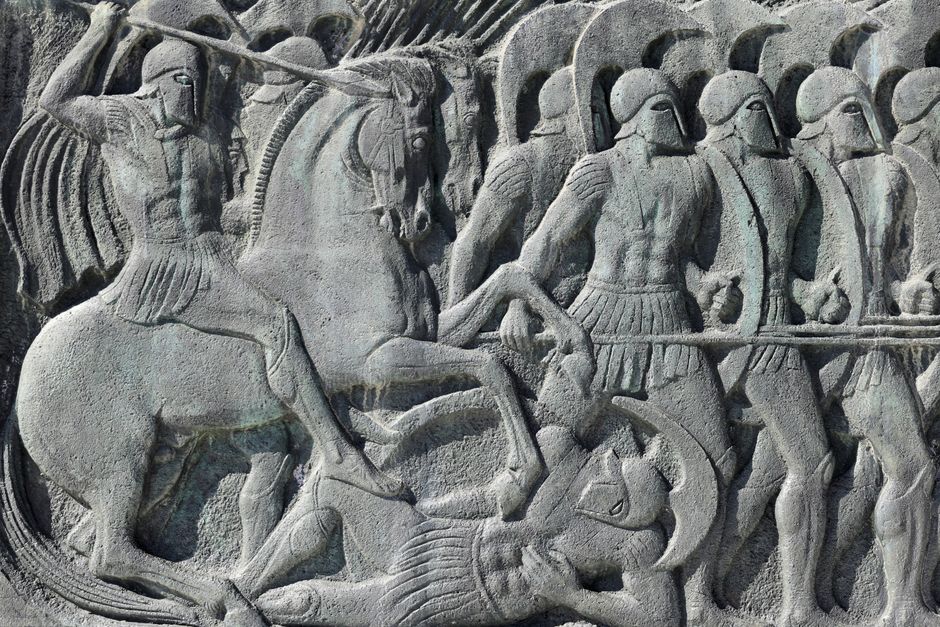
It began with a golden apple — thrown by Eris, goddess of discord, inscribed "For the Fairest." The judgement of Paris, the abduction of Helen, a fleet of a thousand ships: the Trojan War was the defining catastrophe of the mythic age, a conflict in which gods took sides and mortals paid in blood.
Homer's Iliad enters the war in its tenth year, when the wrath of Achilles — greatest of warriors — threatens to undo the Greek campaign entirely. The epic unfolds not as simple heroism but as a meditation on mortality, honour, and the terrible costs of pride.
- The Judgement of Paris Paris of Troy awards the golden apple to Aphrodite, who promises him Helen — wife of King Menelaus of Sparta.
- The Fleet Assembles Agamemnon rallies the Greek kings: Achilles, Odysseus, Ajax, Diomedes. A thousand ships sail for Troy.
- The Wrath of Achilles Dishonoured by Agamemnon, Achilles withdraws. The Greeks suffer. His friend Patroclus dies at Hector's hand.
- The Fall of Hector Grief-maddened, Achilles returns, slays Hector, and drags his body before the walls of Troy.
- The Wooden Horse Odysseus's cunning stratagem: a hollow horse concealing Greek warriors brings about the fall of mighty Troy.
Homer's Second Epic
The Odyssey
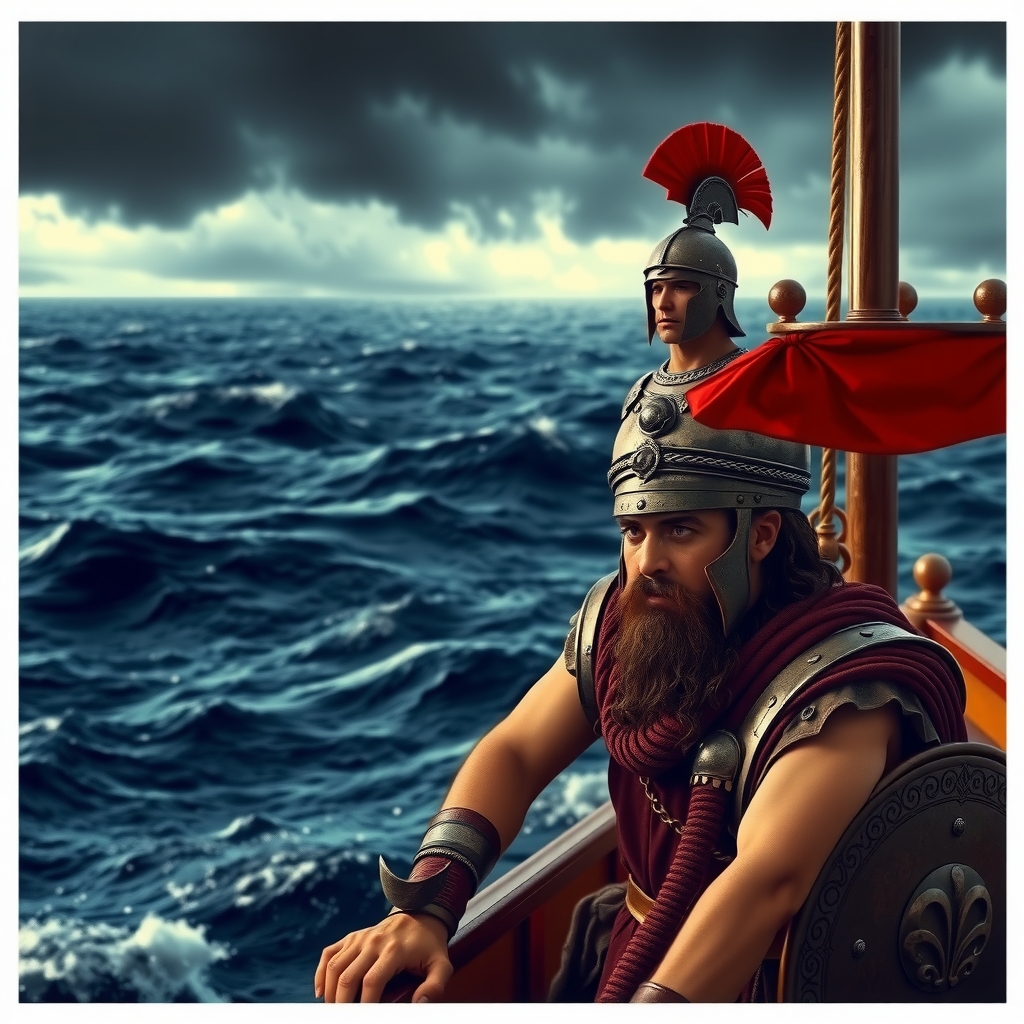
Ten years of war at Troy. Ten more years lost at sea. Odysseus, cunning king of Ithaca, must navigate a world where gods conspire and monsters lurk at every horizon — all to return to a wife and son who barely remember his face.
Homer's Odyssey is one of the greatest journeys ever committed to verse: past the cave of the Cyclops Polyphemus, through the enchanted island of Circe, past the Sirens whose song brings death, between the churning maw of Charybdis and the six-headed Scylla — until at last, in disguise, the wanderer comes home.
The Odyssey is not merely an adventure. It is a study of longing, identity, and the meaning of home. Every trial Odysseus faces strips away another layer of who he was — until only the essential man remains, sufficient to reclaim his kingdom by the strength of a bow no one else can draw.
"Tell me, O Muse, of that ingenious hero who travelled far and wide after he had sacked the famous town of Troy." — Homer, Odyssey
Mythality Shorts
Greek Mythology in Motion
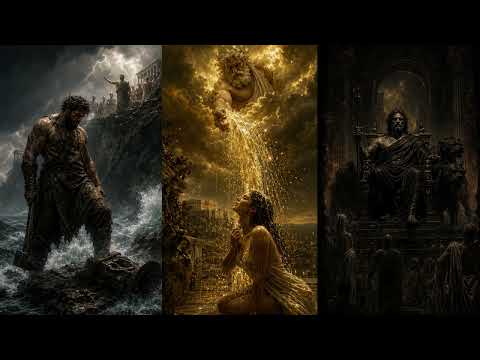
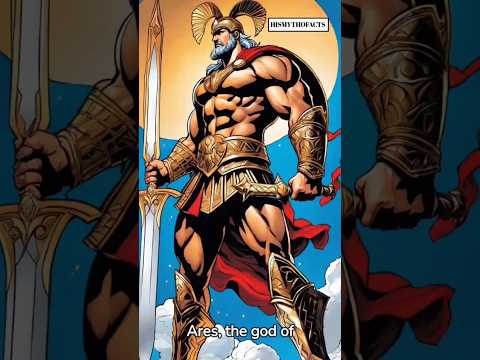
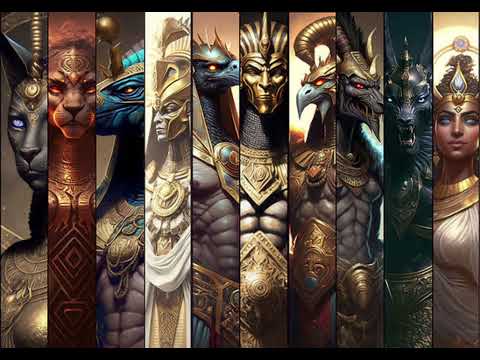
Short explorations of Olympus — tap any card to watch.
Continue Your Journey
The Ancient World Awaits
Greece is only the beginning. The gods of Rome, Egypt, and the Norse north all have their own stories to tell — each as vivid, as strange, and as enduring as the myths of Olympus.