Mythality · Celtic Mythology
The Mists of the Celtic World
Beyond the veil of mortal sight lie ancient gods, shape-shifting ravens, undying heroes, and a land of eternal youth — the living myths of Ireland, Britain, and Gaul.
The Divine Race
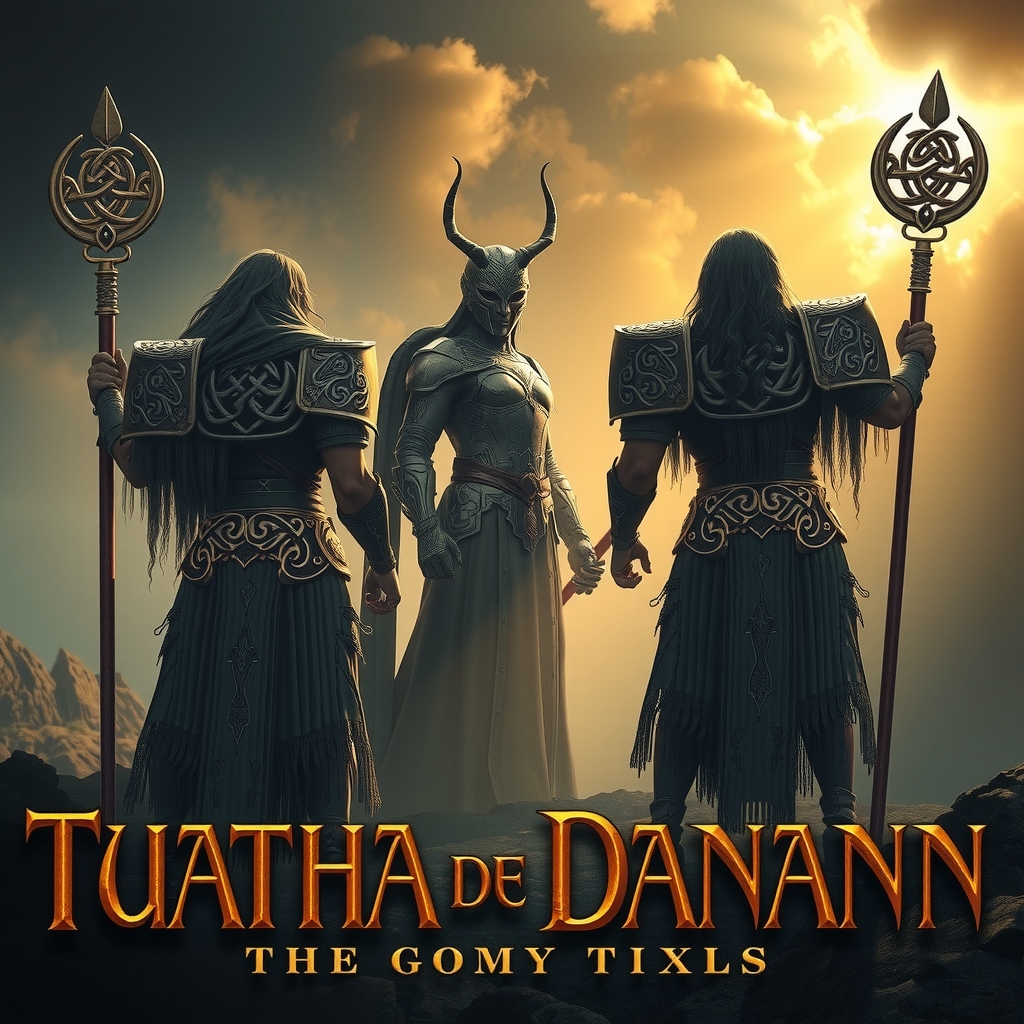
The Tuatha Dé Danann — Gods of Ancient Ireland
Before the Gaels walked the green hills of Ireland, a race of luminous beings descended from the northern sky. The Tuatha Dé Danann — the People of the Goddess Danu — arrived in ships of cloud, burning their vessels so there could be no retreat. They were not merely gods in the abstract; they were warriors, poets, smiths, and healers who carried the four great treasures of Ireland: the Lia Fáil, the Spear of Lugh, the Sword of Nuada, and the Cauldron of the Dagda.
Scholars of Irish mythological tradition divide the divine narrative into four cycles — the Mythological Cycle being the most ancient stratum, preserved in manuscripts such as the Lebor Gabála Érenn (The Book of Invasions). The Tuatha Dé Danann defeated the monstrous Fomorians at the Second Battle of Mag Tuired, a cosmic struggle that mirrors flood-myths worldwide yet is unmistakably Irish in its texture — vivid with satire, prophecy, and the magic of sovereignty.
When the Gaelic Milesians finally overcame them, the Tuatha Dé Danann did not die. They retreated beneath the hills — the sídhe — becoming the eternal Otherworldly beings who would haunt and bless Ireland's imagination for millennia.
The Dagda
Master of life and death, wielder of a club that could slay nine men or restore them to life, keeper of the inexhaustible cauldron that left no man unsatisfied.
Lugh Lámhfhada
The Long-Armed, master of every art and craft, slayer of Balor of the Evil Eye. His festival Lughnasadh is still echoed in the harvest traditions of August.
Dian Cécht
Divine physician who fashioned a silver arm for the wounded king Nuada and whose healing spring could restore the slain to life before each day's battle.
Brigid
Triple goddess of smithcraft, poetry, and healing springs; so beloved she passed into Christian sainthood without losing her sacred flame at Kildare.
Manannán mac Lir
Ruler of the Otherworld and the sea between worlds, who rides the waves in a chariot and lends heroes his cloak of invisibility and the Feast of Age.
Aengus Óg
Whose kisses became singing birds, who outwitted the Dagda for possession of Brú na Bóinne — the great mound at Newgrange — through a riddle of days.
The Ulster Cycle
Cú Chulainn — The Hound of Ulster
— Attributed to Cú Chulainn
He was born Sétanta, the son of the sun-god Lugh and a mortal woman, Deichtine. His childhood feats were so extraordinary that even the greatest warriors of the Red Branch watched in disbelief. At seven years old he killed the fearsome hound of the smith Culann — and then pledged to serve in the dog's place until a replacement could be trained. From that act of honour, he took his name: Cú Chulainn, the Hound of Culann.
The Warp Spasm
In battle, Cú Chulainn was transfigured by the ríastrad — the warp spasm. His body twisted within its own skin, one eye plunging deep into his skull while the other bulged enormous; his heart thundered like a caged animal; the hero's halo blazed above his head. Enemies would freeze in terror at the sight.
The Cattle Raid of Cooley
Queen Medb of Connacht coveted Ulster's great brown bull. While the men of Ulster lay cursed into weakness, Cú Chulainn alone defended the province — fighting champion after champion at the ford in single combat across an entire winter, exhausted and wounded but never broken.
The Fate at the Ford
He faced his beloved foster-brother Ferdiad for four days of increasingly devastating combat. Neither could bear to strike the fatal blow. On the fourth day, Cú Chulainn cast the gáe bulga — a terrible barbed spear thrown with the foot — and wept as his brother fell.
The Death of the Hero
Tricked by the spells of his enemies into violating his sacred taboos, Cú Chulainn fell mortally wounded. He tied himself to a standing stone so he would die upright — and his enemies dared not approach until a raven landed on his shoulder, confirming his death.
Goddess of Fate & War
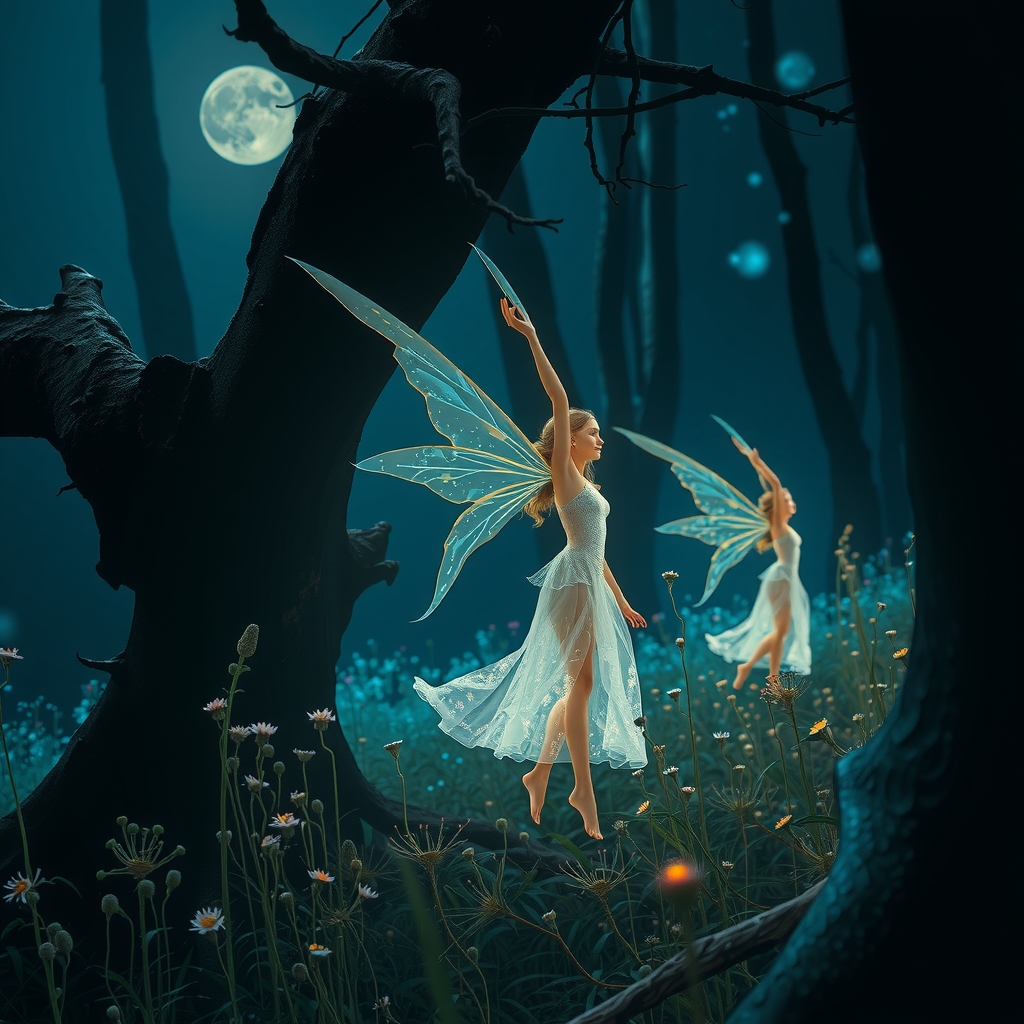
The Morrigan — Crow Queen of Battle
She comes before the slaughter: a crow alighting on a standing stone, a red-haired woman washing blood-soaked armour in a river ford, a hag crouching in the road. The Morrigan is not a goddess of war in the heroic Greek mould — she does not fight battles herself but shapes their outcome, prophesies doom, and tests the courage of those who would be heroes.
She is triple in nature, encompassing Badb (the crow of battle, whose screams herald carnage), Macha (sovereign goddess of the land, who binds kings to the soil), and Nemain (frenzy and panic that breaks armies). Together they are the Morrígan — the Phantom Queen.
The Triple Goddess
The Morrigan's encounters with Cú Chulainn form one of the most psychologically complex relationships in Celtic myth. She offers herself to him; he, not recognising her, rebuffs her. In revenge she hinders him in combat — appearing as an eel, a wolf, a heifer — yet ultimately she cannot help but admire his unconquerable spirit. When he lies dying she perches on his shoulder as a crow, completing the prophecy she has carried since his first triumph.
The Morrigan's Prophecy at Mag Tuired
Before the great battle against the Fomorians, the Morrigan appeared to the Dagda and made love to him across a river — a sacred union of battle and fertility that ensured the survival of the gods. She then delivered a chilling prophecy of the world's eventual end: rivers running blood, summers without flowers. Her words were not curses but the clear-eyed recognition that all golden ages end.
Beyond the Veil
The Otherworld — Tír na nÓg and Beyond
Celtic cosmology places the Otherworld not above the sky or below the earth but alongside — a parallel realm separated by the thinnest membrane of mist and will. It can be reached by sailing west across the sea, by descending into a faerie mound, by stepping through a lake's surface on Samhain, or simply by wandering far enough into an ancient forest at the wrong — or right — hour.
Unlike the Christian afterlife or the Greek Hades, the Celtic Otherworld is not primarily about judgement or punishment. It is a realm of abundance, beauty, music, and timelessness where the Tuatha Dé Danann dwell alongside mortal heroes who have earned their passage.
Tír na nÓg
The Land of Youth, where no one ages, where food and wine never diminish, and the trees flower and fruit simultaneously. Oisín was brought here by Niamh of the Golden Hair.
Mag Mell
The Plain of Honey, or the Delightful Plain — a paradise of perpetual summer, music, and feasting, reached by heroes who sail beyond the known horizon.
Emain Ablach
The Isle of Apple Trees, ruled by Manannán mac Lir, source of the golden branch that serves as a passport between worlds for those mortals deemed worthy.
The Sídhe
The faerie mounds beneath Ireland's hills — Newgrange, Knocknarea, the Hill of Tara — entry points to the Otherworld hidden in plain sight across the landscape.
Hy-Brasil
The phantom island seen floating west of Ireland every seven years, appearing on ancient maps but retreating into fog whenever approached, the westernmost outpost of the mythic Atlantic.
The Land Under Wave
Tír fo Thuinn, the sunken realm beneath Irish seas, where drowned heroes feast and beautiful women lure sailors not to death but to an impossible, timeless existence.
Oisín and Niamh — The Price of Paradise
The warrior-poet Oisín, son of Fionn Mac Cumhaill, rode to Tír na nÓg on a white horse with Niamh of the Golden Hair. He dwelt there for what felt like three years of feasting and love — yet when longing for Ireland moved him to visit, he discovered three hundred years had passed. Niamh warned him never to dismount, for touching Irish soil would unmake the enchantment. But when he leaned to help old men lift a stone, he fell — and aged three centuries in moments. The myth is a perfect Celtic parable: paradise exists, but it cannot be held in one hand while the other clings to the mortal world.
Keepers of Sacred Knowledge
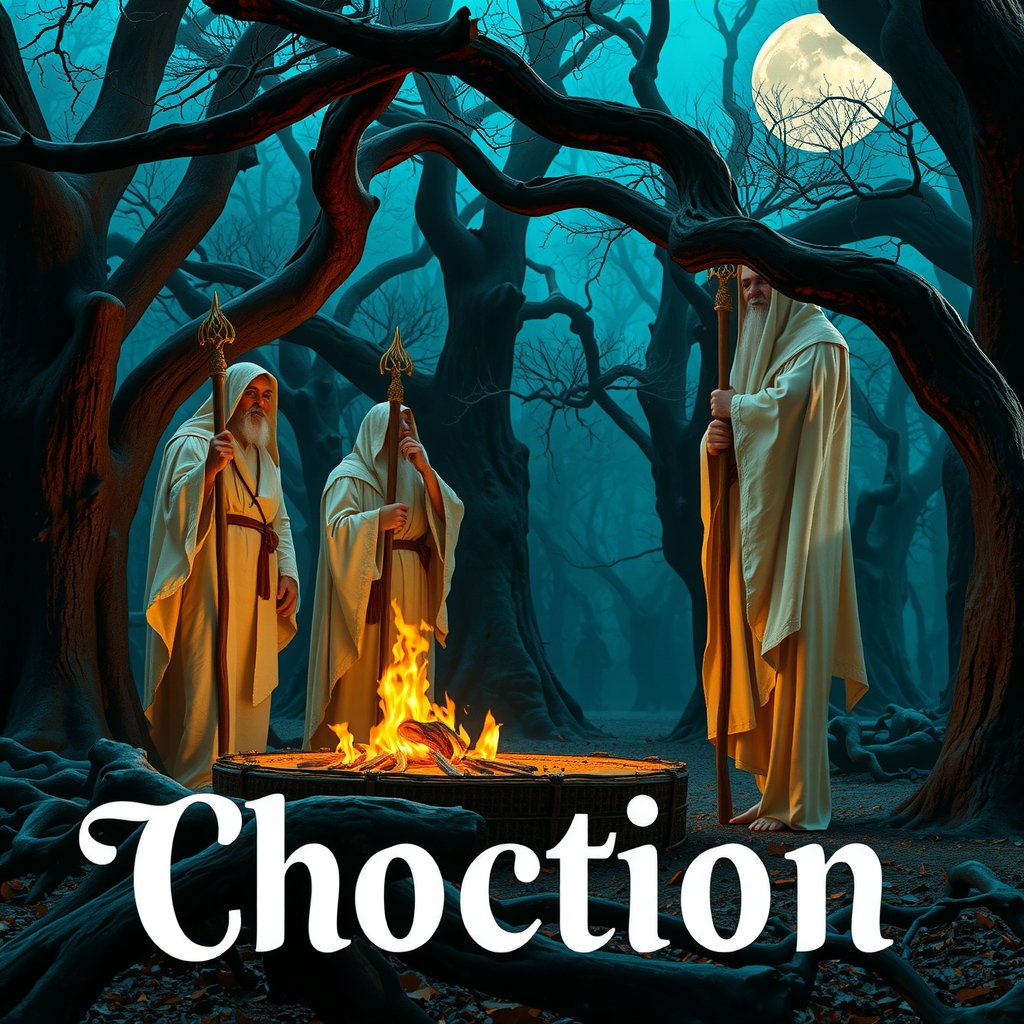
Druidic Traditions & Sacred Groves
The druids were the intellectual class of Celtic society — at once philosophers, judges, astronomers, poets, healers, and the living libraries of a culture that committed nothing of import to writing. Julius Caesar, himself an adversary with reason to caricature, nonetheless wrote with reluctant respect that druidic training lasted twenty years and encompassed the nature of the cosmos, the movements of stars, and the immortality of the soul.
The Sacred Oak
The word druid derives from the Proto-Celtic dru-wid: oak-knowledge. The oak grove — the nemeton — was the druidic cathedral; a clearing in the deep forest where sky met earth and ritual enacted the renewal of the cosmos.
Mistletoe & the Ritual Year
The harvesting of mistletoe from oak trees with a golden sickle, described by Pliny the Elder, was one of the most sacred druidic rites — mistletoe touching neither earth nor sky embodied the liminal sacred that Celtic religion prized above all.
The Three Druidic Classes
Celtic learned culture distinguished the Druid proper (philosopher-priest), the Vate or fili (seer and poet), and the Bard (oral historian and singer). Together they formed the memory and moral compass of their society.
Samhain & the Celtic Calendar
The four great festivals — Samhain, Imbolc, Bealtaine, and Lughnasadh — marked the turning points of the agricultural and spiritual year, each a moment when the boundary between worlds thinned and the Otherworld breathed through.
Quick Reference