Mythality · First Nations
Sacred Stories & the Living Earth
For thousands of years, First Nations peoples have carried the world's oldest living mythologies — stories that do not merely explain creation, but breathe within it.
These traditions belong to living peoples. We share them with deep respect, honouring their ongoing spiritual and cultural significance.
Across the Continent
Nations & Traditions
Across hundreds of distinct nations — each with their own language, ceremony, and cosmology — the mythological traditions of First Nations peoples form one of humanity's most diverse and profound bodies of sacred knowledge.
Pacific Northwest
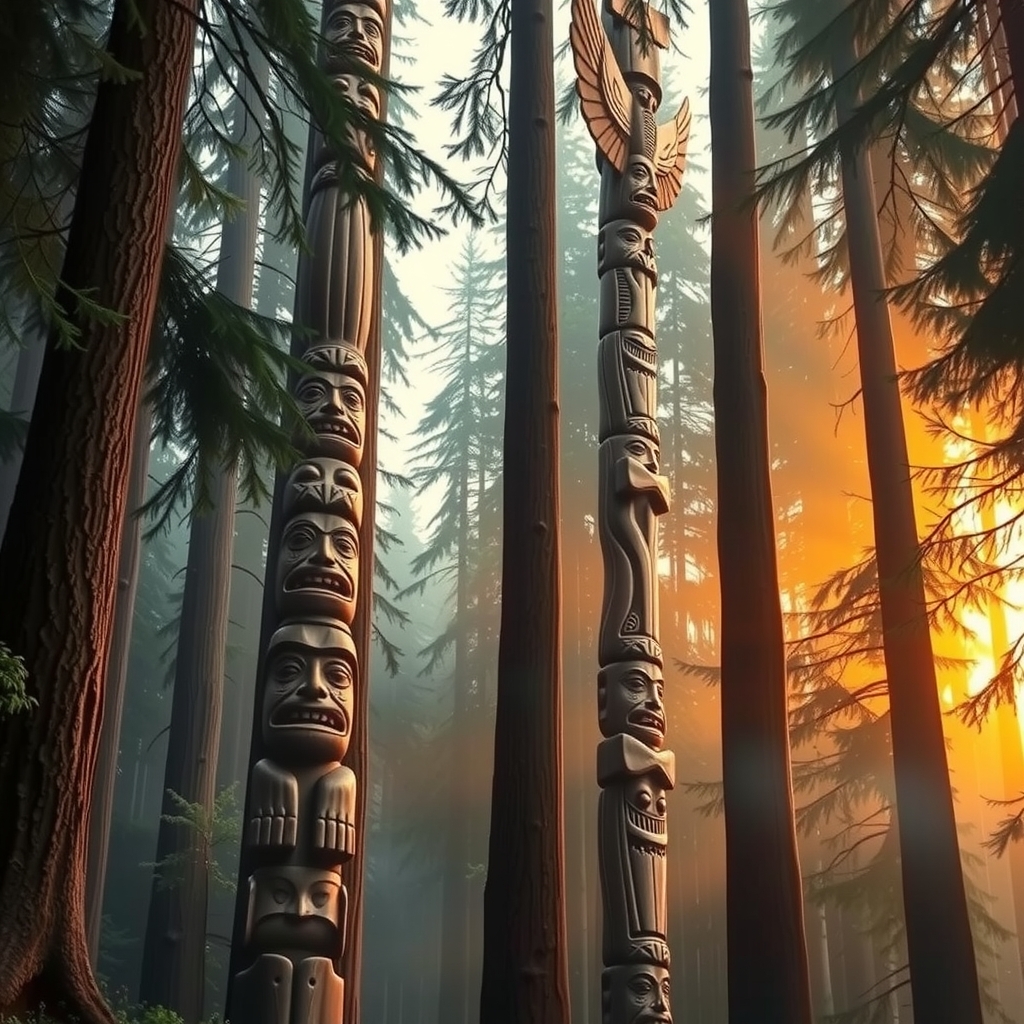
Haida, Tlingit, Kwakwaka'wakw — masters of totem poles, Raven stories, and the salmon's sacred journey.
Plains Nations
Lakota Sioux, Blackfoot, Cheyenne — keepers of the Buffalo Nation, the Sun Dance, and Wakan Tanka.
Eastern Woodlands
Haudenosaunee (Iroquois), Ojibwe, Algonquin — storytellers of Turtle Island, the Great Spirit, and Nanabozho.
Southwest Peoples
Navajo, Hopi, Zuni — weavers of the Hero Twins, Kachina spirits, and emergence from the underworld.
Arctic Peoples
Inuit nations — guardians of Sedna, the sea goddess, and the luminous mythology of the Aurora Borealis.
Southeast Nations
Cherokee, Muscogee, Seminole — preserving the Corn Mother, sacred fire ceremonies, and the world's four directions.
In the Beginning
Creation Stories
Turtle Island
Among many Eastern Woodlands nations, the earth was formed on the back of a great turtle, after Sky Woman fell from the heavens and animals dove into the primordial waters to bring up soil. The world we walk upon breathes and lives.
The Emergence
Navajo and Hopi traditions describe humanity ascending through successive underworlds — passing through trials, teachings, and transformations until emerging onto the sacred surface of this world.
Wakan Tanka's Breath
For the Lakota, all creation flows from Wakan Tanka — the Great Mystery. Not a single god but a sacred power woven through every living thing: stone, wind, eagle, river, and human being alike.
World From Darkness
Many Northwest Coast nations tell of a time before light, when Raven stole the sun from a box and flung it into the sky — an act of trickery that gave the world its dawn and its shadow.
The Sacred Shapeshifters
Trickster Spirits
Across almost every First Nations tradition, a trickster figure walks between creation and chaos — teaching through mischief, healing through laughter, and revealing truth through disguise.
Raven
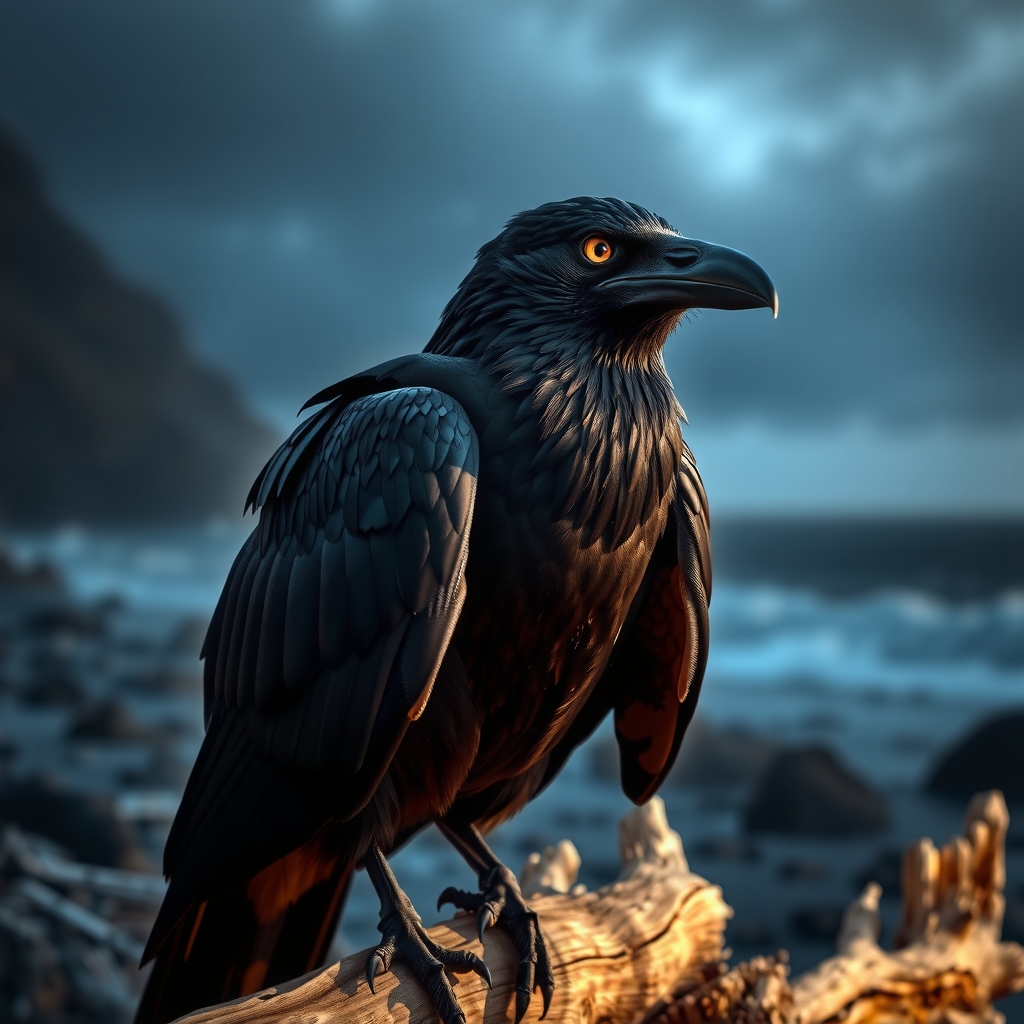
The great trickster of the Pacific Northwest — simultaneously creator, thief, and transformer. Raven stole light, released salmon into rivers, and shaped the world through insatiable curiosity.
Coyote
Beloved across the Plains and Southwest, Coyote is the cunning fool who nonetheless carries fire to humanity, teaches survival, and reminds us that cleverness without wisdom leads only to disaster.
Nanabozho (Great Hare)
The Ojibwe trickster hero — part human, part spirit — who outwits monsters, creates the earth anew after the flood, and carries the sacred pipe across the water.
Iktomi (Spider)
The Lakota spider-trickster, weaver of illusions and lies — a cautionary figure whose webs entangle the careless, but whose stories carry the seeds of wisdom for those who listen deeply.
Clan & Kin
Animal Totems & Clans
Animal spirits are not symbols but living relatives — ancestors, teachers, and guardians who share the world with humanity and ask only for respect in return.
Eagle
Messenger between worlds, vision, and divine connection to the Great Spirit
Wolf
Teacher of loyalty, family, and the sacred bond between hunter and hunted
Bear
Healer, protector, keeper of medicine plants, and guardian of the forest
Turtle
Patience, the earth's foundation, longevity, and Turtle Island itself
Raven
Magic, transformation, creation, and the gift of light to the world
Buffalo
Abundance, gratitude, the sacred covenant between Plains peoples and the land
Between Worlds
The Spirit World
For First Nations peoples, the boundary between the living world and the spirit world is permeable, not fixed. Dreams, visions, and ceremony are doorways — not metaphors, but genuine passages to knowledge.
"We do not inherit the earth from our ancestors; we borrow it from our children."
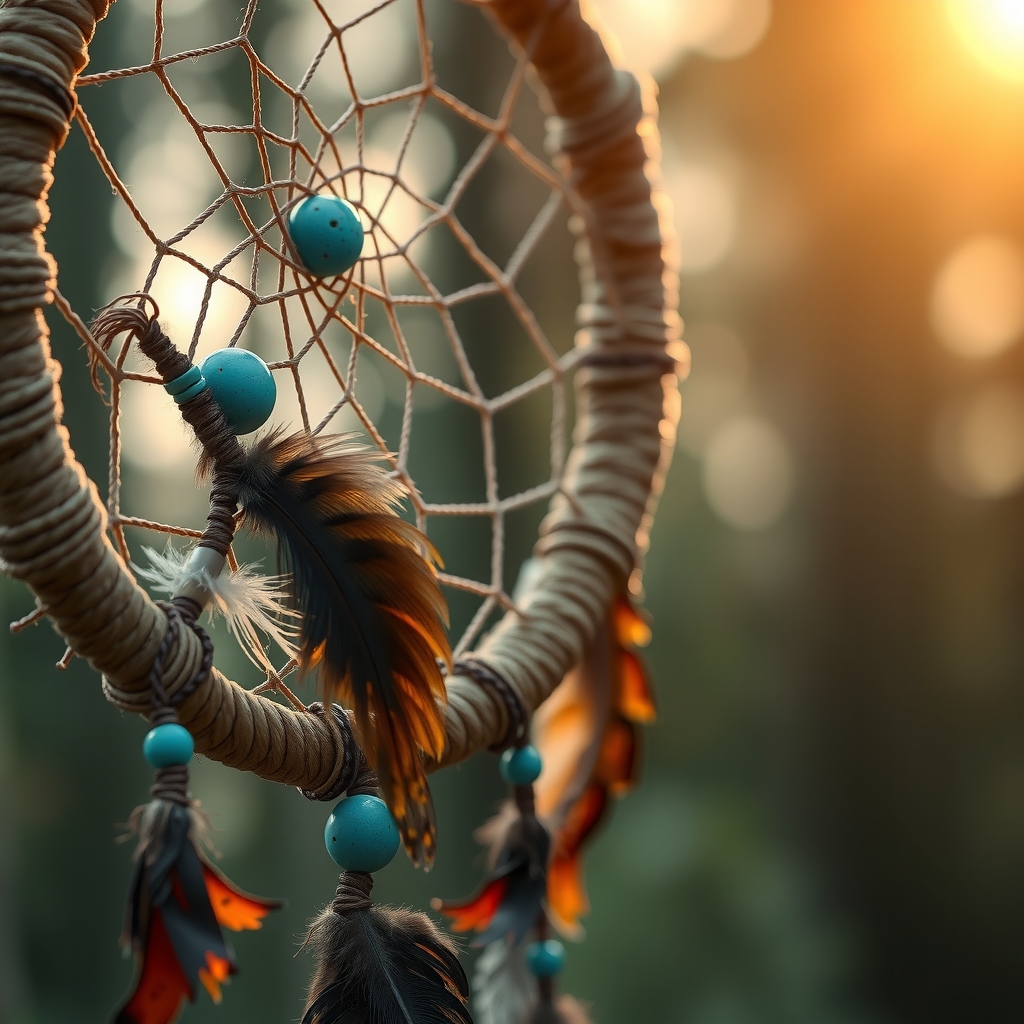
The dreamcatcher, originating with the Ojibwe, filters the spirit world's traffic through the night — catching harmful visions in its web while letting good dreams pass through to the sleeper below.
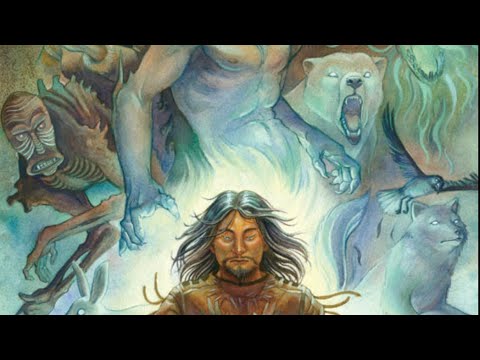
Shamans and medicine people — known by different names across nations — serve as intermediaries who travel these realms, bringing back healing, prophecy, and the guidance of ancestors whose presence never truly departs.
Explore related cosmologies in Māori mythology, where the spirit world is equally woven into daily life, or Andean traditions where Pachamama embodies the living earth herself.
The Living Tradition
Sacred Storytelling
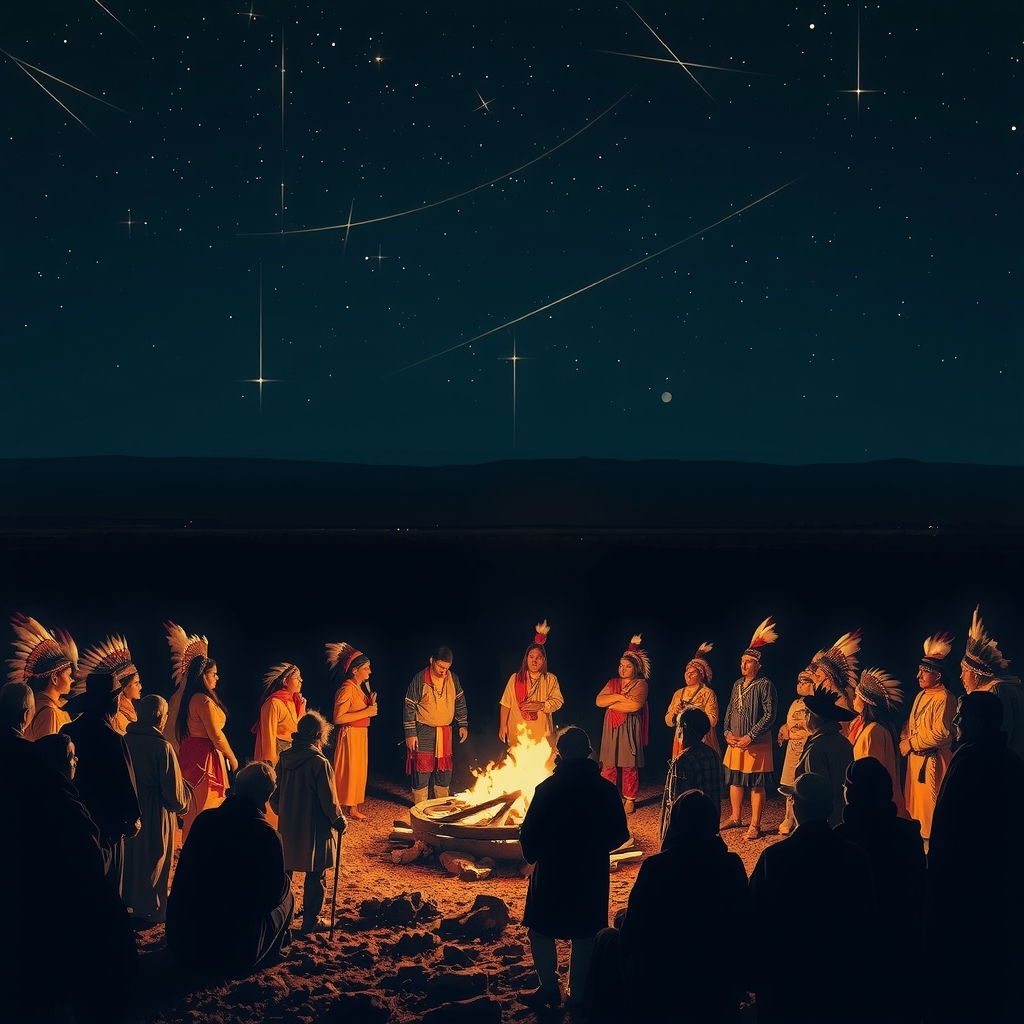
Stories are not entertainment — they are law, medicine, and memory. In many nations, certain stories may only be told in winter, only by certain people, only after ceremony. The story chooses when it is ready to be heard.
Winter Telling
Many nations restrict powerful stories to winter months — when the world is still, spirits are closer, and the lessons can settle into the listener's bones along with the cold.
The Role of Elders
Knowledge holders — grandmothers and grandfathers — carry entire cosmologies in memory. Oral tradition is not fragile. In the right hands, it endures longer than any carved stone.
Living Stories
Unlike myths frozen in ancient texts, First Nations stories continue to grow. New tellings honour old truths while speaking to present realities — climate, justice, identity, survival.
Ceremony as Story
The Sundance, potlatch, sweat lodge, and Green Corn Ceremony are not merely rituals — they are stories told with the whole body, enacted in community so the world remembers how to be itself.
Cross-Cultural Echoes
The trickster finds kin in Anansi of West Africa, and the creation emergence mirrors themes in Japanese Kami mythology — yet each tradition remains wholly its own.
Voices & Visions
Explore Further
Short films and storytelling sessions from educators, elders, and mythologists — swipe to explore.

Continue the Journey
The Stories Continue
Every tradition on earth has looked at the sky, the river, and the animal tracks in the mud — and wondered. Follow those tracks across the world's mythologies.