Mythality · Aztec Mythology
Where Serpents Carry the Sky
Five suns have burned and died. Gods sacrificed themselves so the world could spin. In the Aztec cosmos, creation is not a gift — it is a debt written in blood and starlight.
Begin the Journey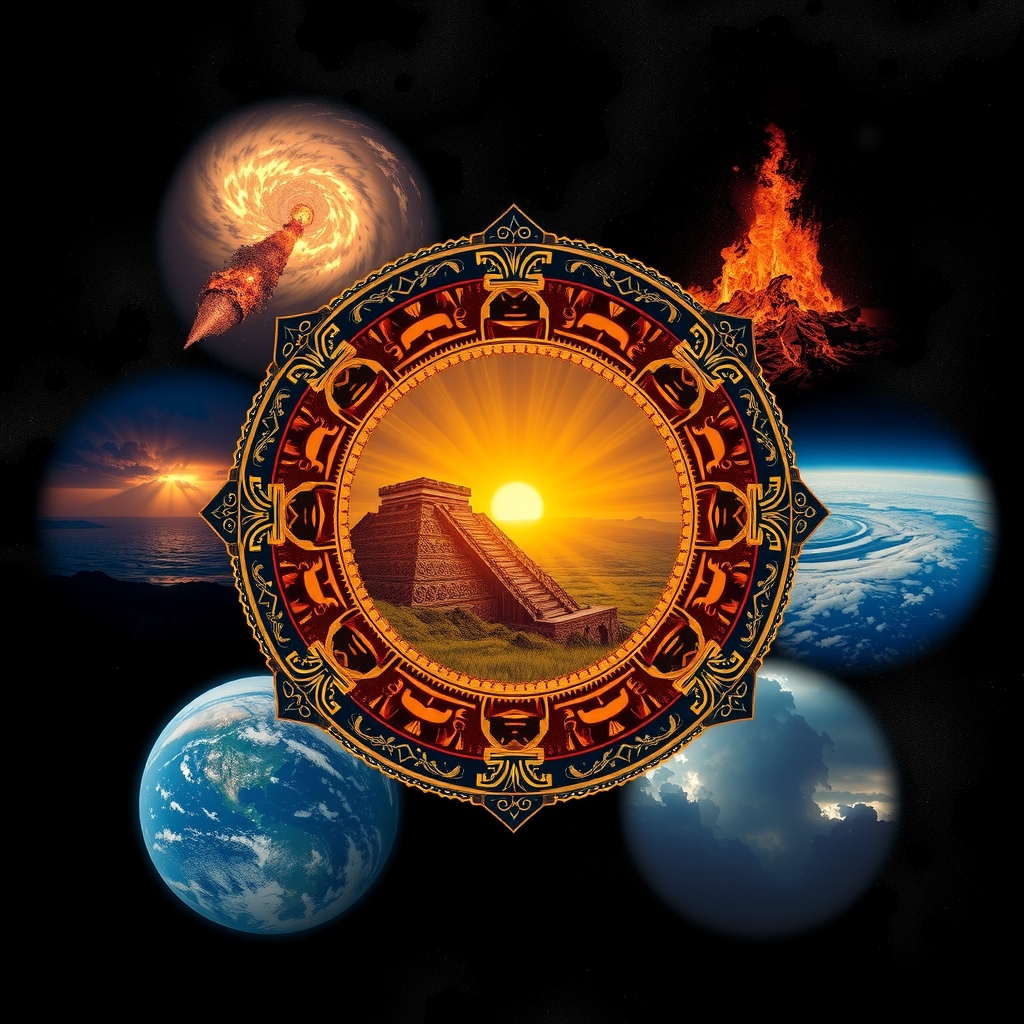
The Aztec Cosmos
Thirteen Heavens, Nine Underworlds
The Aztec universe was not a single plane but a layered architecture of sacred space. Above soared thirteen celestial levels — Topan — each inhabited by distinct divine forces, with the supreme duality Ometeotl enthroned at the apex. Below lay nine underworlds collectively called Mictlan, where the dead undertook a harrowing four-year journey before reaching final rest.
In between, the earth — Tlaltepetl — floated like a great disc upon primordial water. Four directional trees and their associated gods held the sky aloft at each corner. The east was ruled by Quetzalcoatl, associated with wind and the morning star; the west by Quiahuitl; north by Tezcatlipoca, the smoking mirror; south by Huitzilopochtli, divine war and the sun.
Time itself was conceived as cyclical and fragile — each era a "Sun" that could, and did, end in catastrophe. To sustain the present age, the gods demanded sacrifice and ceremony without ceasing.
Creation Myth
The Five Suns — Five Ages of the World
Before our era existed, four worlds rose and perished in fire, flood, wind, and rain of stone. The Aztec sun stone — the great calendar disc — encodes this cosmic history in concentric rings of meaning.
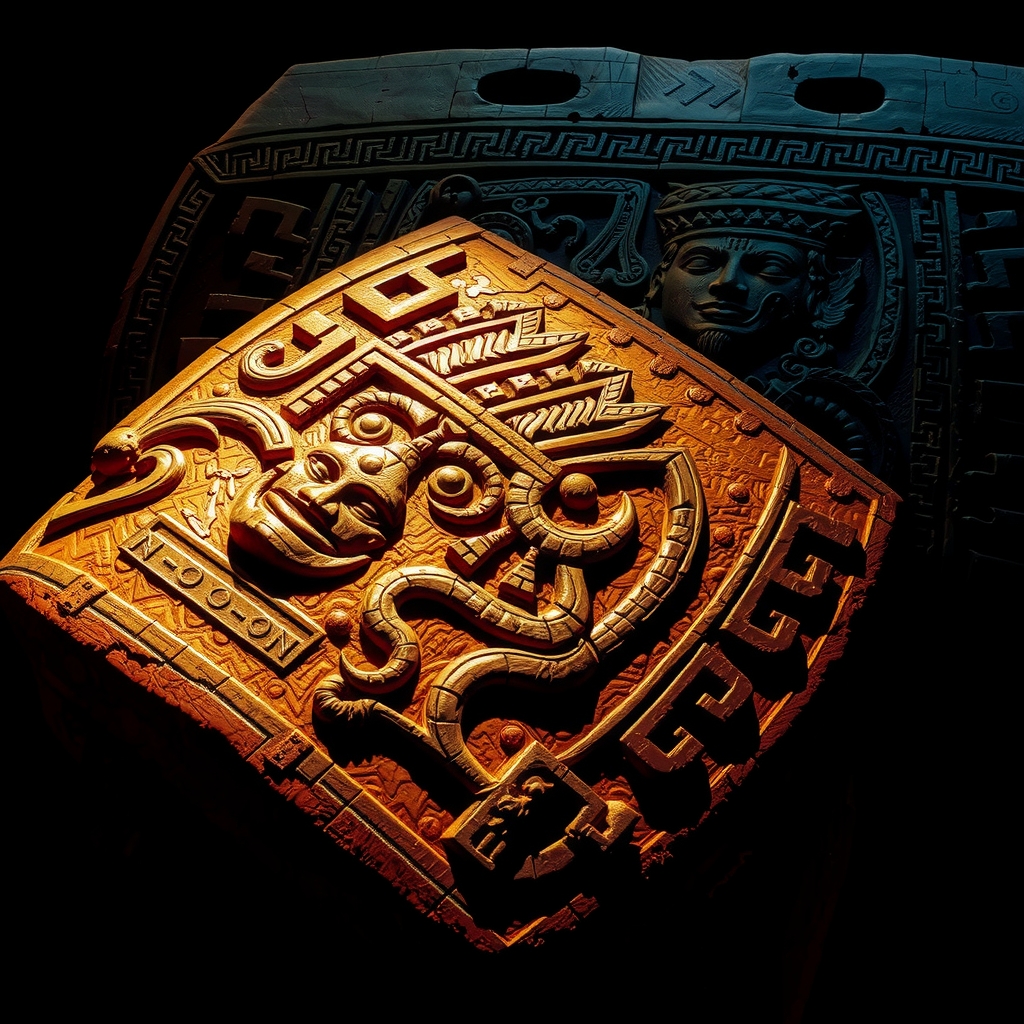
Tezcatlipoca became the first sun. Giants walked the earth — but Quetzalcoatl knocked Tezcatlipoca from the sky, and jaguars devoured all creation.
Quetzalcoatl presided. When Tezcatlipoca took revenge, devastating hurricanes swept the world clean, and the survivors became monkeys.
Tlaloc ruled, but Quetzalcoatl caused a rain of fire. The people who escaped were transformed into birds.
Chalchiuhtlicue, jade-skirted water goddess, governed. Tezcatlipoca shattered her sky and floods engulfed everything. Survivors became fish.
At Teotihuacan, two gods leapt into a sacrificial fire to become the sun and moon. This age is destined to end in earthquakes — unless sustained by human blood and devotion.
The Feathered Serpent
Quetzalcoatl — Wind, Wisdom & the Morning Star
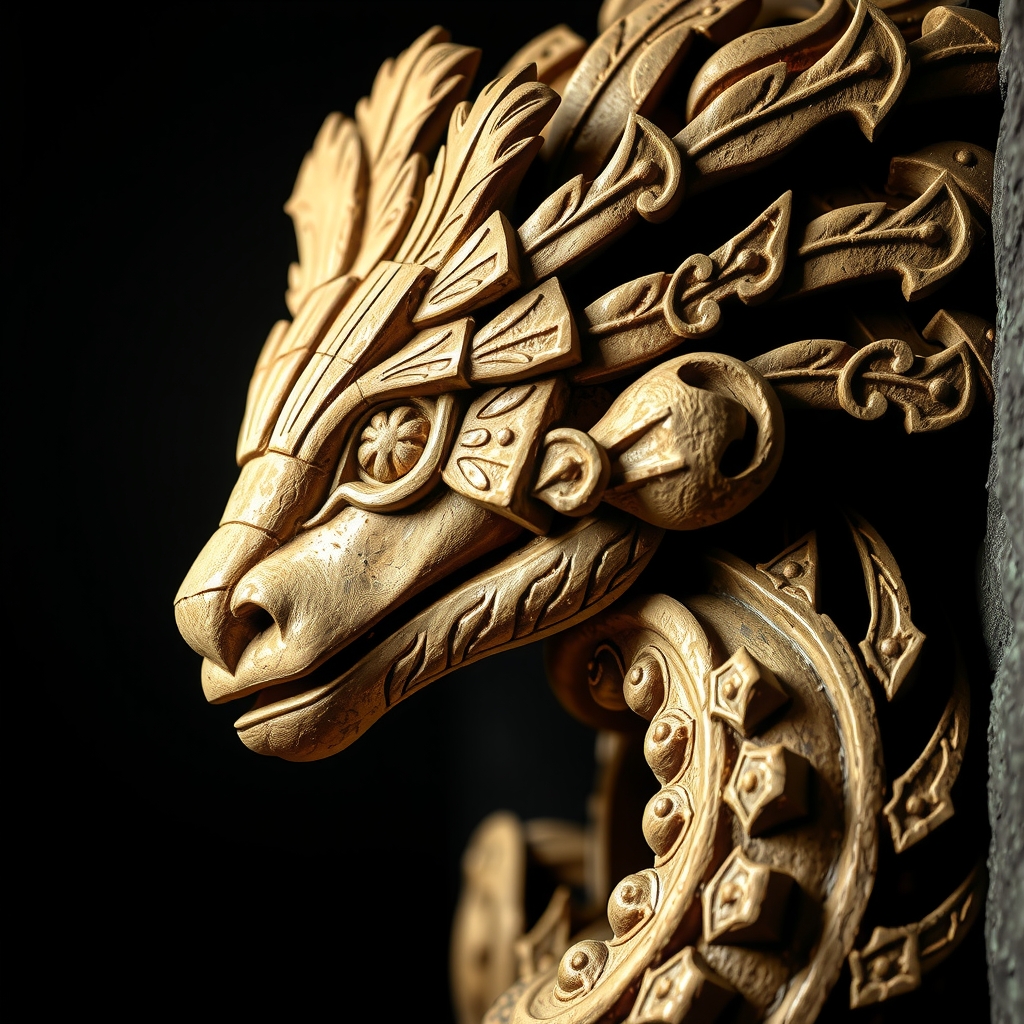
No figure looms larger in Mesoamerican myth than Quetzalcoatl — the Feathered Serpent, whose name fuses the quetzal bird's iridescent plumes with coatl, serpent. He was god of wind, learning, priesthood, and the dawn star Venus, embodying the paradox of earth and sky united.
In one of the most poignant mythic cycles, Quetzalcoatl ruled Tula as a wise priest-king who forbade human sacrifice and taught the arts of civilization. His adversary Tezcatlipoca tricked him into drunkenness and shame; disgraced, Quetzalcoatl journeyed east to the sea, where he sailed away on a raft of serpents — vowing, in some versions, to return.
His dual nature as Ehecatl, lord of wind, made him the breath before rain, the messenger between worlds. The great circular temples built in his honor were without corners so the wind could pass through unobstructed. Across Mesoamerica — from Teotihuacan to Chichen Itza — his serpentine image appears, linking cultures across centuries.
War God & Solar Champion
Huitzilopochtli — Blue Hummingbird of the South
Born fully armored from the womb of Coatlicue — Earth Mother — at the moment his four hundred siblings conspired to kill her, Huitzilopochtli burst forth with a serpent of fire and slew his sister Coyolxauhqui, casting her dismembered body down Coatepec mountain. This primal battle is the eternal drama of the sun conquering the stars and moon at every dawn.
As patron of Tenochtitlan and god of war, sun, and sacrifice, Huitzilopochtli guided the Mexica people on their long migration — appearing as a hummingbird spirit — to the site where an eagle devoured a serpent upon a cactus: the place destined to be their capital. His great temple, the Templo Mayor, was oriented so the winter solstice sunrise aligned directly with his shrine.
Each sunrise re-enacts Huitzilopochtli's defeat of the night stars. Warriors slain in battle accompanied the sun from zenith to dusk; women who died in childbirth escorted it through the underworld back to dawn.
The foundation myth of Mexico's capital — and the image on the modern Mexican flag — comes directly from Huitzilopochtli's divine command, fulfilling a centuries-long prophecy.
Discovered beneath Mexico City in 1978, the great circular stone depicting the dismembered moon goddess transformed our understanding of Aztec cosmology and sacrifice.
War also connected to agricultural renewal through Xipe Totec, "Our Lord the Flayed One," whose ceremonies signified the earth shedding its skin — death feeding life.
Rain, Storm & Sustenance
Tlaloc & the Rain Gods
Tlaloc, the goggle-eyed rain deity, was among the most ancient and feared gods in the Aztec pantheon. Long predating the Aztec civilization itself, he appears in Teotihuacan murals from 150 CE. As giver and withholder of water, Tlaloc controlled the agricultural fate of millions — his benevolence was rain and abundant harvest; his wrath brought drought, hail, and lightning.
He presided over Tlalocan, a paradise of eternal spring in the east where those who drowned, were struck by lightning, or died from water-related ailments went after death — a very different afterlife from the grey halls of Mictlan. Children were sacrificed to Tlaloc with the belief that their tears would summon the rains.
His four assistants — the Tlaloque — each guarded a corner of the cosmos, controlling different types of rain: life-giving, stormy, icy, and scorching. His consort Chalchiuhtlicue, "She of the Jade Skirt," ruled rivers, lakes, and the waters of childbirth — one of the four sun-bearers in the Five Suns cycle.
The duality of Tlaloc — generous rains balanced against destructive floods — mirrors the Aztec worldview: that all forces of nature required constant negotiation through ceremony. His shrines atop Mount Tlaloc received offerings even into Spanish colonial times, testament to the depth of reverence for the rain-bringer. You can explore similar rain and storm deity traditions in Andean mythology with Illapa, or the storm god Perun in Slavic tradition.
Sacred Time & Ceremony
The Sacred Calendar & Ritual Life
The Aztec world was governed by two interlocking calendars of extraordinary precision. Their intersection shaped every aspect of life — from the naming of children to the timing of war, from planting to sacrifice.
Explore Other Mythologies
The Fifth Sun Is Still Burning
The Aztec cosmos demands engagement — myths this vivid deserve to be read, compared, and carried forward. Explore more worlds with Mythality.