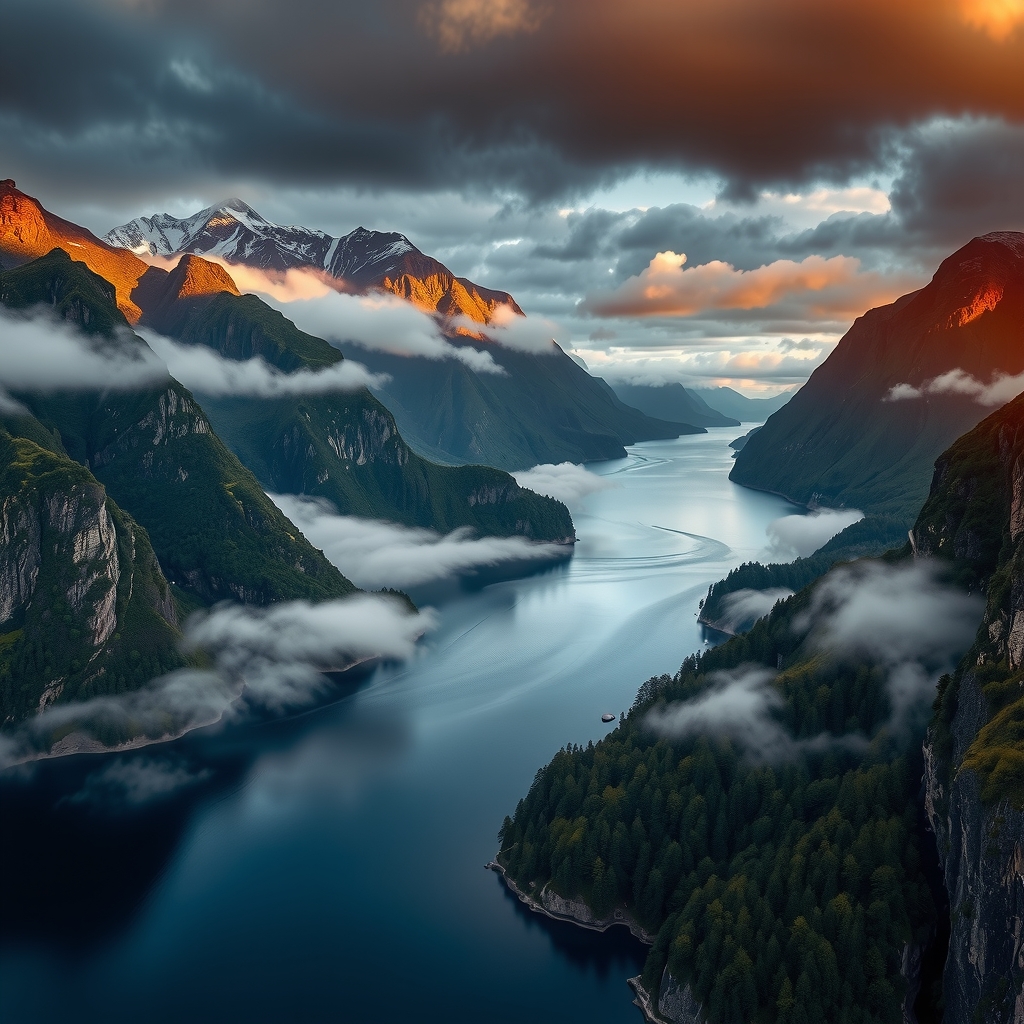
Aotearoa New Zealand
☽Māori Mythology
From the void of Te Kore to the fish-hooks of Māui — the sacred stories of Aotearoa bind sky, earth, ocean and people into one living genealogy.
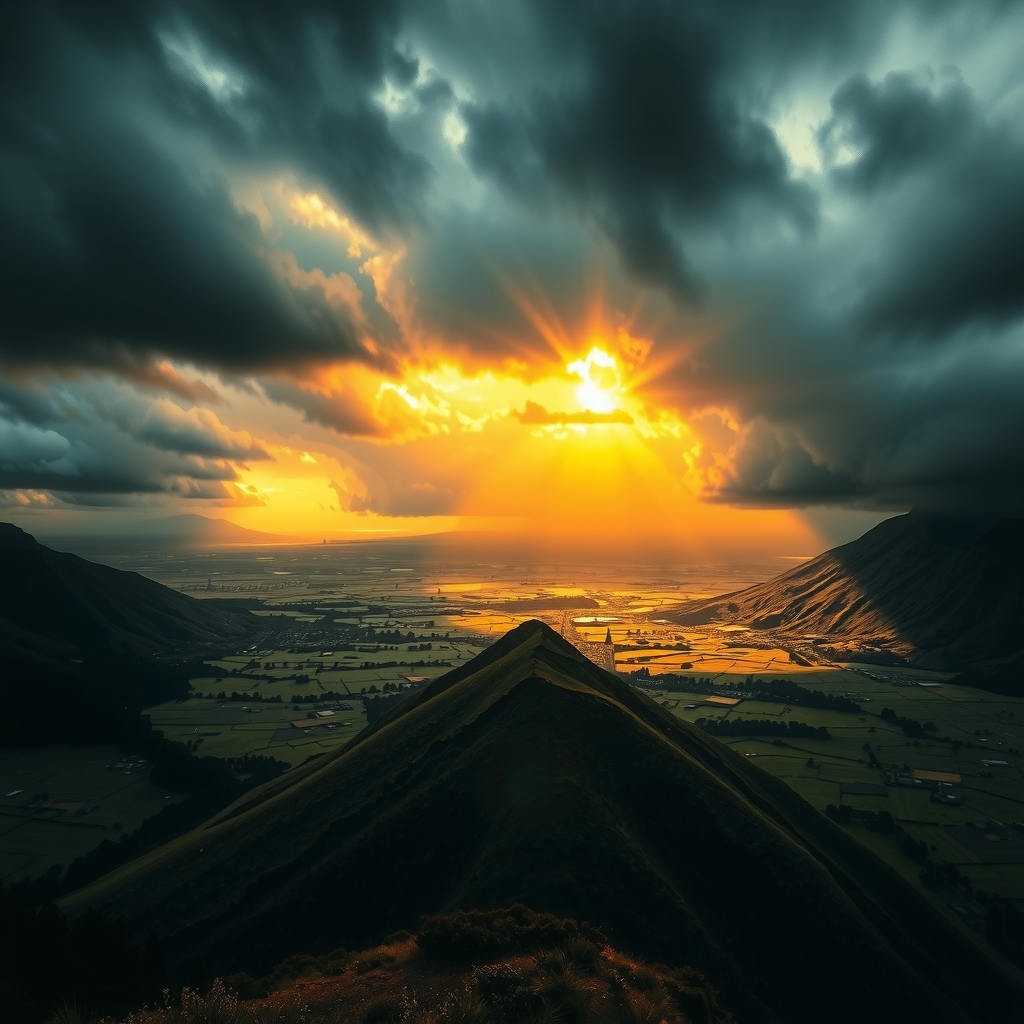
The First Separation
Ranginui & Papatūānuku
In the very beginning there was Te Kore — the void — then Te Pō, the long night. From this darkness came Ranginui, the Sky Father, and Papatūānuku, the Earth Mother, locked in a timeless embrace. Between them, their children existed in perpetual darkness, pressed flat between sky and earth.
It was Tāne, god of forests and birds, who finally separated his parents, pushing Ranginui high into the heavens. As sky and earth were torn apart, Ranginui's tears became the rain and dew that still nourish Papatūānuku's body today. Their love — and their grief — became the world we inhabit.
"Ko Ranginui e tū iho nei, ko Papatūānuku e takoto nei." — Sky above, earth below.
The Great Atua
Children of the Sky & Earth
From Ranginui and Papatūānuku were born the great atua — divine beings who shaped every realm of existence. Each governs a domain, and each carries within them a portion of that original separation, that first longing for light.
Their rivalries and alliances echo across the natural world. Like the Shinto kami of Japan or the Orishas of West Africa, the Māori atua are not remote abstractions but living presences woven into daily life and landscape.
Tāne-mahuta
God of forests, birds, and the maker of the first human. He separated sky from earth and breathed life into Hineahuone.
Tangaroa
Lord of the oceans and all sea creatures. His body became the waters that surround Aotearoa and all the Pacific.
Tūmatauenga
God of people and war. He remained upright against his parents' embrace, and humans are born of his fierce independence.
Rūaumoko
Still unborn, cradled against Papatūānuku — his movements cause earthquakes and geothermal heat.
Rongo
God of cultivated plants and peace. He presides over the kūmara harvest and the art of agriculture.
Haumia-tiketike
God of uncultivated food — wild plants, ferns, and the bounty that grows without human tending.
The Demi-God
Māui of a Thousand Tricks
Born premature and cast into the sea by his mother, Māui — sometimes called Māui-tikitiki-a-Tāranga — survived through miraculous intervention. He grew to become the greatest trickster and culture-hero of the Pacific world, a figure whose exploits stretch across Aotearoa, Hawaiʻi, and the wider Polynesian world.
His deeds are celebrated in story, song, and carving across every island people who share his name. Like First Nations trickster figures of North America, Māui embodies the boundary between human limitation and divine possibility.
- Fished up Te Ika-a-Māui — the North Island of New Zealand — using his grandmother's jawbone as a fish-hook
- Lassoed the sun with a rope of flax, forcing it to slow its path and give people longer days
- Stole fire from Mahuika, the fire-keeper, and gave it to humanity
- Attempted to win immortality by entering the body of Hine-nui-te-pō — Goddess of Death — and failed, making death permanent for all
Lord of the Forest
Tāne & the Living World
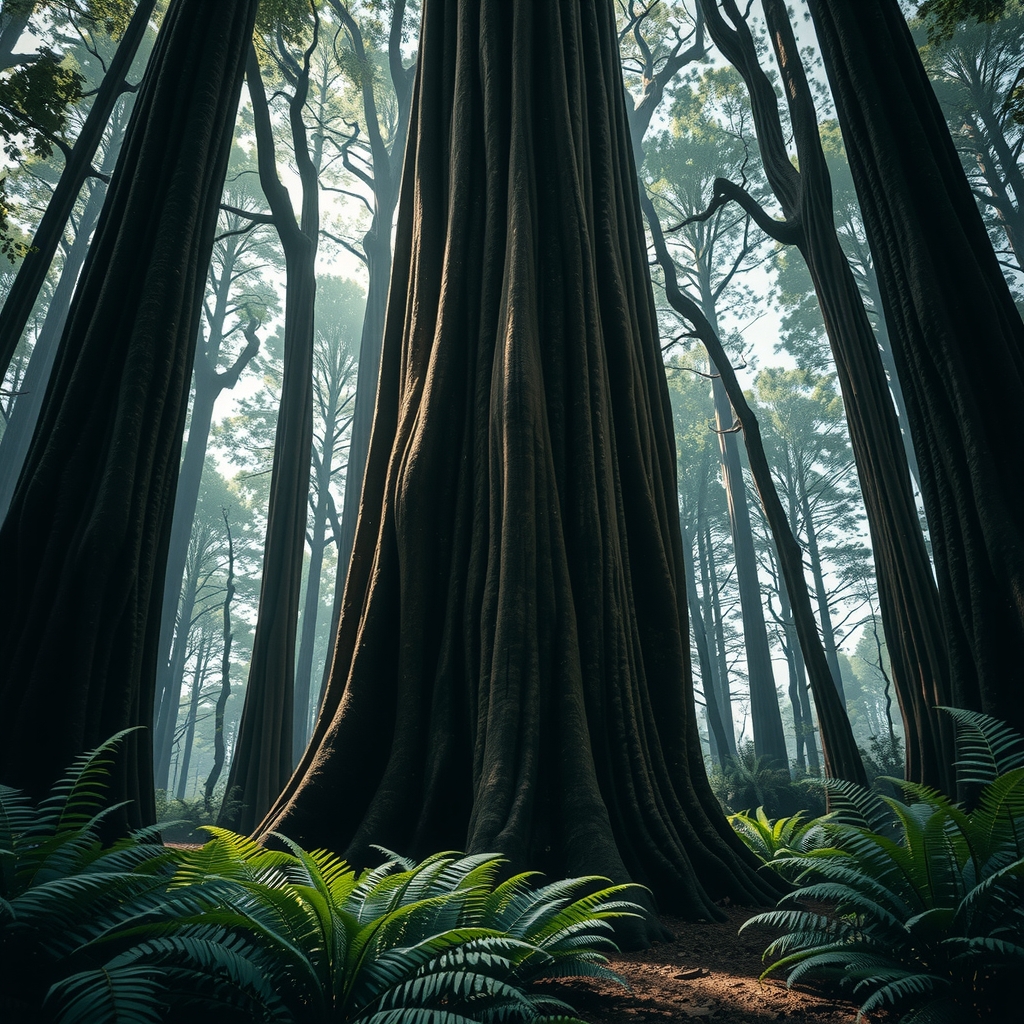
Tāne-mahuta, whose name means "lord of the forest," is among the most venerated of the atua. He clothed his mother Papatūānuku by planting trees upon her body — rooting them upside-down so their roots reached skyward, until he turned them right and they stood with roots in earth and canopy reaching to his father Ranginui.
Tāne also fashioned the first woman, Hineahuone, from the red earth at Kurawaka, breathing life into her form. His forests — especially the ancient kauri — are considered sacred wharenui, the houses of the gods, still standing in the Waipoua Forest of Northland today.
The great kauri Tāne Mahuta, largest living kauri, is named in his honour — a living monument more than 2,000 years old.
Lord of the Oceans
Tangaroa & the Sea
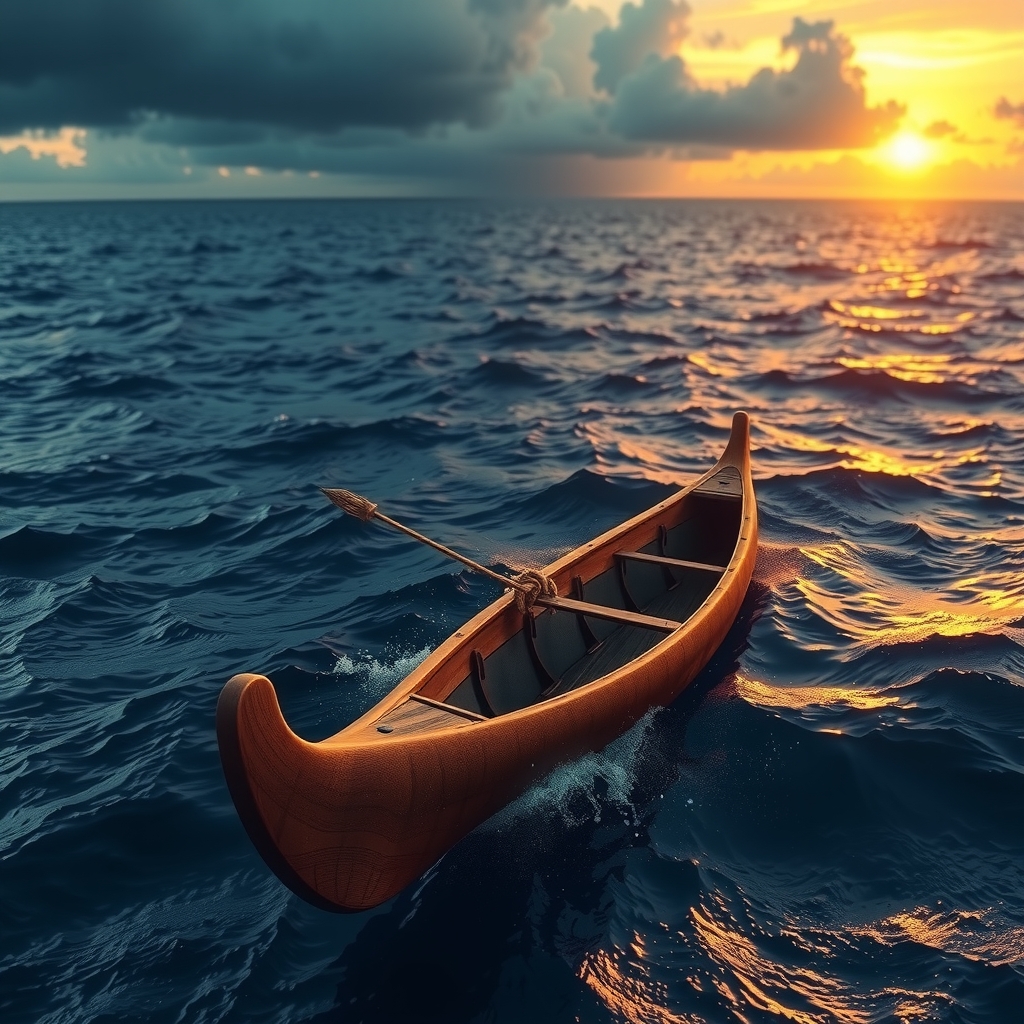
Tangaroa rules the vast Pacific — the waters that both separate and connect the islands of Polynesia. He is the ancestor of all fish and sea creatures, and his relationship with his brother Tāne has always been one of creative tension: fish shelter in Tāne's forests, and Tāne's canoes navigate Tangaroa's oceans.
The Māori relationship with the sea was inseparable from their identity as great navigators and fishermen. To fish was to enter Tangaroa's realm — to offer a karakia (prayer) was to acknowledge his power and seek his permission. Similar reverence for ocean deities echoes in Andean traditions beside Lake Titicaca, and among Pacific Northwest First Nations who read the sea as a living ancestor.
"Ko Tangaroa, ko ia te matua o ngā ika katoa." — Tangaroa is the parent of all fish.
The ancient tension between Tāne and Tangaroa explains why forests and ocean are rivals yet interdependent — trees fall into rivers, float to sea, and become the canoes that conquer waves. Fishing nets, traditionally woven from flax, were seen as sacred objects charged with Tāne's gift and guided by Tangaroa's favour.
In carving and weaving, the patterns of the sea — wave spirals and koru — appear alongside forest motifs. The hei matau (fish-hook pendant) remains one of Māori art's most recognisable forms, a symbol of abundance, prosperity, and safe passage across the waters.
These sacred symbols connect directly to Japanese Shinto reverence for kami of sea and storm — a reminder that island peoples the world over have always found the divine in the ocean's immensity.
Living Genealogy
Whakapapa & Identity
Whakapapa — genealogy — is not merely the listing of ancestors. It is the philosophical framework through which Māori understand all existence. Every being, every phenomenon, every story is located within a web of relationships that descends from Ranginui and Papatūānuku through the great atua to the first human beings.
To recite your whakapapa is to locate yourself in the cosmos. It binds you to mountain, river, ocean and ancestor simultaneously. The wharenui (meeting house) is itself a living whakapapa — its ridgepole the ancestor's spine, its rafters his ribs, its porch his face. To enter is to stand inside an ancestor's body.
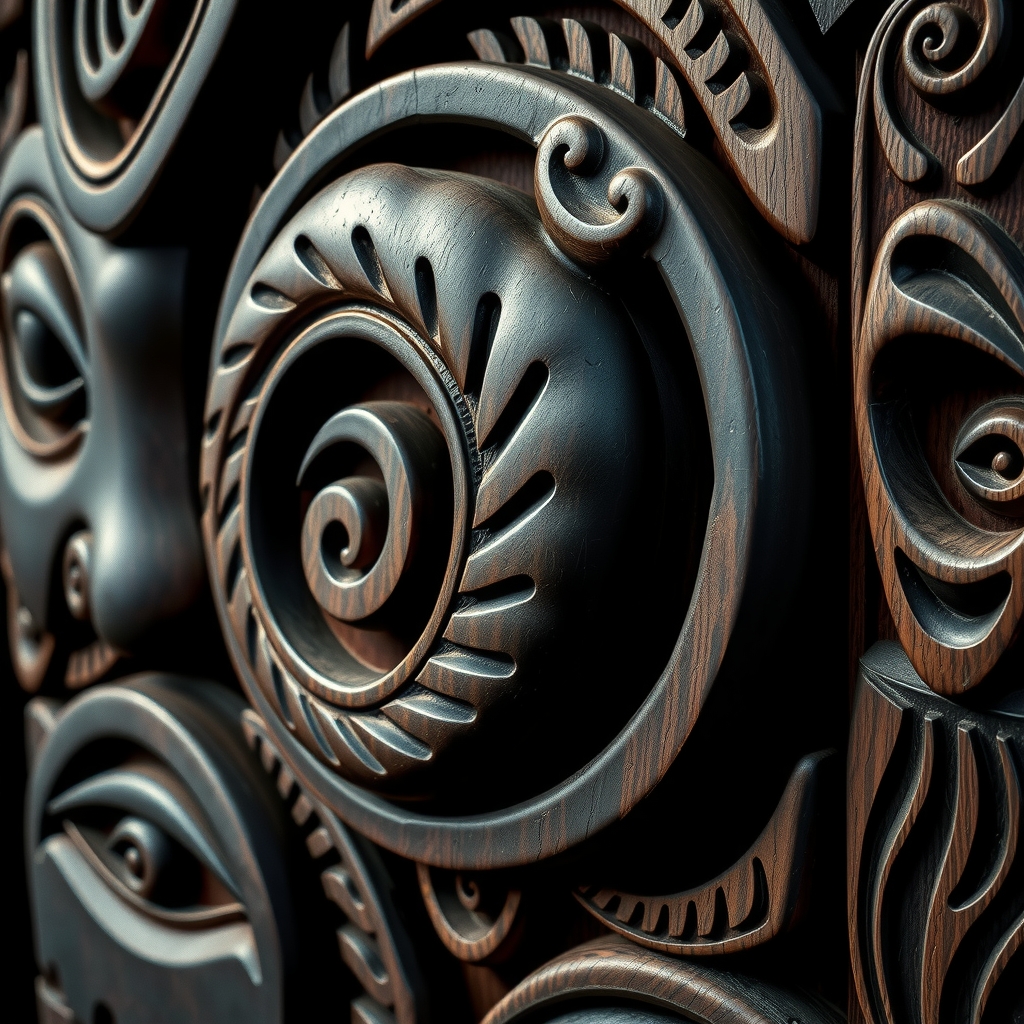
Whakairo — sacred wood carving — encodes these genealogies in the spiralling forms of the koru, the double spiral of the pākura, and the interlocking patterns that line every post and lintel of a traditional meeting house.
The World's Mythologies Await
Every People Has a Story of the Sky
Māori mythology connects Aotearoa to a global conversation about creation, identity, and the sacred. Explore the traditions that share its spirit.