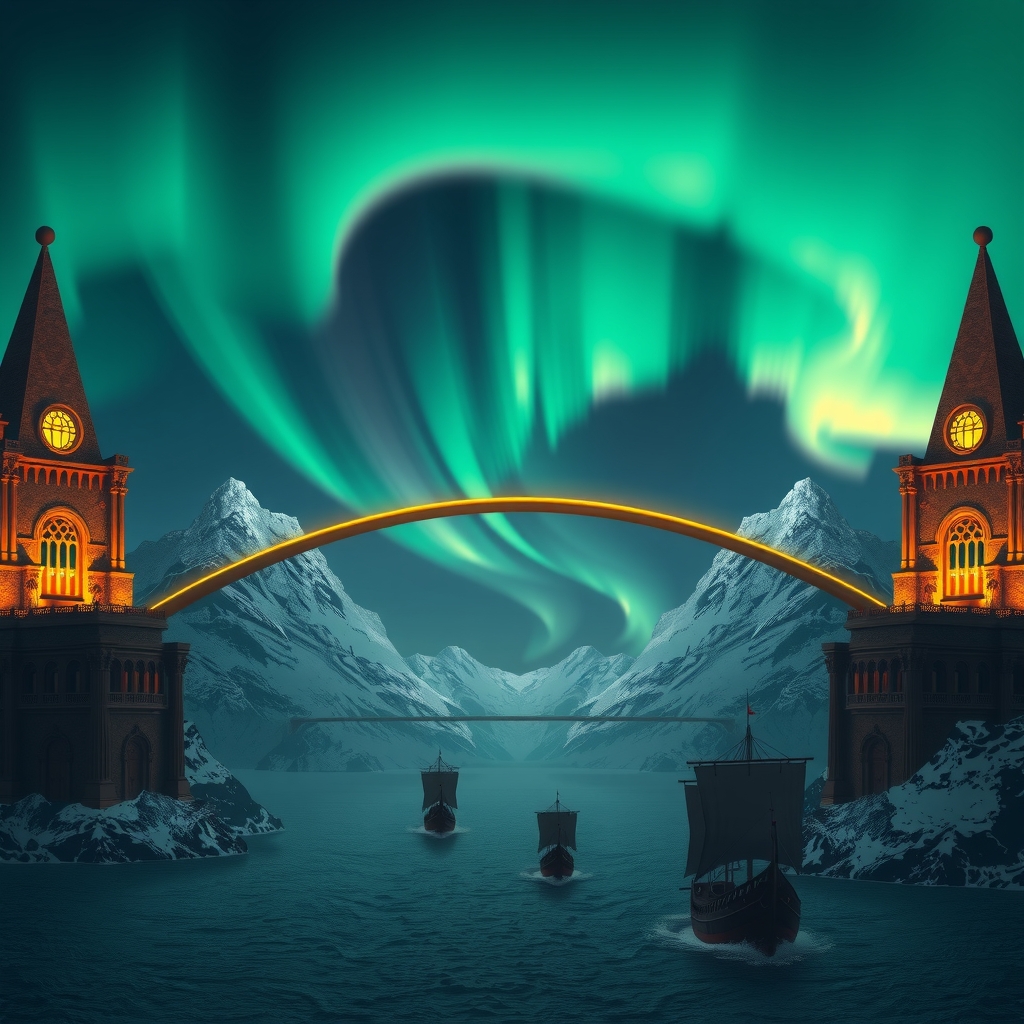
Norse
Mythology
From the void of Ginnungagap to the fires of Ragnarök — the world-tree trembles, and the gods ride to war.
A Cosmos Born of Ice & Fire
Before the worlds were made, there was Ginnungagap — the great void, yawning and boundless. From the south, fires of Muspelheim crept; from the north, the ice of Niflheim spread. Where they met, the first being awoke: the primordial giant Ymir.
From Ymir's body the gods Odin, Vili, and Vé fashioned the world itself — his flesh became the earth, his blood the seas, his bones the mountains, his skull the sky. The Norse cosmos is thus not merely a backdrop to myth but a living being, saturated with the memory of creation and haunted by the certainty of its own destruction.
The Eddas — the Prose and Poetic — preserve these sagas, collected in medieval Iceland yet echoing far older oral traditions carried by Viking skalds across the frozen sea.
Norse Pantheon
The Aesir are the principal gods of Norse mythology, dwelling in Asgard atop the world-tree. Fierce, wise, and fatally mortal, they know their own doom — and ride toward it anyway.
Odin
Allfather · King of AsgardGod of wisdom, war, death, poetry, and seiðr magic. He hung nine days on Yggdrasil to claim the runes.
Thor
God of ThunderWielder of Mjölnir, protector of mankind, endless slayer of giants. Son of Odin and Jörð, the earth.
Loki
Trickster · ShapeshifterHalf-god, half-giant. Agent of chaos and cleverness, whose deceptions ultimately ignite Ragnarök.
Frigg
Queen of AsgardOdin's wife, goddess of marriage and foresight. She alone among the gods knows every fate — but speaks none.
Freya
Goddess of Love & WarVanir goddess of love, fertility, battle, and seiðr magic. Leader of the Valkyries and keeper of Sessrúmnir.
Tyr
God of Law & JusticeThe one-handed god who sacrificed his arm to bind the wolf Fenrir, that the worlds might remain safe a while longer.
Heimdall
Watchman of the GodsEver-vigilant guardian of Bifröst, keeper of Gjallarhorn — the horn whose blast will herald Ragnarök.
Baldr
God of Light & PurityThe most beloved of all gods, fated to die by a mistletoe dart — and to return after Ragnarök reborn.
Odin
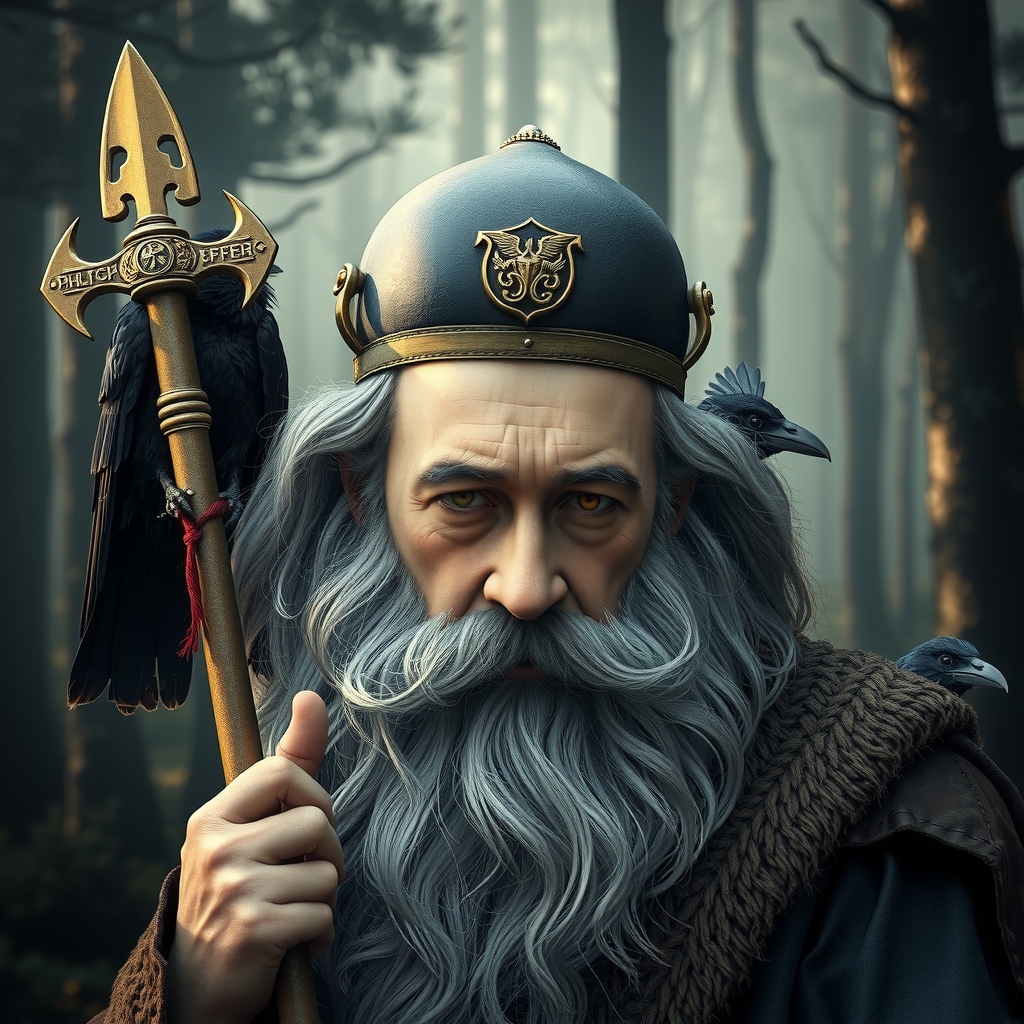
Odin is the most complex figure in Norse mythology — simultaneously creator and destroyer, scholar and warrior, wanderer and king. He sacrificed one eye to drink from Mimir's well and gain cosmic wisdom. He traded his eye for a glimpse of all time.
"I know that I hung on the wind-swept tree for nine full nights, wounded by the spear, dedicated to Odin — myself given to myself."
— Hávamál, the Words of the High One
His ravens Huginn and Muninn — Thought and Memory — circle the worlds each day, returning to whisper all they have seen. His eight-legged horse Sleipnir carries him between realms. Odin collects slain warriors for Valhalla, preparing his army for the final battle.
Thor
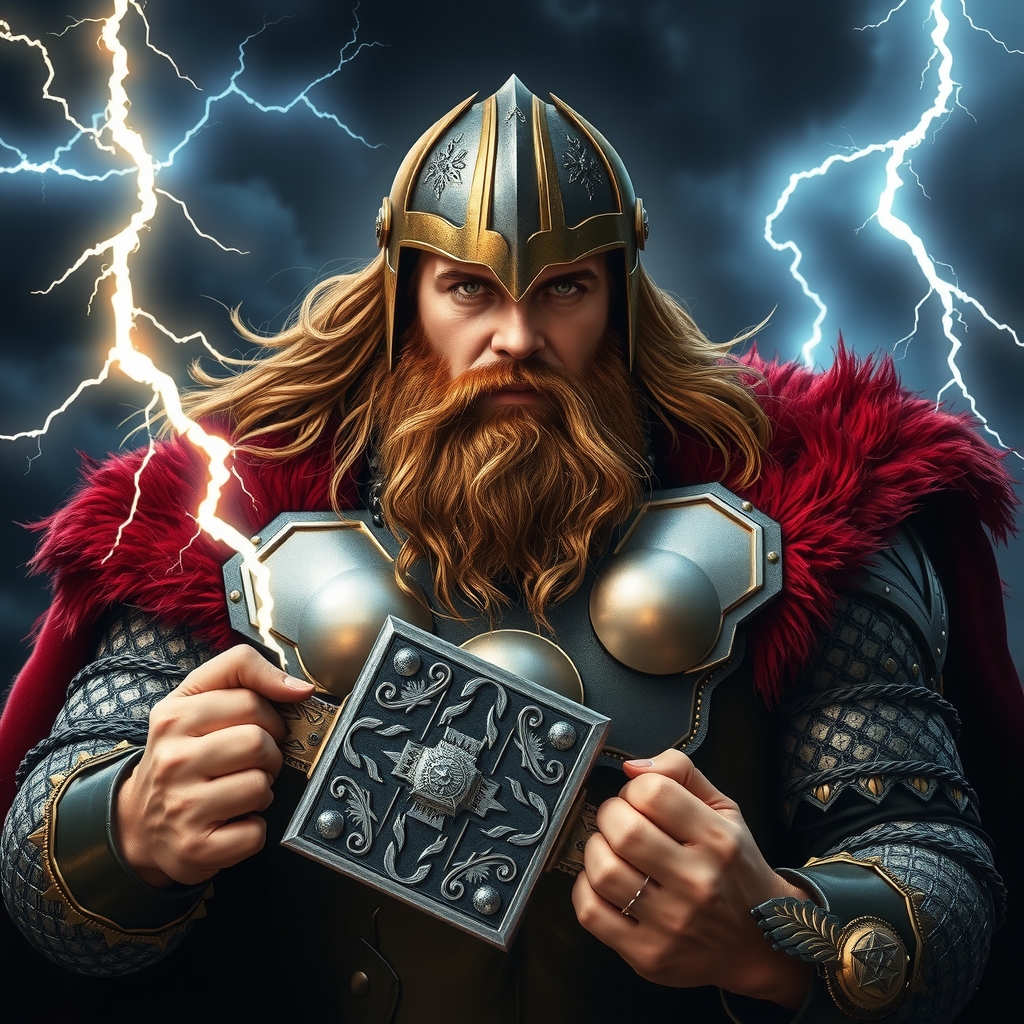
Thor is Asgard's greatest warrior — enormous, red-bearded, and utterly devoted to the protection of gods and mortals alike. While Odin is revered in the halls of kings, it is Thor who the common people pray to before planting, before sailing, before battle.
His hammer Mjölnir — "the crusher" — is the mightiest weapon in the Norse cosmos, capable of leveling mountains. Forged by the dwarven smiths Brokkr and Sindri under Loki's treacherous interference, it is slightly short-handled — yet no less devastating for it.
"He is the strongest of all gods and men. His realm is called Þrúðvangr, and his hall is Bilskirnir, the largest hall in all the worlds."
— Prose Edda, Gylfaginning
Loki
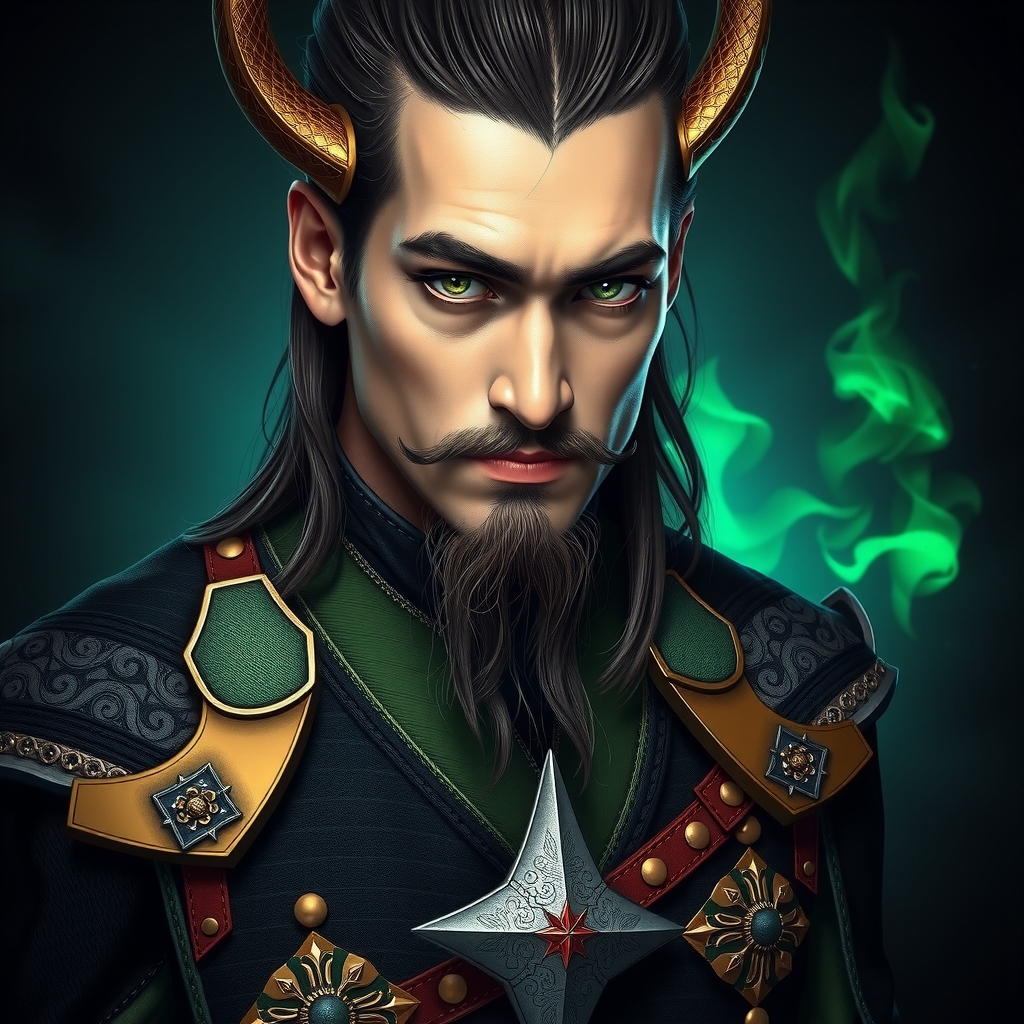
Loki is the great paradox of Norse mythology — blood-brother to Odin, beloved companion of Thor, yet a being whose every gift conceals a sting. He is not evil by nature but by compulsion, driven by a restless cleverness that cannot bear simplicity or peace.
He is the mother of Sleipnir (having disguised himself as a mare), the father of the wolf Fenrir, the serpent Jörmungandr, and the half-dead goddess Hel. Each of his children will play a devastating role at Ragnarök — and so Loki's chaos is not random but cosmically consequential.
"Loki is handsome and beautiful, evil in character and very changeable in his ways. He surpassed all men in the art of cunning."
— Prose Edda, Gylfaginning
Yggdrasil & The Nine Realms
At the center of all existence stands Yggdrasil — the immense ash tree whose roots plunge into three wells and whose branches hold the nine worlds. It is simultaneously universe and organism, eternally gnawed at yet forever enduring.
Ragnarök
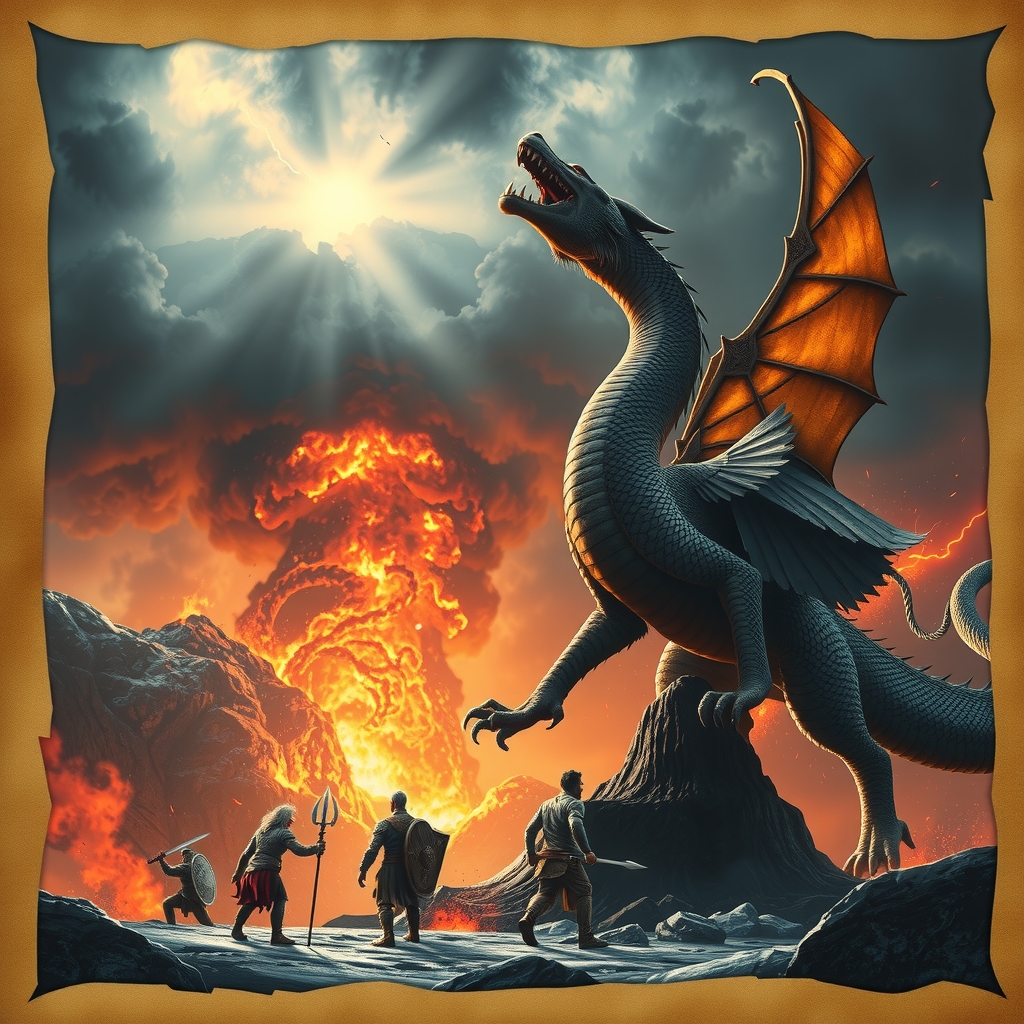
The Norse gods do not expect to live forever. They know with terrible certainty that a day will come — Ragnarök, the Twilight of the Gods — when the cosmos itself will burn and shatter. Yet they refuse to surrender. They will fight, knowing they will fall.
"Brothers shall fight and fell each other, and sisters' sons shall kinship stain; hard is it on earth, with mighty whoredom; axe-time, sword-time, shields are sundered, wind-time, wolf-time, ere the world falls — nor ever shall men each other spare."
— Völuspá, the Prophecy of the Seeress
Deepen Your Knowledge
Video content for this section is coming soon. In the meantime, explore our written sagas above, or visit a mythology archive such as the Prose Edda translated by Snorri Sturluson.
Explore More Mythologies
The sagas of the North are one thread in humanity's great tapestry of myth. Follow the other threads — to Olympus, to the Nile, to the creature-haunted dark.