Mythality · Japanese Mythology
Amaterasu, Susanoo & the Kami of the Islands
From the primordial void to the birth of the sun goddess, Japan's sacred texts weave a cosmos alive with spirit, storm, and light — where the divine and mortal world are never truly apart.
Kamiyō no Maki
The Age of the Gods
The Kojiki (Record of Ancient Matters, 712 CE) and the Nihon Shoki (Chronicles of Japan, 720 CE) open with the Kamiyō — the Age of Gods — when the universe separated from chaos into heaven and earth, and the first kami came into being.
Konton — Chaos
Before creation, heaven and earth were one undivided mass. A cosmic egg-like void held all potential within it, neither light nor dark.
The First Kami
Three spontaneous deities formed in the heavens alone — Amenominakanushi, Takamimusubi, and Kamimusubi — invisible and without form.
The Seven Generations
Pairs of kami followed in succession. The final pair — Izanagi and Izanami — were charged with giving form to the floating world below.
The Jeweled Spear
Given a divine spear by the heavenly kami, Izanagi and Izanami churned the brine below and raised the first island, Onogoro, from the sea.
Creation & Descent
Izanagi & Izanami
The divine couple descended to Onogoro island and gave birth to the Japanese archipelago — Awaji, Shikoku, Kyushu, and finally Honshu — island by island, through sacred union. They then created the kami of wind, sea, mountains, and fire.
The birth of the fire deity Kagutsuchi proved fatal to Izanami, who died of her burns. Overcome with grief, Izanagi pursued her into Yomi — the land of the dead. What he found shattered his heart. When he fled and sealed the underworld's entrance, Izanami cursed him: she would take one thousand lives each day. He promised to create one thousand and five hundred in return — the origin of birth and death.
Purifying himself in a river after escaping Yomi, Izanagi's ablutions gave rise to the three greatest kami: from his left eye — Amaterasu, goddess of the sun; from his right — Tsukuyomi, god of the moon; from his nose — Susanoo, god of storms.
Arashi no Kami
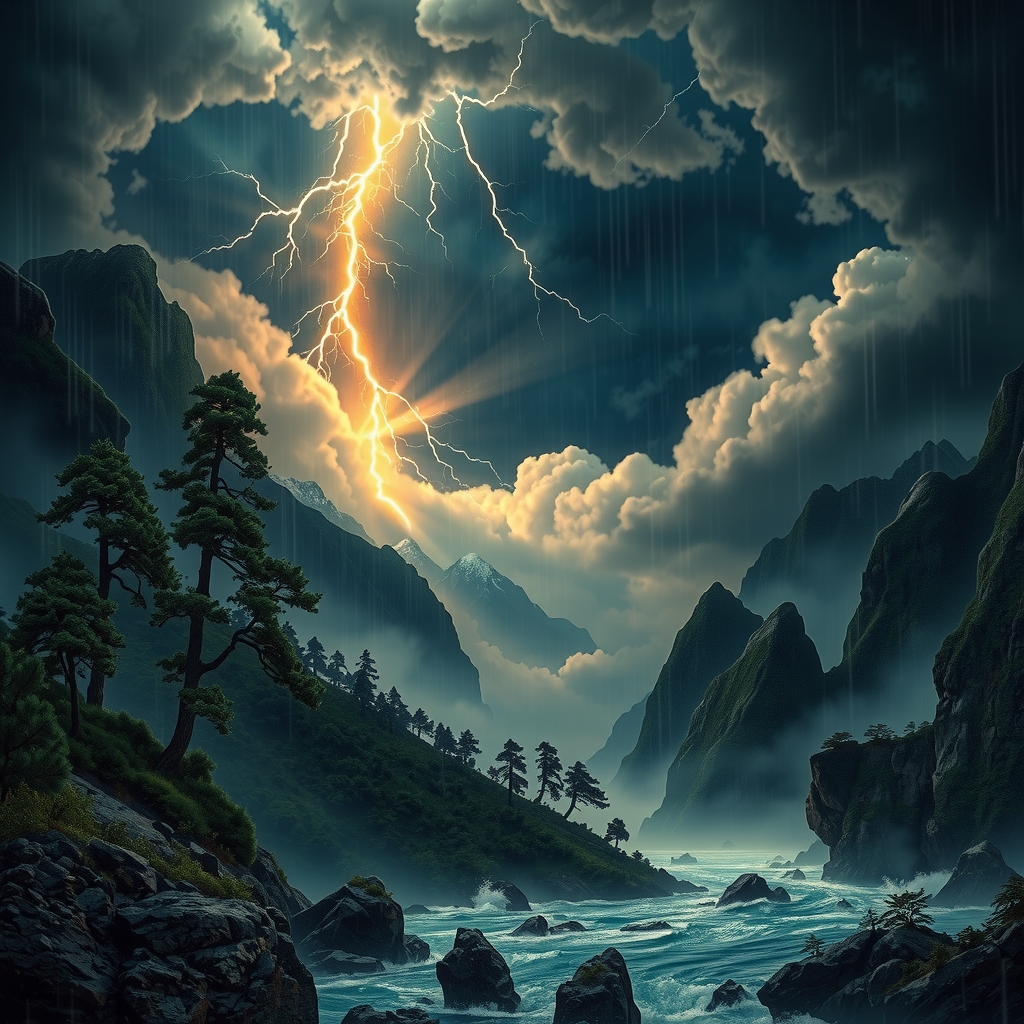
Susanoo & the Eight-Headed Dragon
Banished from heaven for his turbulent grief and destruction, Susanoo descended to Izumo province, where he discovered an elderly couple weeping beside a river. Each year, the eight-headed serpent Yamata no Orochi devoured one of their daughters — only one remained.
Susanoo brewed eight vats of strong sake, luring each of the dragon's heads into drinking until the beast was drunk and slumbering. He then drew his sword and slew it. Inside one of its tails, he discovered the legendary sword Kusanagi-no-Tsurugi — later given to Amaterasu and destined to become one of Japan's three imperial treasures.
Susanoo married Kushinadahime, the saved daughter, and settled in Izumo. His poetry, composed on that occasion, is considered the first waka verse in Japan.
Supernatural Beings
Yōkai & Spirit Beings
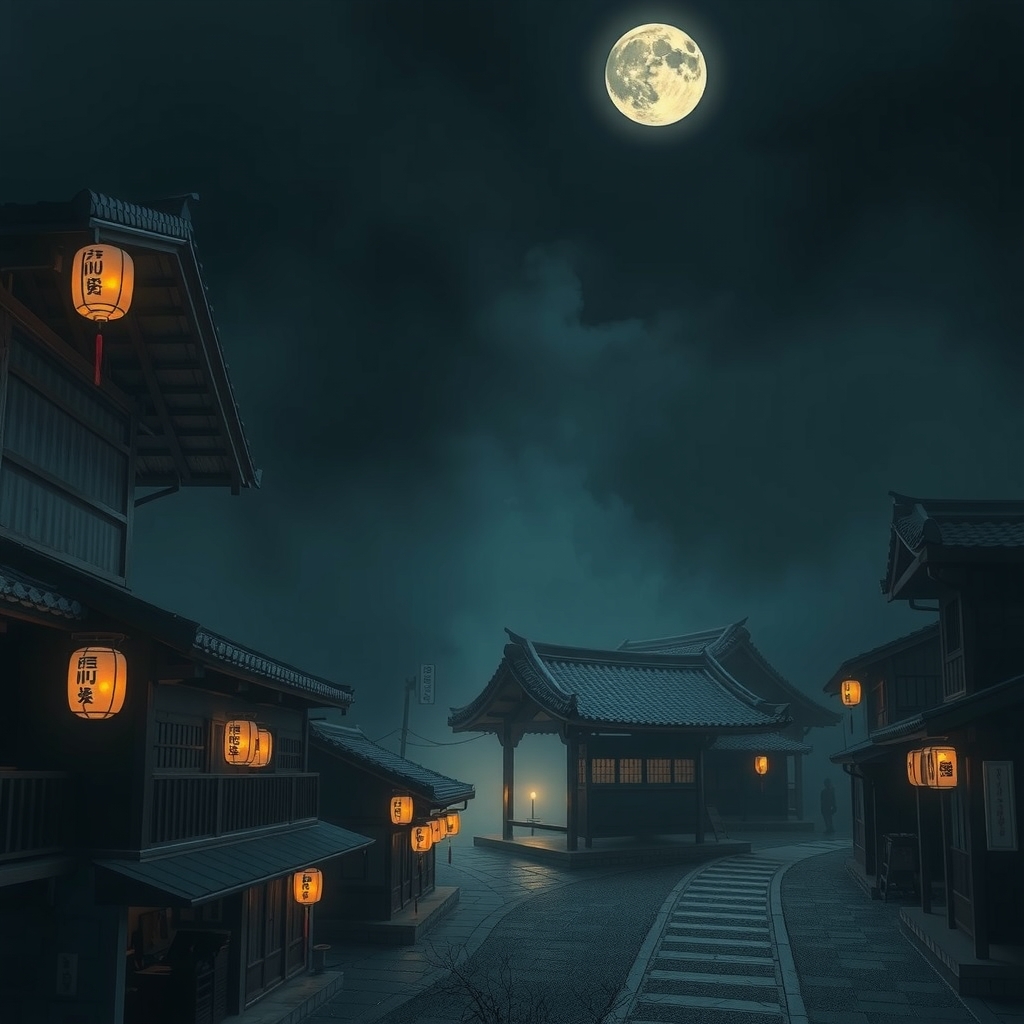
Beneath the great kami exist vast categories of supernatural beings — the yōkai — who populate rivers, forests, homes, and the boundary between the living and dead.
- Tengu — Mountain spirits with bird features, guardians of forests and teachers of martial arts to heroes.
- Kappa — River creatures with shell backs and water-filled head-dishes, known for mischief and a love of cucumbers.
- Oni — Fearsome horned demons who punish sinners in the afterlife; featured in setsubun bean-throwing rituals.
- Tanuki — Magical raccoon dogs with shapeshifting powers, often depicted with enormous luck-bringing bellies.
- Kitsune — Fox spirits who grow more powerful with each tail they earn, serving as messengers of the god Inari.
- Yūrei — Ghosts of the restless dead, driven by unresolved emotion — grief, jealousy, or love — to linger in the mortal world.
Shintō no Seichi
Sacred Shrines of the Kami
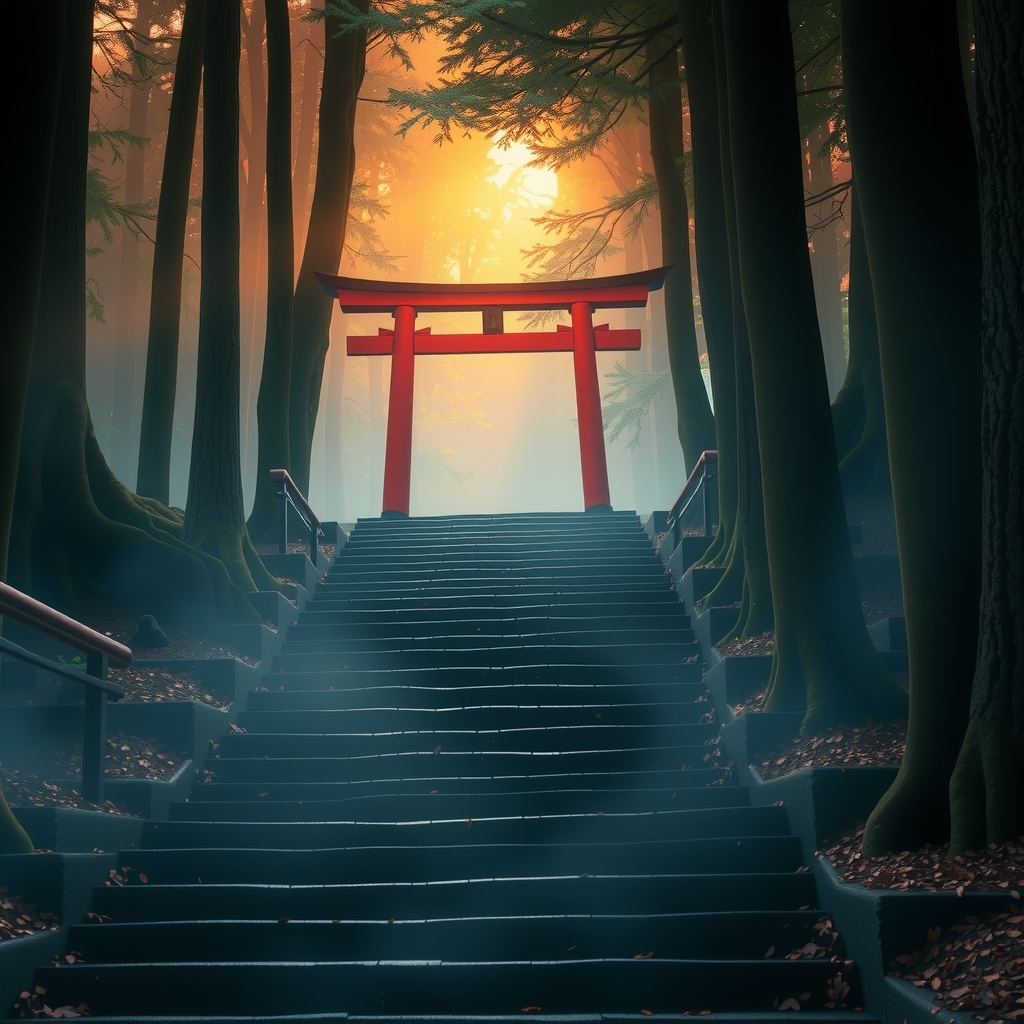
Japan's landscape is dotted with over 80,000 Shinto shrines — each a dwelling place for kami, marked by the iconic vermilion torii gate that separates the sacred from the ordinary world.
Ise Jingū, Mie
Japan's most sacred shrine complex, dedicated to Amaterasu herself. The inner sanctuary has housed the sacred mirror for over two millennia.
Izumo Taisha, Shimane
Dedicated to Ōkuninushi, descendant of Susanoo and lord of the unseen world. Gods gather here each October to arrange marriages.
Fushimi Inari, Kyoto
Thousands of torii gates wind up Mount Inari in honour of Inari Ōkami — deity of rice, agriculture, and foxes, served by kitsune messengers.
Itsukushima, Hiroshima
Built over water, this shrine honours the three daughters of Susanoo. At high tide its famous torii appears to float on the Seto Inland Sea.
Explore More Mythologies
Japanese mythology is one thread in a vast tapestry of human storytelling. Follow the thread across oceans and continents.